
Title


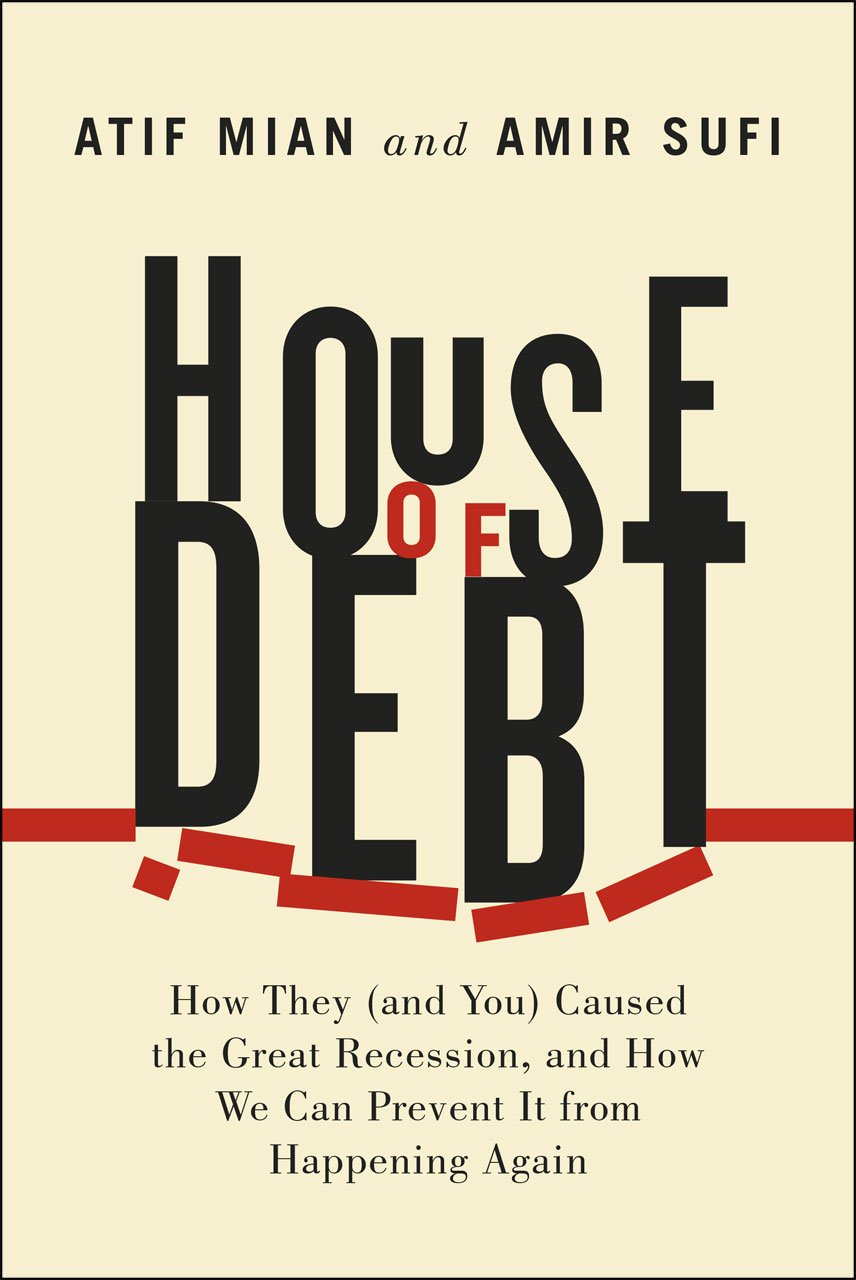
House of Debt: How They (and You) Caused the Great Recession, and How We Can Prevent It from Happening Again,Used
Sold by Ergodebooks, an authorized reseller.
Returns accepted within 30 days | support@ergodebooks.com
Shipping Information
- Free Standard Shipping — United States only
- Processing Time: 3–5 business days
- Estimated Delivery: 6–10 business days after dispatch
- Double-boxed, fully insured & discreetly packaged
- Tracking number sent via email once dispatched
Returns & Refund
Returns accepted within 30 days of delivery.
Damaged or Defective Item
Free return shipping + replacement or full refund
Wrong Item Received
Free return shipping + replacement or full refund
Change of Mind
Return shipping at customer's expense · 25% restocking fee applies
Payment Option

The Great American Recession resulted in the loss of eight million jobs between 2007 and 2009. More than four million homes were lost to foreclosures. Is it a coincidence that the United States witnessed a dramatic rise in household debt in the years before the recessionthat the total amount of debt for American households doubled between 2000 and 2007 to $14 trillion? Definitely not. Armed with clear and powerful evidence, Atif Mian and Amir Sufi reveal in House of Debt how the Great Recession and Great Depression, as well as the current economic malaise in Europe, were caused by a large runup in household debt followed by a significantly large drop in household spending.Though the banking crisis captured the publics attention, Mian and Sufi argue strongly with actual data that current policy is too heavily biased toward protecting banks and creditors. Increasing the flow of credit, they show, is disastrously counterproductive when the fundamental problem is too much debt. As their research shows, excessive household debt leads to foreclosures, causing individuals to spend less and save more. Less spending means less demand for goods, followed by declines in production and huge job losses. How do we end such a cycle? With a direct attack on debt, say Mian and Sufi. More aggressive debt forgiveness after the crash helps, but as they illustrate, we can be rid of painful bubbleandbust episodes only if the financial system moves away from its reliance on inflexible debt contracts. As an example, they propose new mortgage contracts that are built on the principle of risksharing, a concept that would have prevented the housing bubble from emerging in the first place.Thoroughly grounded in compelling economic evidence, House of Debt offers convincing answers to some of the most important questions facing the modern economy today: Why do severe recessions happen? Could we have prevented the Great Recession and its consequences? And what actions are needed to prevent such crises going forward?
⚠️ WARNING (California Proposition 65):
This product may contain chemicals known to the State of California to cause cancer, birth defects, or other reproductive harm.
For more information, please visit www.P65Warnings.ca.gov.
- Q: What is the main argument of 'House of Debt'? A: 'House of Debt' argues that the Great Recession was largely caused by a significant increase in household debt, which led to reduced consumer spending and subsequent economic downturn.
- Q: Who are the authors of this book? A: The book is authored by Atif Mian and Amir Sufi, both of whom are recognized economists.
- Q: What kind of evidence do the authors provide? A: The authors present clear and compelling economic evidence to support their claims regarding the relationship between household debt and economic crises.
- Q: How many pages does 'House of Debt' have? A: 'House of Debt' has a total of 192 pages.
- Q: What is the binding type of the book? A: The book is available in hardcover binding.
- Q: When was 'House of Debt' published? A: 'House of Debt' was published on May 21, 2014.
- Q: What edition of the book is available? A: The book is available in its First Edition.
- Q: What topics does the book cover? A: The book covers topics such as the causes of severe recessions, potential preventative measures for economic crises, and the implications of household debt on the economy.
- Q: Can I find solutions for preventing future economic crises in this book? A: Yes, the authors propose solutions such as innovative mortgage contracts that emphasize risk-sharing to help prevent future economic crises.
- Q: Is 'House of Debt' suitable for readers without an economics background? A: Yes, the book is written in an accessible manner, making it suitable for readers with varying levels of knowledge in economics.