
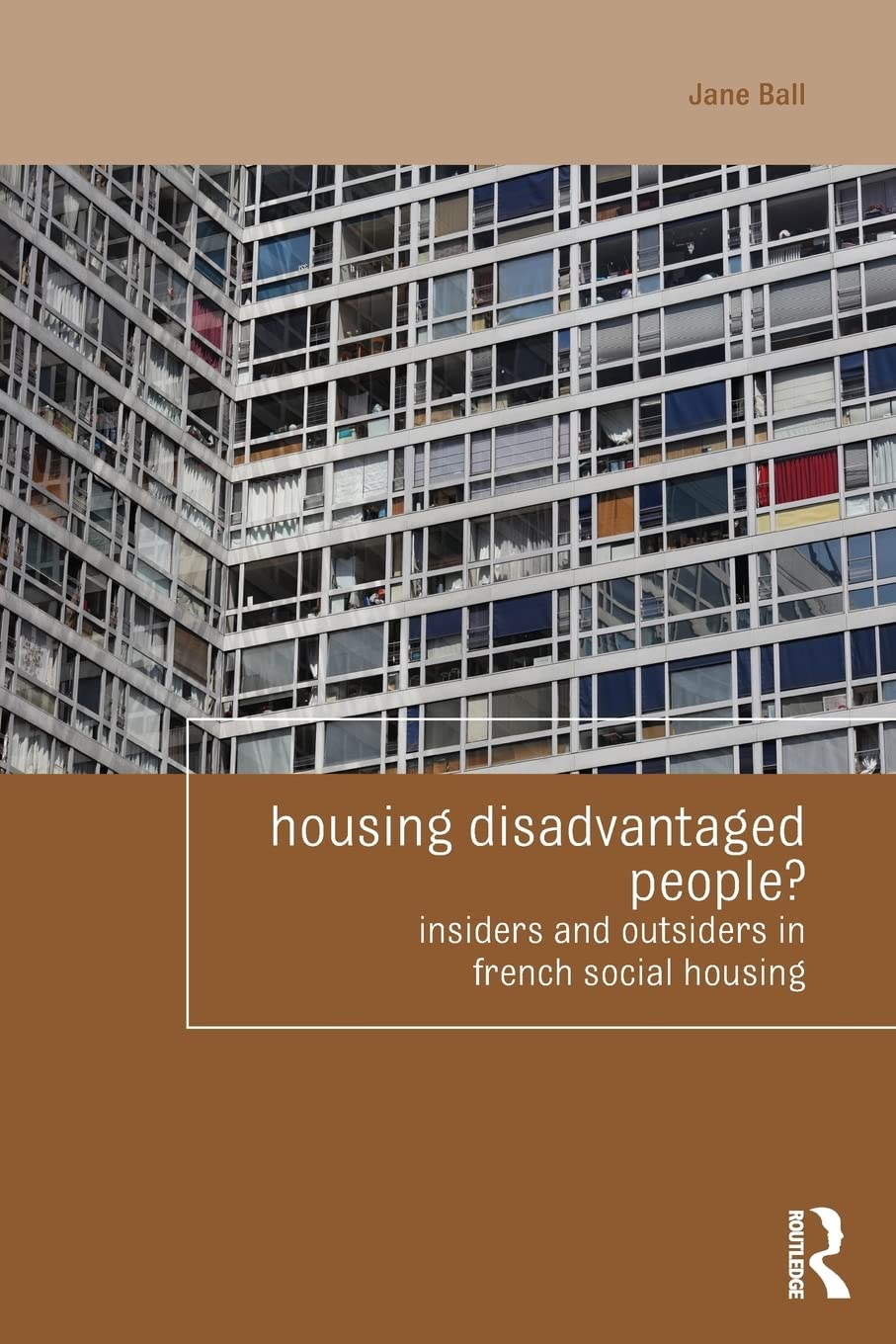
Title
Housing Disadvantaged People? (Housing and Society Series),Used
Sold by Ergodebooks, an authorized reseller.
Returns accepted within 30 days | support@ergodebooks.com
Shipping Information
- Free Standard Shipping — United States only
- Processing Time: 3–5 business days
- Estimated Delivery: 6–10 business days after dispatch
- Double-boxed, fully insured & discreetly packaged
- Tracking number sent via email once dispatched
Returns & Refund
Returns accepted within 30 days of delivery.
Damaged or Defective Item
Free return shipping + replacement or full refund
Wrong Item Received
Free return shipping + replacement or full refund
Change of Mind
Return shipping at customer's expense · 25% restocking fee applies
Payment Option

Social housing appears to offer a solution for the housing of poor and disadvantaged people. The French 'right to housing' offers poor and disadvantaged citizens priority in social housing allocation, and even a legal action against the State to obtain a social home. Despite this, France is suffering a longlasting housing crisis with disadvantaged people having particular difficulties of access, often despite the efforts of local housing actors. This situation is affected by the European Court of Human Rights and EU decisions limiting diverse national housing and rental policies.Between historic French revolutions and the modern riots, negotiated solutions to social dilemmas emerged. Despite progress in constitutional principles, complex local negotiations still ultimately determine who is housed. Local social landlords, mayors and employee and tenant representatives use their privileges to house their insiders: existing tenants, locals and employees, with rent insufficiently subsidized. Insider Outsider theory is used for an economic analysis of exclusion in social housing allocation: its processes, institutional context, and stigmatizing effects. This highlights the spatial effects of nimbyism, excluding disadvantaged outsiders, and concentrating them in deprived areas. Simultaneously, urban regeneration reduced affordable housing stock and social mix became a reason to refuse a social home.History, comparative law, economic theory and local interviews with housing actors give a detailed picture of what happens in and around French social housing allocation for an interdisciplinary housing policy audience. Constitutional principles appear in an unfamiliar guise as negotiating positions, with the 'right to property' supporting landlords and the 'right to housing' supporting tenants. French debates about the function of social landlords are echoed across Europe and reflected in European policies concerning rights, and the exclusion of disadvantaged minorities.
⚠️ WARNING (California Proposition 65):
This product may contain chemicals known to the State of California to cause cancer, birth defects, or other reproductive harm.
For more information, please visit www.P65Warnings.ca.gov.