If you have any questions, you are always welcome to contact us. We'll get back to you as soon as possible, withing 24 hours on weekdays.
Customer service
All questions about your order, return and delivery must be sent to our customer service team by e-mail at yourstore@yourdomain.com
Sale & Press
If you are interested in selling our products, need more information about our brand or wish to make a collaboration, please contact us at press@yourdomain.com
Help
If you have any questions, you are always welcome to contact us. We'll get back to you as soon as possible, withing 24 hours on weekdays.
Customer service
All questions about your order, return and delivery must be sent to our customer service team by e-mail at yourstore@yourdomain.com
Sale & Press
If you are interested in selling our products, need more information about our brand or wish to make a collaboration, please contact us at press@yourdomain.com
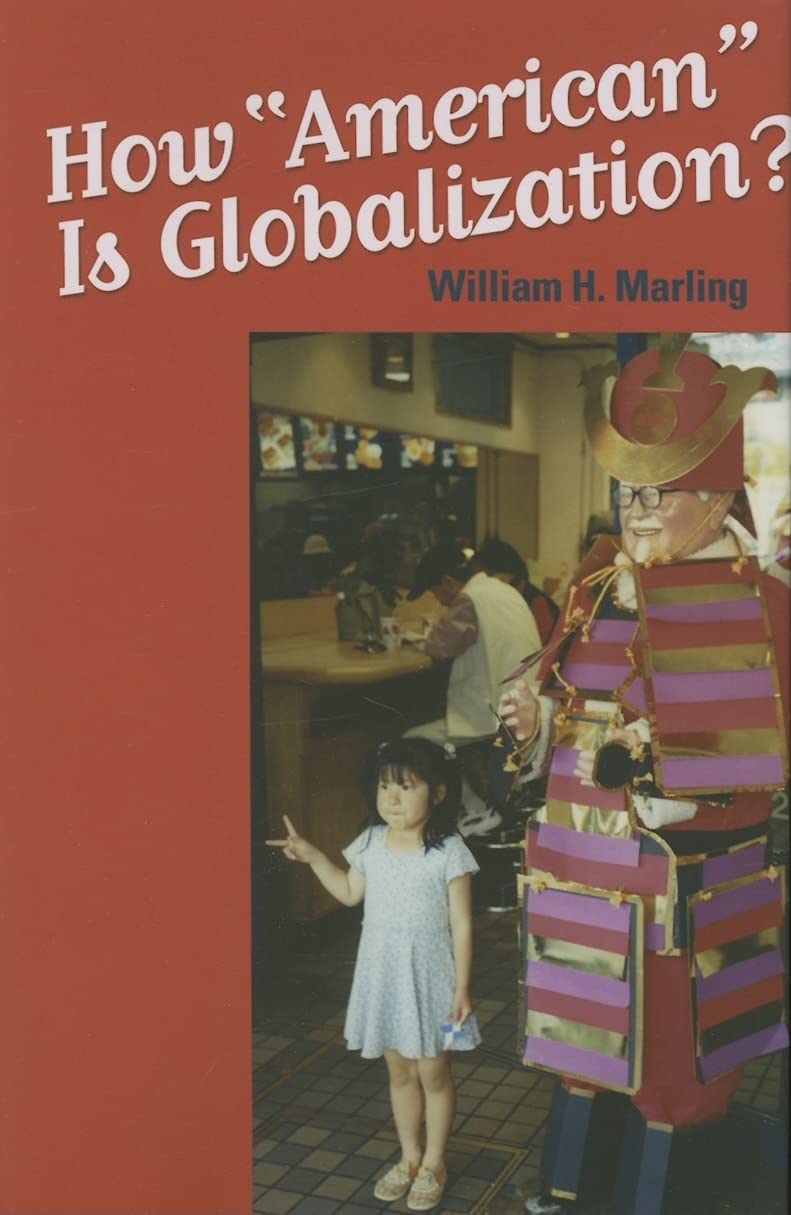
William Marling's provocative work analyzesin specific termsthe impacts of American technology and culture on foreign societies. Marling answers his own questionhow 'American' is globalization?with two seemingly contradictory answers: 'less than you think' and 'more than you know.' Deconstructing the myth of global Americanization, he argues that despite the typically American belief that the United States dominates foreign countries, the practical effects of 'Americanization' amount to less than one might suppose.Critics point to the uneven popularity of McDonalds as a prime example of globalization and supposed American hegemony in the world. But Marling shows, in a series of case studies, that local cultures are intrinsically resilient and that local languages, eating habits, land use, education systems, and other social patterns determine the extent to which American culture is imported and adapted to native needs. He argues that globalization can actually accentuate local cultures, which often put their own imprint on what they importfrom translating films and television into hundreds of languages to changing the menu at a McDonalds to include the Japanese favorite Chicken Tastuta.Marling also examines the unexpected ways in which American technology travels abroad: the technological transferability of the ATM, the practice of franchising, and 'shopfloor' American innovations like shipping containers, bar codes, and computers. These technologies convey American attitudes about work, leisure, convenience, credit, and travel, but as Marling shows, they take root overseas in ways that are anything but 'American.'
⚠️ WARNING (California Proposition 65):
This product may contain chemicals known to the State of California to cause cancer,
birth defects, or other reproductive harm.
For MAP (Minimum Advertised Price) violations and Intellectual Property (IP) or Trademark concerns, please contact:
support@ergodebooks.com
⚠️ California Proposition 65 Warning: Some products sold on this website may expose you to chemicals known to the State of California to cause cancer, birth defects, or other reproductive harm. For more information, visit www.P65Warnings.ca.gov.