
Title
How and Why Are Some Therapists Better Than Others?: Understanding Therapist Effects,Used
Sold by Ergodebooks, an authorized reseller.
Returns accepted within 30 days | support@ergodebooks.com
Shipping Information
- Free Standard Shipping — United States only
- Processing Time: 3–5 business days
- Estimated Delivery: 6–10 business days after dispatch
- Double-boxed, fully insured & discreetly packaged
- Tracking number sent via email once dispatched
Returns & Refund
Returns accepted within 30 days of delivery.
Damaged or Defective Item
Free return shipping + replacement or full refund
Wrong Item Received
Free return shipping + replacement or full refund
Change of Mind
Return shipping at customer's expense · 25% restocking fee applies
Payment Option

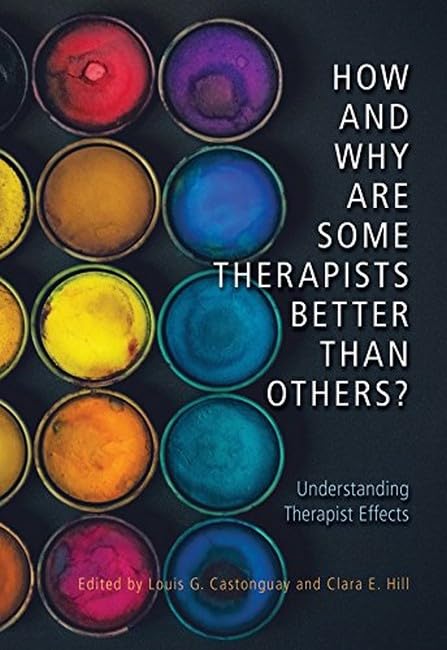
Some therapists are more effective than others, that much is clear; why they are more effective is less clear. This book identifies which characteristics make therapists more or less effective in their work and proposes guidelines to improve their effectiveness.Editors Louis Castonguay and Clara Hill have gathered a panel of expert researchers and practitioners from diverse theoretical backgrounds to answer this complicated question. Synthesizing the rich literature on therapist effects in this comprehensive volume, they explore how various effects can help or hinder clients in therapy. They then propose practical strategies that mental health practitioners can use to improve their own effectiveness.Castonguay, Hill, and their contributors first lay the empirical foundations for understanding therapist effects and why they are important. They also acknowledge the massive variability that exists among therapists and the complexities of studying therapist effects. Drawing from this fundamental knowledge, they then carefully examine specific therapist characteristics, attitudes, and skills that are relevant in any therapeutic setting. Topics include therapists responsiveness, presence, attachment, and technical interventions; cultural factors; negative emotions; humor; and creativity. Exciting new studies about therapist effects in the treatment of specific disorders, including depression and generalized anxiety, are also presented. The closing chapters translate the books general themes and takeaways into broader applications for research, intervention, training, and policy, including the role of routine outcome monitoring.
⚠️ WARNING (California Proposition 65):
This product may contain chemicals known to the State of California to cause cancer, birth defects, or other reproductive harm.
For more information, please visit www.P65Warnings.ca.gov.