
Title
How Charts Lie: Getting Smarter about Visual Information,Used
Sold by Ergodebooks, an authorized reseller.
Returns accepted within 30 days | support@ergodebooks.com
Shipping Information
- Free Standard Shipping — United States only
- Processing Time: 3–5 business days
- Estimated Delivery: 6–10 business days after dispatch
- Double-boxed, fully insured & discreetly packaged
- Tracking number sent via email once dispatched
Returns & Refund
Returns accepted within 30 days of delivery.
Damaged or Defective Item
Free return shipping + replacement or full refund
Wrong Item Received
Free return shipping + replacement or full refund
Change of Mind
Return shipping at customer's expense · 25% restocking fee applies
Payment Option

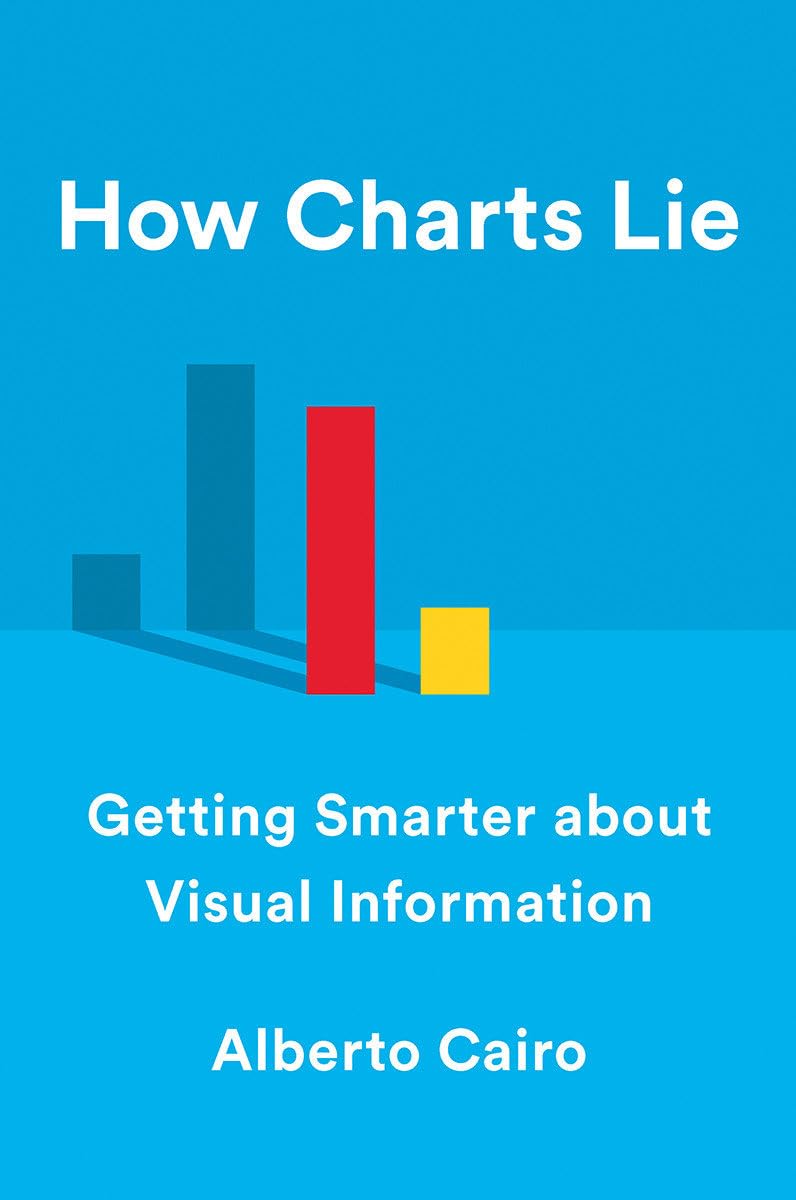
A leading data visualization expert explores the negativeand positiveinfluences that charts have on our perception of truth.Weve all heard that a picture is worth a thousand words, but what if we dont understand what were looking at? Social media has made charts, infographics, and diagrams ubiquitousand easier to share than ever. We associate charts with science and reason; the flashy visuals are both appealing and persuasive. Pie charts, maps, bar and line graphs, and scatter plots (to name a few) can better inform us, revealing patterns and trends hidden behind the numbers we encounter in our lives. In short, good charts make us smarterif we know how to read them.However, they can also lead us astray. Charts lie in a variety of waysdisplaying incomplete or inaccurate data, suggesting misleading patterns, and concealing uncertaintyor are frequently misunderstood, such as the confusing cone of uncertainty maps shown on TV every hurricane season. To make matters worse, many of us are illequipped to interpret the visuals that politicians, journalists, advertisers, and even our employers present each day, enabling bad actors to easily manipulate them to promote their own agendas.In How Charts Lie, data visualization expert Alberto Cairo teaches us to not only spot the lies in deceptive visuals, but also to take advantage of good ones to understand complex stories. Public conversations are increasingly propelled by numbers, and to make sense of them we must be able to decode and use visual information. By examining contemporary examples ranging from electionresult infographics to global GDP maps and boxoffice record charts, How Charts Lie demystifies an essential new literacy, one that will make us better equipped to navigate our datadriven world. 175 illustrations
⚠️ WARNING (California Proposition 65):
This product may contain chemicals known to the State of California to cause cancer, birth defects, or other reproductive harm.
For more information, please visit www.P65Warnings.ca.gov.