
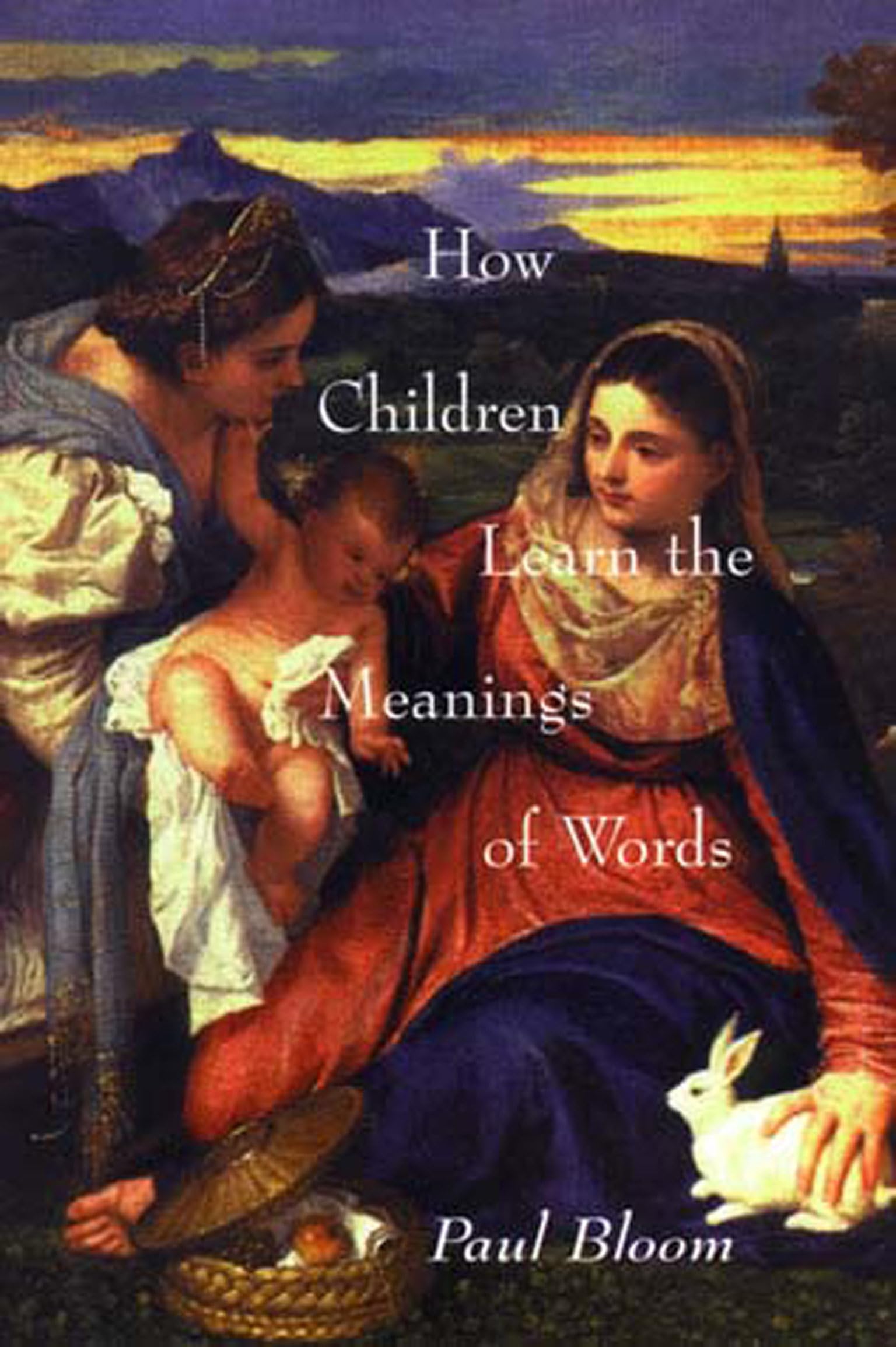
Title
How Children Learn The Meanings Of Words (Learning, Development, And Conceptual Change),New
Sold by Ergodebooks, an authorized reseller.
Returns accepted within 30 days | support@ergodebooks.com
Shipping Information
- Free Standard Shipping — United States only
- Processing Time: 3–5 business days
- Estimated Delivery: 6–10 business days after dispatch
- Double-boxed, fully insured & discreetly packaged
- Tracking number sent via email once dispatched
Returns & Refund
Returns accepted within 30 days of delivery.
Damaged or Defective Item
Free return shipping + replacement or full refund
Wrong Item Received
Free return shipping + replacement or full refund
Change of Mind
Return shipping at customer's expense · 25% restocking fee applies
Payment Option

How Do Children Learn That The Word 'Dog' Refers Not To All Fourlegged Animals, And Not Just To Ralph, But To All Members Of A Particular Species? How Do They Learn The Meanings Of Verbs Like 'Think,' Adjectives Like 'Good,' And Words For Abstract Entities Such As 'Mortgage' And 'Story'? The Acquisition Of Word Meaning Is One Of The Fundamental Issues In The Study Of Mind.According To Paul Bloom, Children Learn Words Through Sophisticated Cognitive Abilities That Exist For Other Purposes. These Include The Ability To Infer Others' Intentions, The Ability To Acquire Concepts, An Appreciation Of Syntactic Structure, And Certain General Learning And Memory Abilities. Although Other Researchers Have Associated Word Learning With Some Of These Capacities, Bloom Is The First To Show How A Complete Explanation Requires All Of Them. The Acquisition Of Even Simple Nouns Requires Rich Conceptual, Social, And Linguistic Capacities Interacting In Complex Ways.This Book Requires No Background In Psychology Or Linguistics And Is Written In A Clear, Engaging Style. Topics Include The Effects Of Language On Spatial Reasoning, The Origin Of Essentialist Beliefs, And The Young Child'S Understanding Of Representational Art. The Book Should Appeal To General Readers Interested In Language And Cognition As Well As To Researchers In The Field.
⚠️ WARNING (California Proposition 65):
This product may contain chemicals known to the State of California to cause cancer, birth defects, or other reproductive harm.
For more information, please visit www.P65Warnings.ca.gov.