
Title
How Constitutional Rights Matter,New
Sold by Ergodebooks, an authorized reseller.
Returns accepted within 30 days | support@ergodebooks.com
Shipping Information
- Free Standard Shipping — United States only
- Processing Time: 3–5 business days
- Estimated Delivery: 6–10 business days after dispatch
- Double-boxed, fully insured & discreetly packaged
- Tracking number sent via email once dispatched
Returns & Refund
Returns accepted within 30 days of delivery.
Damaged or Defective Item
Free return shipping + replacement or full refund
Wrong Item Received
Free return shipping + replacement or full refund
Change of Mind
Return shipping at customer's expense · 25% restocking fee applies
Payment Option

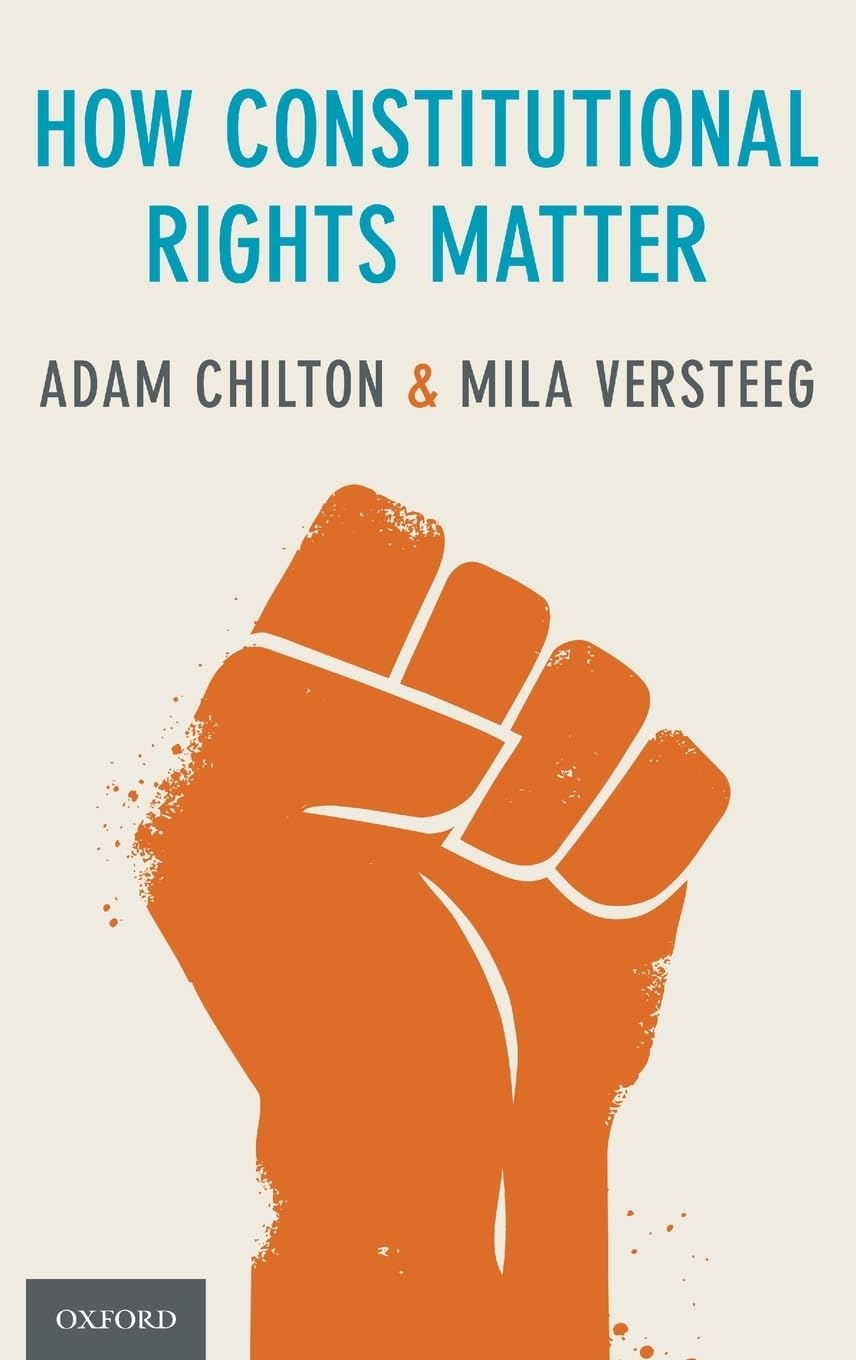
Does constitutionalizing rights improve respect for those rights in practice? Drawing on statistical analyses, survey experiments, and case studies from around the world, this book argues that enforcing constitutional rights is not easy, but that some rights are harder to repress than others.First, enshrining rights in constitutions does not automatically ensure that those rights will be respected. For rights to matter, rights violations need to be politically costly. But this is difficult to accomplish for unconnected groups of citizens.Second, some rights are easier to enforce than others, especially those with natural constituencies that can mobilize for their enforcement. This is the case for rights that are practiced by and within organizations, such as the rights to religious freedom, to unionize, and to form political parties. Because religious groups, trade unions and parties are highly organized, they are wellequipped to use the constitution to resist rights violations. As a result, these rights are systematically associated with better practices. By contrast, rights that are practiced on an individual basis, such as free speech or the prohibition of torture, often lack natural constituencies to enforce them, which makes it easier for governments to violate these rights.Third, even highly organized groups armed with the constitution may not be able to stop governments dedicated to rightsrepression. When constitutional rights are enforced by dedicated organizations, they are thus best understood as speed bumps that slow down attempts at repression.An important contribution to comparative constitutional law, this book provides a comprehensive picture of the spread of constitutional rights, and their enforcement, around the world.
⚠️ WARNING (California Proposition 65):
This product may contain chemicals known to the State of California to cause cancer, birth defects, or other reproductive harm.
For more information, please visit www.P65Warnings.ca.gov.