
Title
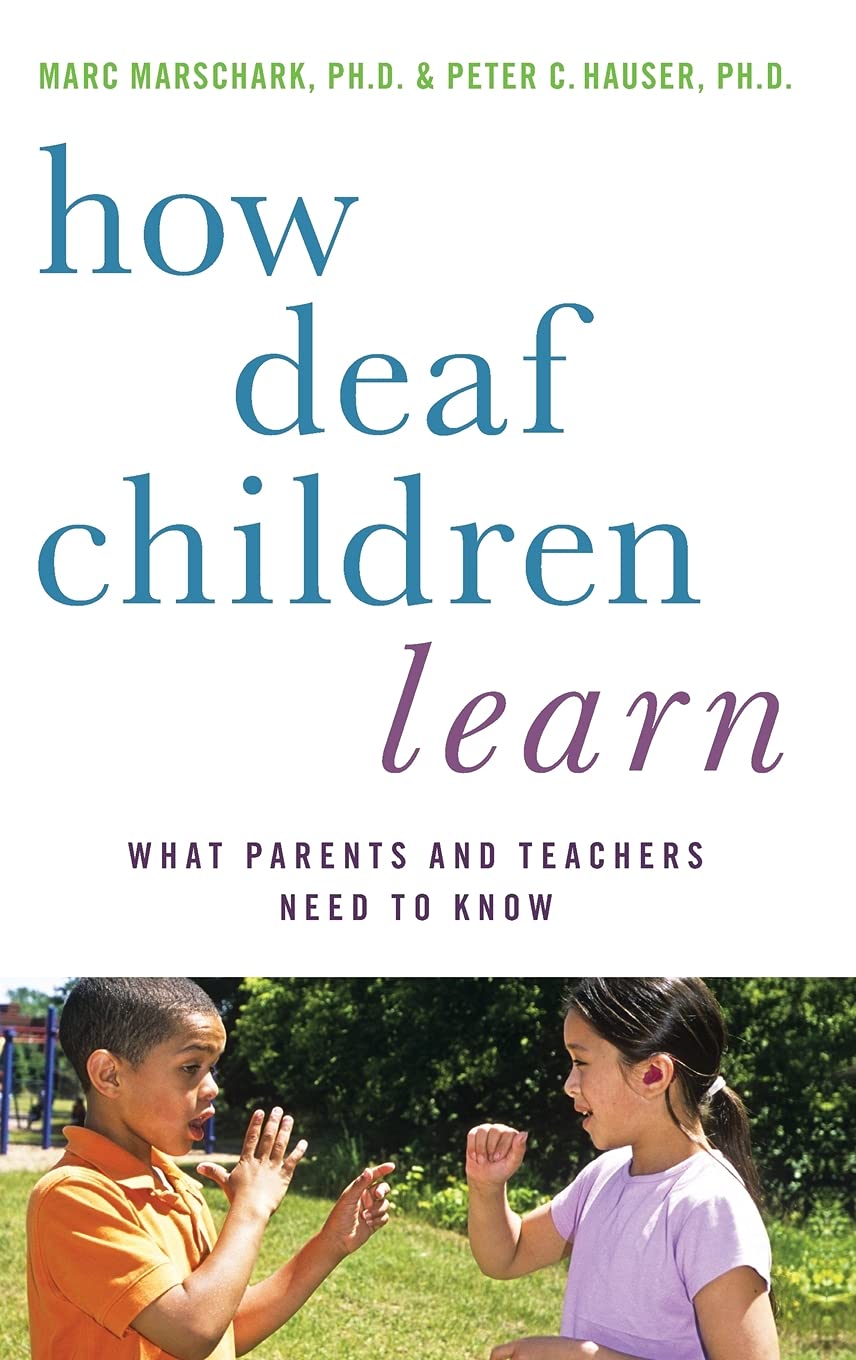
How Deaf Children Learn: What Parents and Teachers Need to Know (Perspectives on Deafness),New
Sold by Ergodebooks, an authorized reseller.
Returns accepted within 30 days | support@ergodebooks.com
Shipping Information
- Free Standard Shipping — United States only
- Processing Time: 3–5 business days
- Estimated Delivery: 6–10 business days after dispatch
- Double-boxed, fully insured & discreetly packaged
- Tracking number sent via email once dispatched
Returns & Refund
Returns accepted within 30 days of delivery.
Damaged or Defective Item
Free return shipping + replacement or full refund
Wrong Item Received
Free return shipping + replacement or full refund
Change of Mind
Return shipping at customer's expense · 25% restocking fee applies
Payment Option

How can parents and teachers most effectively support the language development and academic success of deaf and hardofhearing children? Will using sign language interfere with learning spoken language? Should deaf children be placed in classrooms with hearing children? Are traditional methods of teaching subjects such as reading and math to hearing children appropriate for deaf learners? As many parents and teachers will attest, questions like these have no easy answers, and it can be difficult for caring adults to separate science from politics and fact from opinion in order to make informed decisions about how to help deaf children learn.In this invaluable guide, renowned authorities Marc Marschark and Peter Hauser highlight important new advances in scientific and educational research that can help parents and teachers of students with significant hearing loss. The authors stress that deaf children have strengths and needs that are sometimes very different from those who can hear. Consequently, if deaf students are to have full academic access and optimal educational outcomes, it is essential that parents and teachers learn to recognize these differences and adjust their teaching methods to them. Marschark and Hauser explain how the fruits of research conducted over the last several years can markedly improve educational practices at home and in the classroom, and they offer innovative strategies that parents and teachers can use to promote learning in their children. The result is a lively, accessible volume that sheds light on what it means to be a deaf learner and that provides a wealth of advice on how we can best support their language development, social skills, and academic success.
⚠️ WARNING (California Proposition 65):
This product may contain chemicals known to the State of California to cause cancer, birth defects, or other reproductive harm.
For more information, please visit www.P65Warnings.ca.gov.