
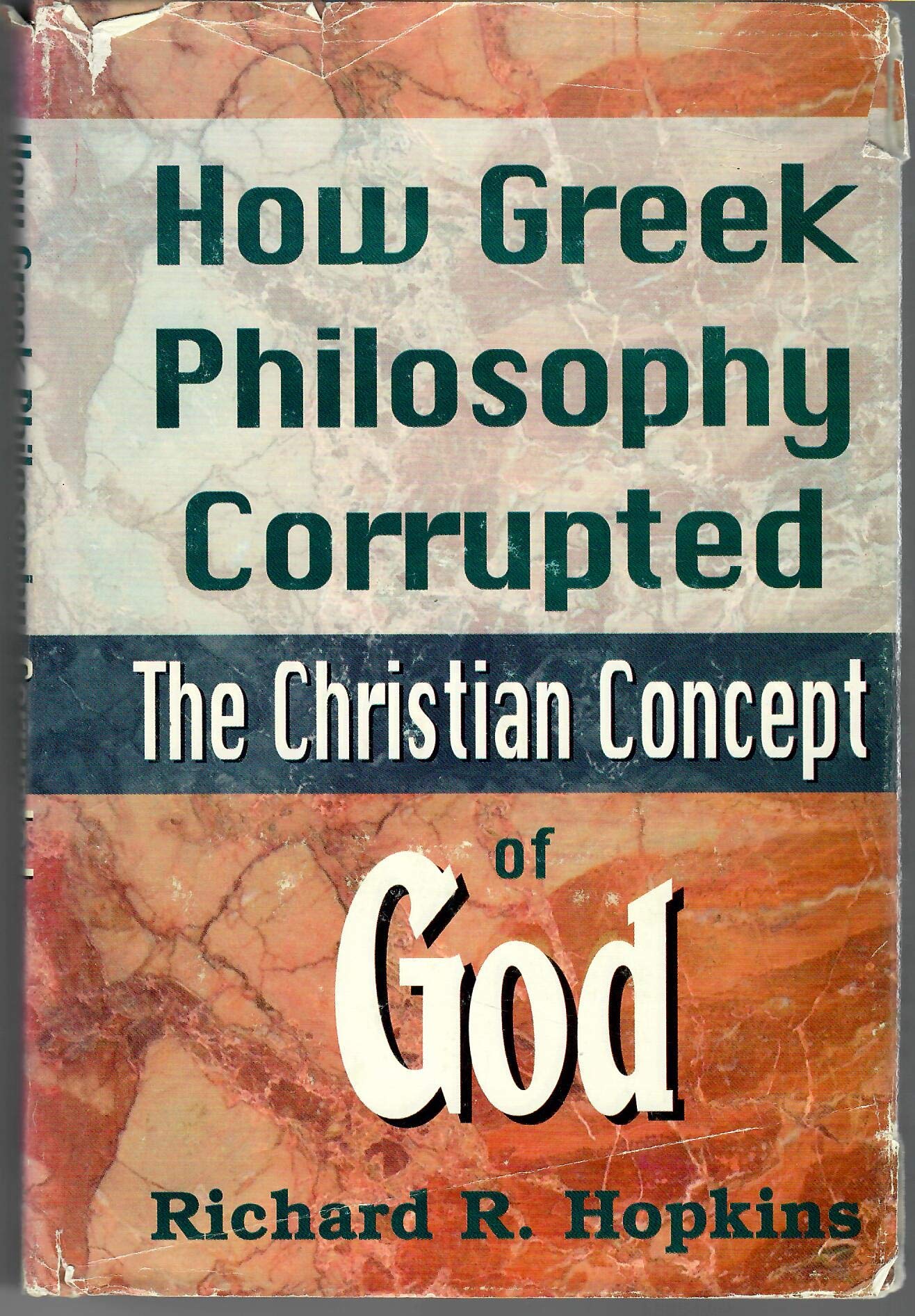
Title

How Greek Philosophy Corrupted The Christian Concept Of God,Used
Sold by Ergodebooks, an authorized reseller.
Returns accepted within 30 days | support@ergodebooks.com
Shipping Information
- Free Standard Shipping — United States only
- Processing Time: 3–5 business days
- Estimated Delivery: 6–10 business days after dispatch
- Double-boxed, fully insured & discreetly packaged
- Tracking number sent via email once dispatched
Returns & Refund
Returns accepted within 30 days of delivery.
Damaged or Defective Item
Free return shipping + replacement or full refund
Wrong Item Received
Free return shipping + replacement or full refund
Change of Mind
Return shipping at customer's expense · 25% restocking fee applies
Payment Option

How Greek Philosophy Corrupted the Christian Concept of God brings profound new insights to the Trinitarian doctrines of 'orthodox' Christianity. With clear and precise documentation, the book shows how these doctrines migrated into early Christianity from Greek philosophy. The various aspects of Trinitarian belief are isolated, linked to their Greek sources, and carefully analyzed to show they differ radically from biblical teaching. The writings of early church fathers, portrayed in their historical context, show that during the second century, theological concepts taught in Platonism were adopted as Christianity struggled to end Roman persecution. Emperor Marcus Aurelius, a famous Stoic philosopher, was putting Christians to death because their belief did not conform to the Hellenized religion of the day. The book shows that the early Church Fathers sought to save their people's lives by redefining the Christian God in Greek terms. Their efforts brought metaphysics to Christianity and ushered in concepts like the Trinity. After presenting the historical setting in which these philosophical errors were embraced as Christian doctrine, the book compares orthodox Christian theology today, called 'classical theism,' to biblical teachings. The book identifies how Greek phillosophy has influenced major atributes of God taught in classical theism. The book constitutes a major challenge to those who accept the tenants of classical theism but do not know the many aspects of their doctrine that are based on Greek philosophy.
⚠️ WARNING (California Proposition 65):
This product may contain chemicals known to the State of California to cause cancer, birth defects, or other reproductive harm.
For more information, please visit www.P65Warnings.ca.gov.
- Q: What is the page count of the book? A: The book contains four hundred sixty-four pages. This extensive length allows for a detailed exploration of Greek philosophy's influence on Christian doctrines.
- Q: What type of binding does this book have? A: This book is bound in hardcover. The hardcover binding ensures durability, making it suitable for repeated reading and reference.
- Q: Who is the author of the book? A: The author of the book is Richard R. Hopkins. His insights focus on the intersection of Greek philosophy and Christian theology.
- Q: What category does this book fall under? A: This book is categorized under Mormonism. It specifically addresses theological concepts relevant to this religious tradition.
- Q: Is this book suitable for beginners in philosophy? A: Yes, the book is suitable for beginners. It presents complex ideas in a clear and accessible manner, making it easier to grasp.
- Q: What themes are explored in the book? A: The book explores themes of Trinitarian belief and its origins in Greek philosophy. It critically analyzes how these ideas differ from biblical teachings.
- Q: How should I store this book to keep it in good condition? A: Store the book in a cool, dry place away from direct sunlight. This will help preserve its binding and pages over time.
- Q: Can I lend this book to others? A: Yes, you can lend this book to others. However, ensure it is returned in good condition to maintain its value.
- Q: What if the book arrives damaged? A: If the book arrives damaged, you should contact the seller for a return or replacement. Most sellers have policies for damaged items.
- Q: Does this book include references to early church fathers? A: Yes, the book includes references to early church fathers. It analyzes their writings in the context of Greek philosophical influences.
- Q: Is the book a used copy? A: Yes, the book is listed as a used copy in good condition. This means it may show some signs of wear but remains fully functional.
- Q: What type of insights does the book offer? A: The book offers profound insights into the historical and theological implications of Greek philosophy on Christian doctrine.
- Q: Is this book appropriate for academic study? A: Yes, this book is appropriate for academic study. It provides documentation and analysis that can support scholarly research.
- Q: What is the target audience for this book? A: The target audience includes individuals interested in theology, philosophy, and the historical context of Christian beliefs.
- Q: How does the book compare classical theism to biblical teachings? A: The book compares classical theism to biblical teachings by identifying discrepancies influenced by Greek philosophy.
- Q: Are there any illustrations in the book? A: No, the book does not include illustrations. It focuses on textual analysis and philosophical arguments.