
Title
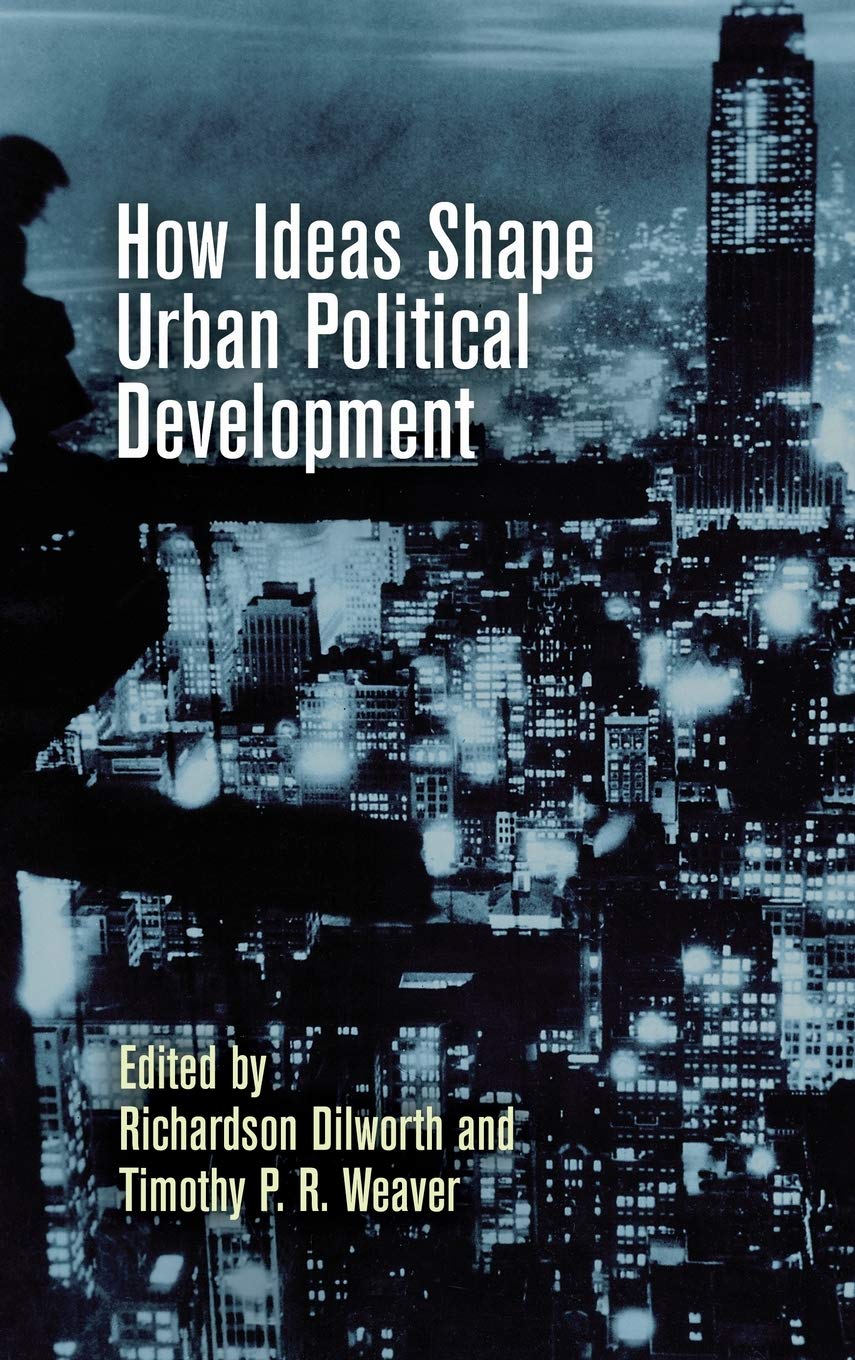
How Ideas Shape Urban Political Development (The City In The Twentyfirst Century),Used
Sold by Ergodebooks, an authorized reseller.
Returns accepted within 30 days | support@ergodebooks.com
Shipping Information
- Free Standard Shipping — United States only
- Processing Time: 3–5 business days
- Estimated Delivery: 6–10 business days after dispatch
- Double-boxed, fully insured & discreetly packaged
- Tracking number sent via email once dispatched
Returns & Refund
Returns accepted within 30 days of delivery.
Damaged or Defective Item
Free return shipping + replacement or full refund
Wrong Item Received
Free return shipping + replacement or full refund
Change of Mind
Return shipping at customer's expense · 25% restocking fee applies
Payment Option

A collection of international case studies that demonstrate the importance of ideas to urban political developmentIdeas, interests, and institutions are the 'holy trinity' of the study of politics. Of the three, ideas are arguably the hardest with which to grapple and, despite a generally broad agreement concerning their fundamental importance, the most often neglected. Nowhere is this more evident than in the study of urban politics and urban political development.The essays in How Ideas Shape Urban Political Development argue that ideas have been the real drivers behind urban political development and offer as evidence national and international examplessome unique to specific cities, regions, and countries, and some of global impact. Within the United States, contributors examine the idea of 'blight' and how it became a powerful metaphor in city planning; the identification of raciallydefined spaces, especially black cities and city neighborhoods, as specific targets of neoliberal disciplinary practices; the paradox of members of Congress who were active supporters of civil rights legislation in the 1950s and 1960s but enjoyed the support of bigcity political machines that were hardly liberal when it came to questions of race in their home districts; and the intersection of national education policy, local school politics, and the politics of immigration. Essays compare the ways in which national urban policies have taken different shapes in countries similar to the United States, namely, Canada and the United Kingdom. The volume also presents case studies of citybased political development in Chile, China, India, and Africaareas of the world that have experienced a more recent form of urbanization that feature deep and intimate ties and similarities to urban political development in the Global North, but which have occurred on a broader scale.Contributors: Daniel Bland, Debjani Bhattacharyya, Robert Henry Cox, Richardson Dilworth, Jason Hackworth, Marcus Anthony Hunter, William Hurst, Sally Ford Lawton, Thomas Ogorzalek, Eleonora Pasotti, Joel Rast, Douglas S. Reed, Mara Sidney, Lester K. Spence, Vanessa Watson, Timothy P. R. Weaver, Amy Widestrom.
⚠️ WARNING (California Proposition 65):
This product may contain chemicals known to the State of California to cause cancer, birth defects, or other reproductive harm.
For more information, please visit www.P65Warnings.ca.gov.