If you have any questions, you are always welcome to contact us. We'll get back to you as soon as possible, withing 24 hours on weekdays.
Customer service
All questions about your order, return and delivery must be sent to our customer service team by e-mail at yourstore@yourdomain.com
Sale & Press
If you are interested in selling our products, need more information about our brand or wish to make a collaboration, please contact us at press@yourdomain.com
Help
If you have any questions, you are always welcome to contact us. We'll get back to you as soon as possible, withing 24 hours on weekdays.
Customer service
All questions about your order, return and delivery must be sent to our customer service team by e-mail at yourstore@yourdomain.com
Sale & Press
If you are interested in selling our products, need more information about our brand or wish to make a collaboration, please contact us at press@yourdomain.com
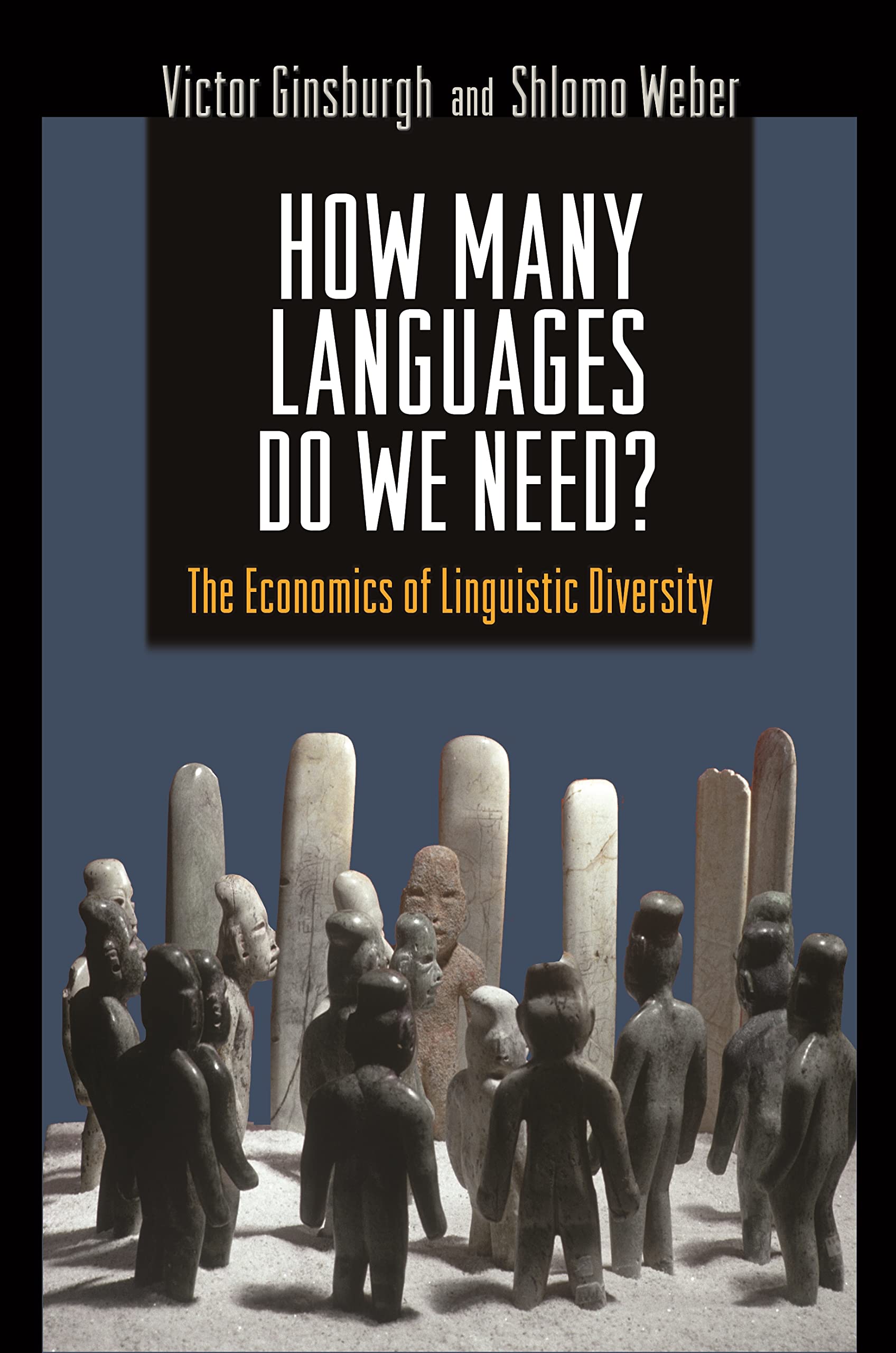
In the global economy, linguistic diversity influences economic and political development as well as public policies in positive and negative ways. It leads to financial costs, communication barriers, divisions in national unity, and, in some extreme cases, conflicts and warbut it also produces benefits related to group and individual identity. What are the specific advantages and disadvantages of linguistic diversity and how does it influence social and economic progress? This book examines linguistic diversity as a global social phenomenon and considers what degree of linguistic variety might result in the greatest economic good.Victor Ginsburgh and Shlomo Weber look at linguistic proximity between groups and between languages. They describe and use simple economic, linguistic, and statistical tools to measure diversity's impact on growth, development, trade, the quality of institutions, translation issues, voting patterns in multinational competitions, and the likelihood and intensity of civil conflicts. They address the choosing of core languages in a multilingual community, such as the European Union, and argue that although too many official languages might harm cohesiveness, efficiency, and communication, reducing their number brings about alienation and disenfranchisement of groups.Demonstrating that the value and drawbacks of linguistic diversity are universal, How Many Languages Do We Need? suggests ways for designing appropriate linguistic policies for today's multilingual world.
⚠️ WARNING (California Proposition 65):
This product may contain chemicals known to the State of California to cause cancer,
birth defects, or other reproductive harm.
For MAP (Minimum Advertised Price) violations and Intellectual Property (IP) or Trademark concerns, please contact:
support@ergodebooks.com
⚠️ California Proposition 65 Warning: Some products sold on this website may expose you to chemicals known to the State of California to cause cancer, birth defects, or other reproductive harm. For more information, visit www.P65Warnings.ca.gov.