
Title
How Multinational Companies Influence Multilateral Negotiations: The TRIPs and the Cartagena Protocol Cases,Used
Sold by Ergodebooks, an authorized reseller.
Returns accepted within 30 days | support@ergodebooks.com
Shipping Information
- Free Standard Shipping — United States only
- Processing Time: 3–5 business days
- Estimated Delivery: 6–10 business days after dispatch
- Double-boxed, fully insured & discreetly packaged
- Tracking number sent via email once dispatched
Returns & Refund
Returns accepted within 30 days of delivery.
Damaged or Defective Item
Free return shipping + replacement or full refund
Wrong Item Received
Free return shipping + replacement or full refund
Change of Mind
Return shipping at customer's expense · 25% restocking fee applies
Payment Option

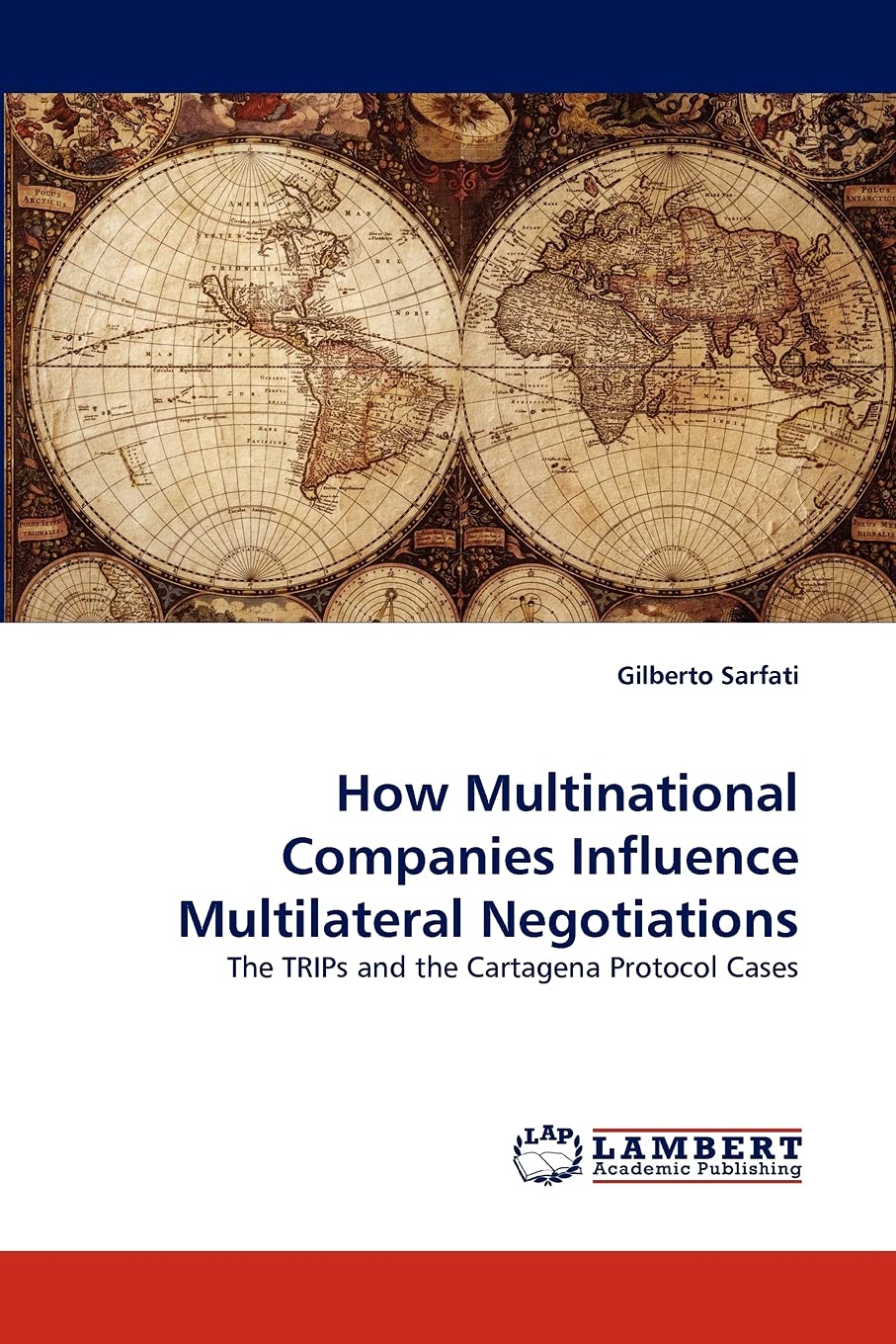
The main objective of this work is to identify how multinational companies (MNCs) act as negotiators in the context of international governance. The main hypothesis is that MNCs try to influence the states and their coalitions, nationally and transnationally, by exercising their structural power as well as their soft power. The defense of their corporate interests depends on the confluence of their interests with those of the states as well as the states' vulnerabilities to the corporations' activities. In the first part of the book, I present the theoretical framework related to the Complex Interdependence Theory and the threelevel chessboard of Nye. I recognize the limitations of the MNCs' influence power through an extension of the FriedenRogowsky model. The second part of the work shows the role of MNCs in two case studies: the negotiations that led to the creation of an international regime of intellectual property in the Uruguay Round of GATT (General Agreement on Tariffs and Trade) and the negotiations of the Cartagena Protocol of Biosafety, a complementary instrument of the Biodiversity Convention (CBD), which regulates genetically modified organisms (GMOs).
⚠️ WARNING (California Proposition 65):
This product may contain chemicals known to the State of California to cause cancer, birth defects, or other reproductive harm.
For more information, please visit www.P65Warnings.ca.gov.