If you have any questions, you are always welcome to contact us. We'll get back to you as soon as possible, withing 24 hours on weekdays.
Customer service
All questions about your order, return and delivery must be sent to our customer service team by e-mail at yourstore@yourdomain.com
Sale & Press
If you are interested in selling our products, need more information about our brand or wish to make a collaboration, please contact us at press@yourdomain.com
Help
If you have any questions, you are always welcome to contact us. We'll get back to you as soon as possible, withing 24 hours on weekdays.
Customer service
All questions about your order, return and delivery must be sent to our customer service team by e-mail at yourstore@yourdomain.com
Sale & Press
If you are interested in selling our products, need more information about our brand or wish to make a collaboration, please contact us at press@yourdomain.com
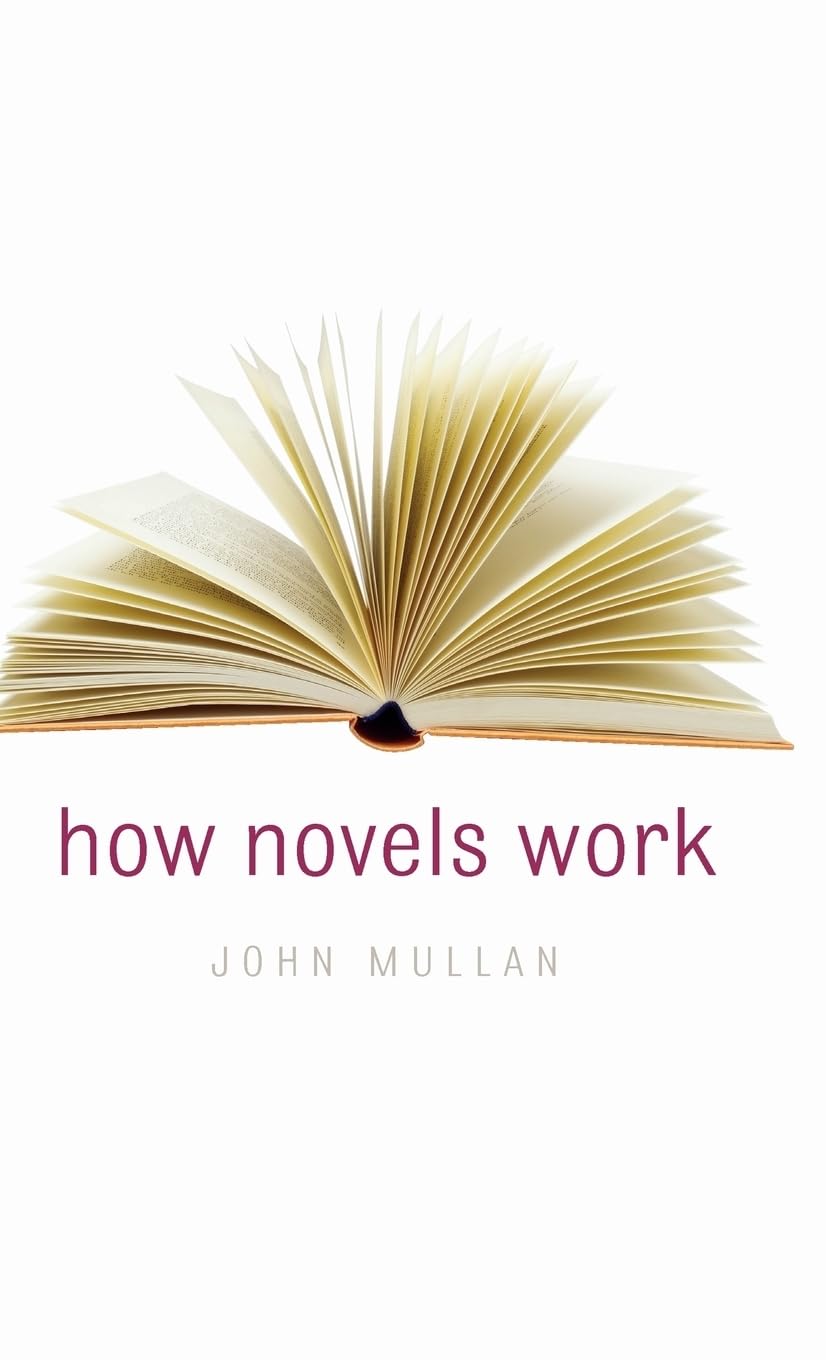
Drawing on his weekly Guardian column, "Elements of Fiction," John Mullan offers an engaging look at the novel, focusing mostly on works of the last ten years as he illuminates the rich resources of novelistic technique.Mullan sheds light on some of the true masterworks of contemporary fiction, including Monica Ali's Brick Lane, J.M. Coetzee's Disgrace, Don DeLillo's Underworld, Jonathan Franzen's The Corrections, Mark Haddon's The Curious Incident of the Dog in the NightTime, Patricia Highsmith's Ripley under Ground, Ian McEwan's Atonement, John le Carr's The Constant Gardener, Philip Roth's The Human Stain, Jonathan Safran Foer's Everything Is Illuminated, and Zadie Smith's White Teeth. He highlights how these acclaimed authors use some of the basic elements of fiction. Some topics (like plot, dialogue, or location) will appear familiar to most novel readers, while others (metanarrative, prolepsis, amplification) will open readers' eyes to new ways of understanding and appreciating the writer's craft. Mullan also excels at comparing modern and classic authorsNick Hornby's adoption of a female narrator is compared to Daniel Defoe's; Ian McEwan's use of weather is set against Austen's and Hardy's.How Novels Work explains how the pleasures of novel reading often come from the formal ingenuity of the novelist, making visible techniques and effects we are often only halfaware of as we read. It is an entertaining and stimulating volume that will captivate anyone who is interested in the contemporary or the classical novel.
⚠️ WARNING (California Proposition 65):
This product may contain chemicals known to the State of California to cause cancer,
birth defects, or other reproductive harm.
For MAP (Minimum Advertised Price) violations and Intellectual Property (IP) or Trademark concerns, please contact:
support@ergodebooks.com
⚠️ California Proposition 65 Warning: Some products sold on this website may expose you to chemicals known to the State of California to cause cancer, birth defects, or other reproductive harm. For more information, visit www.P65Warnings.ca.gov.