
Title
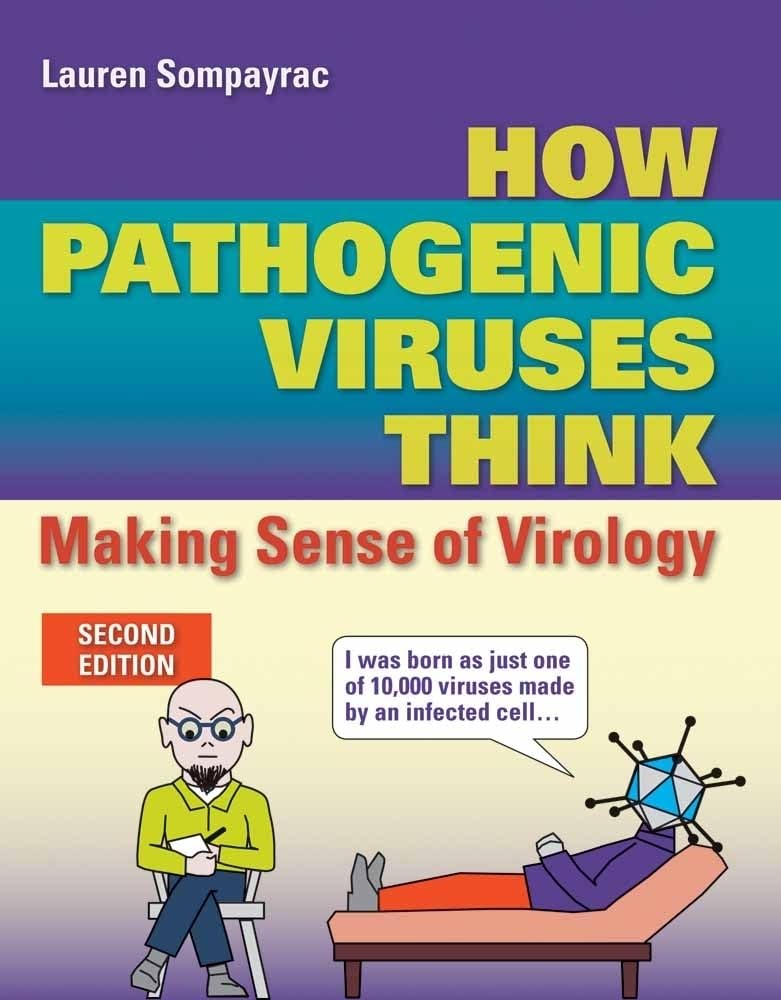
How Pathogenic Viruses Think: Making Sense of Virology: Making Sense of Virology,Used
Sold by Ergodebooks, an authorized reseller.
Returns accepted within 30 days | support@ergodebooks.com
Shipping Information
- Free Standard Shipping — United States only
- Processing Time: 3–5 business days
- Estimated Delivery: 6–10 business days after dispatch
- Double-boxed, fully insured & discreetly packaged
- Tracking number sent via email once dispatched
Returns & Refund
Returns accepted within 30 days of delivery.
Damaged or Defective Item
Free return shipping + replacement or full refund
Wrong Item Received
Free return shipping + replacement or full refund
Change of Mind
Return shipping at customer's expense · 25% restocking fee applies
Payment Option

Over the past decade, the amount of data on viruses has grown dramatically. How can a virology student possibly make sense of all this information? In How Pathogenic Viruses Think, Second Edition, Dr. Sompayrac introduces an organizing principle a paradigm to use to cut through all the details and focus on whats important. He demonstrates the use of this paradigm by interviewing twelve medically important viruses. During these interviews, each virus is encouraged to disclose not only what it does, but why it does it. And when a talking virus reveals its secrets, they are hard to forget! How Pathogenic Viruses Think covers the essential elements of virushost interactions with descriptive graphics, helpful mnemonic tactics for retaining the information, and brief reviews of important concepts. It is an ideal book to help medical, science, and nursing students make sense of this complex subject. Example: Interviewer: I always ask the viruses I interview, How do you attack your hosts, and why have you chosen that route? Flu Virus: I favor the respiratory route. Interviewer: Okay, but why? For example, why not enter via the digestive tract? Flu Virus: Are you kidding me? Do I look like a dumb virus to you? My Uncle Harold tried the digestive tract once, and got as far as the stomach before the acid in there ate him alive! Not me. I take the easy way in. The respiratory route of infection provides direct access to my favorite target cells the epithelial cells which line the human airway.
⚠️ WARNING (California Proposition 65):
This product may contain chemicals known to the State of California to cause cancer, birth defects, or other reproductive harm.
For more information, please visit www.P65Warnings.ca.gov.
- Q: What is the main focus of 'How Pathogenic Viruses Think'? A: The book focuses on helping virology students understand complex information about viruses by introducing an organizing principle that simplifies the study of virus-host interactions.
- Q: Who is the author of this book? A: The author of 'How Pathogenic Viruses Think' is Lauren Sompayrac.
- Q: What is the publication date of the second edition? A: The second edition was published on June 8, 2012.
- Q: How many pages does this book have? A: The book contains 170 pages.
- Q: What type of binding does this book have? A: The book is available in paperback binding.
- Q: Is this book suitable for medical students? A: Yes, this book is ideal for medical, science, and nursing students looking to understand virology.
- Q: What unique approach does the author use to explain viruses? A: The author employs a conversational format by 'interviewing' viruses, allowing them to share insights about their behavior and interactions with hosts.
- Q: Does the book include visuals or graphics? A: Yes, the book features descriptive graphics that aid in understanding virus-host interactions.
- Q: What are some key concepts covered in the book? A: Key concepts include virus-host interactions, mnemonic tactics for retention, and important virology concepts.
- Q: Is the book intended for beginners in virology? A: While it is comprehensive, it is designed to assist students at various levels, making it accessible for beginners as well as more advanced learners.