
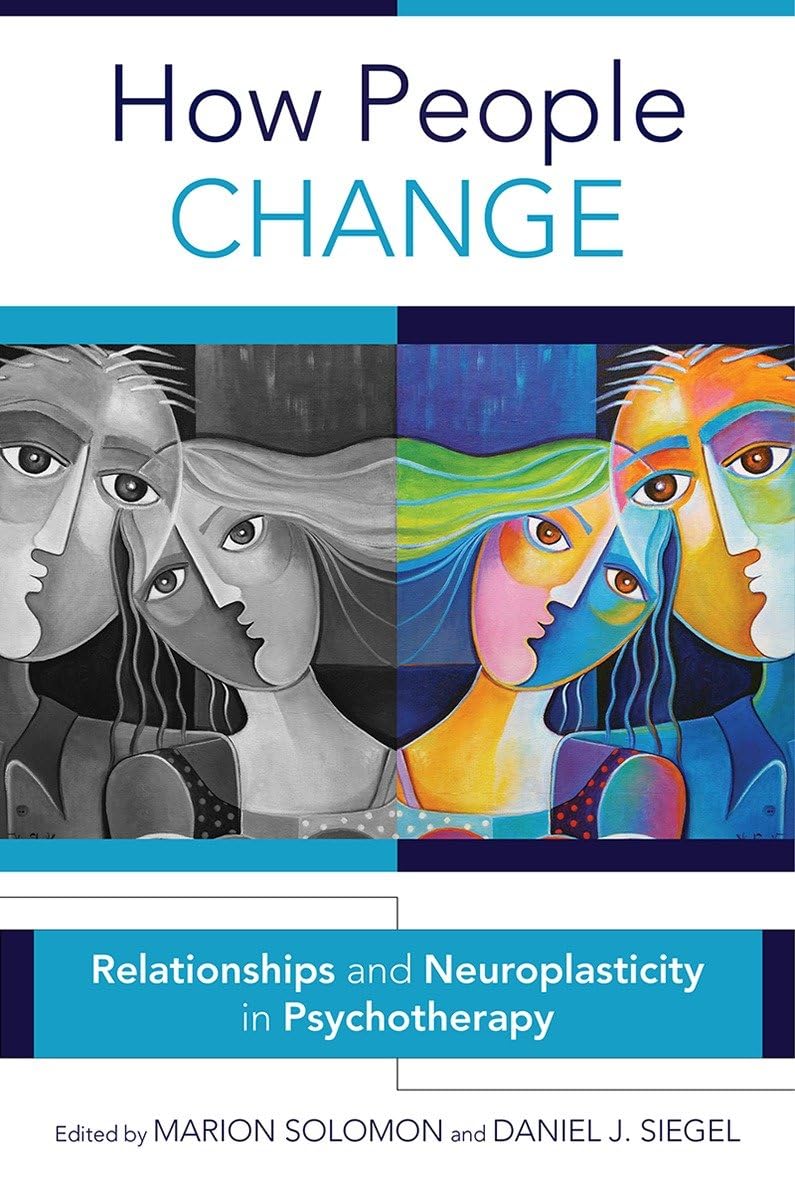
Title
How People Change: Relationships and Neuroplasticity in Psychotherapy (Norton Series on Interpersonal Neurobiology),Used
Sold by Ergodebooks, an authorized reseller.
Returns accepted within 30 days | support@ergodebooks.com
Shipping Information
- Free Standard Shipping — United States only
- Processing Time: 3–5 business days
- Estimated Delivery: 6–10 business days after dispatch
- Double-boxed, fully insured & discreetly packaged
- Tracking number sent via email once dispatched
Returns & Refund
Returns accepted within 30 days of delivery.
Damaged or Defective Item
Free return shipping + replacement or full refund
Wrong Item Received
Free return shipping + replacement or full refund
Change of Mind
Return shipping at customer's expense · 25% restocking fee applies
Payment Option

Drawing on cuttingedge neuroscience to understand psychotherapeutic change.Growth and change are at the heart of all successful psychotherapy. Regardless of one's clinical orientation or style, psychotherapy is an emerging process that s created moment by moment, between client and therapist.How People Change explores the complexities of attachment, the brain, mind, and body as they aid change during psychotherapy. Research is presented about the properties of healing relationships and communication strategies that facilitate change in the social brain. Contributions by Philip M. Bromberg, Louis Cozolino and Vanessa Davis, Margaret Wilkinson, Pat Ogden, Peter A. Levine, Russell Meares, Dan Hughes, Martha Stark, Stan Tatkin, Marion Solomon, and Daniel J. Siegel and Bonnie Goldstein.
⚠️ WARNING (California Proposition 65):
This product may contain chemicals known to the State of California to cause cancer, birth defects, or other reproductive harm.
For more information, please visit www.P65Warnings.ca.gov.
- Q: What is the main focus of 'How People Change'? A: The book primarily focuses on the relationship between neuroplasticity and psychotherapy, exploring how these concepts facilitate personal growth and change during therapeutic processes.
- Q: Who is the author of this book? A: The author of 'How People Change' is Marion F. Solomon, Ph.D., who is known for her work in the field of psychotherapy and interpersonal neurobiology.
- Q: What is the publication date of this book? A: The book was published on May 9, 2017.
- Q: How many pages does 'How People Change' have? A: The book contains 320 pages.
- Q: What type of binding does this book have? A: This edition of the book is available in hardcover binding.
- Q: Is this book suitable for all types of psychotherapy approaches? A: Yes, 'How People Change' is designed to be relevant across various clinical orientations and styles of psychotherapy.
- Q: What are some key themes explored in the book? A: Key themes include the complexities of attachment, the role of healing relationships, and communication strategies that promote change in therapy.
- Q: Are there contributions from other authors in this book? A: Yes, the book includes contributions from several renowned authors in the field, including Philip M. Bromberg and Daniel J. Siegel.
- Q: What audience would benefit from reading this book? A: The book is beneficial for psychotherapists, psychology students, and anyone interested in understanding the neurobiological underpinnings of therapeutic change.
- Q: Does this book provide practical strategies for therapists? A: Yes, it offers insights and strategies that therapists can utilize to enhance their practice and foster effective client relationships.