
Title
How Scientists Explain Disease,Used
Sold by Ergodebooks, an authorized reseller.
Returns accepted within 30 days | support@ergodebooks.com
Shipping Information
- Free Standard Shipping — United States only
- Processing Time: 3–5 business days
- Estimated Delivery: 6–10 business days after dispatch
- Double-boxed, fully insured & discreetly packaged
- Tracking number sent via email once dispatched
Returns & Refund
Returns accepted within 30 days of delivery.
Damaged or Defective Item
Free return shipping + replacement or full refund
Wrong Item Received
Free return shipping + replacement or full refund
Change of Mind
Return shipping at customer's expense · 25% restocking fee applies
Payment Option

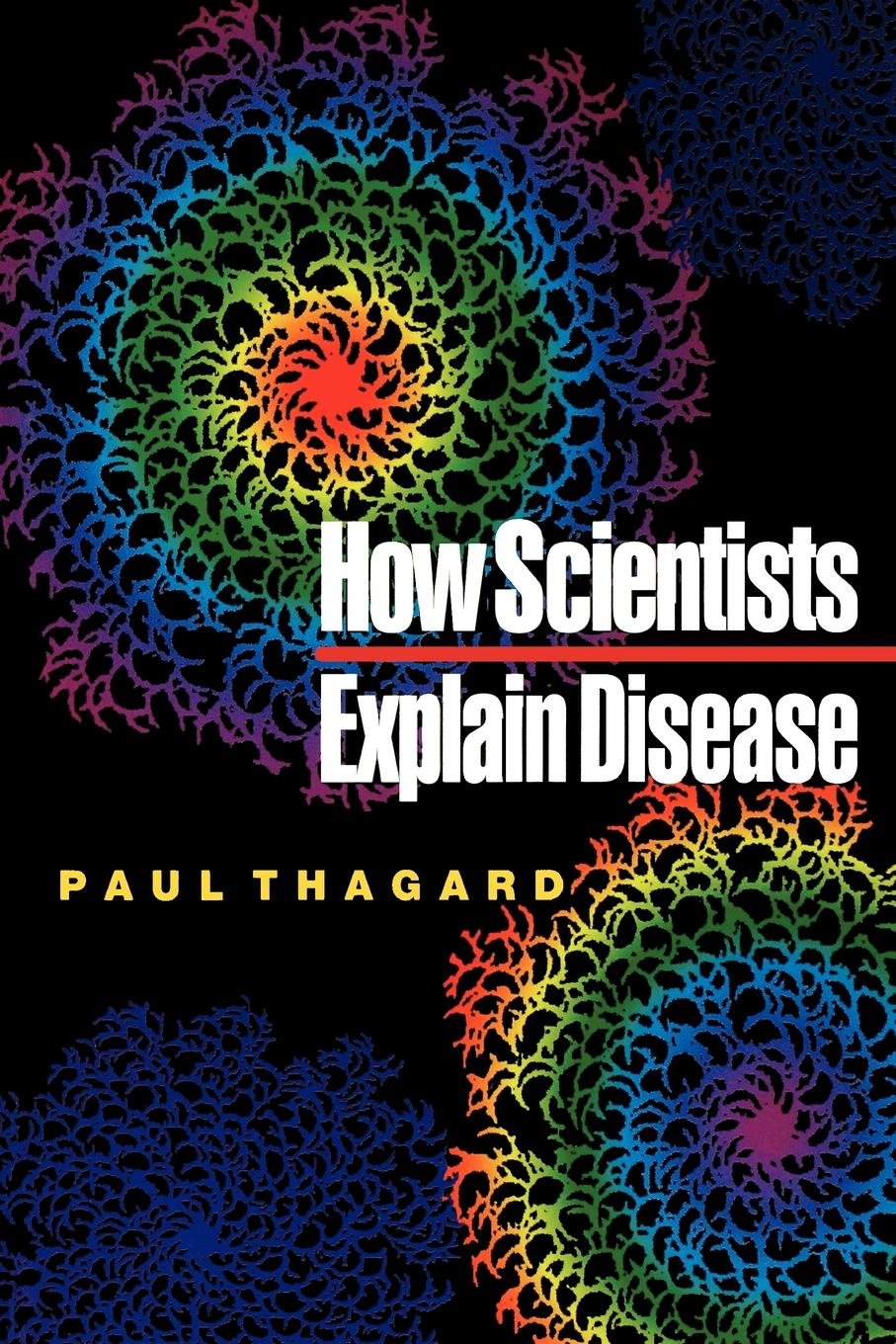
How do scientists develop new explanations of disease? How do those explanations become accepted as true? And how does medical diagnosis change when physicians are confronted with new scientific evidence? These are some of the questions that Paul Thagard pursues in this pathbreaking book that develops a new, integrative approach to the study of science.Ranging through the history of medicine, from the Hippocratic theory of humors to modern explanations of Mad Cow Disease and chronic fatigue syndrome, Thagard analyzes the development and acceptance of scientific ideas. At the heart of the book is a case study of the recent dramatic shift in medical understanding of peptic ulcers, most of which are now believed to be caused by infection by the bacterium Helicobacter pylori. When this explanation was first proposed in 1983, it was greeted with intense skepticism by most medical experts, but it became widely accepted over the next decade. Thagard discusses the psychological processes of discovery and acceptance, the physical processes involving instruments and experiments, and the social processes of collaboration, communication, and consensus that brought about this transformation in medical knowledge.How Scientists Explain Disease challenges both traditional philosophy of science, which has viewed science as largely a matter of logic, and contemporary science studies that view science as largely a matter of power. Drawing on theories of distributed computing and artificial intelligence, Paul Thagard develops new models that make sense of scientific change as a complex system of cognitive, social, and physical interactions.This is a book that will appeal to all readers with an interest in the development of science and medicine. It combines an engaging style, significant research, and a powerfully original argument.
⚠️ WARNING (California Proposition 65):
This product may contain chemicals known to the State of California to cause cancer, birth defects, or other reproductive harm.
For more information, please visit www.P65Warnings.ca.gov.