
Title
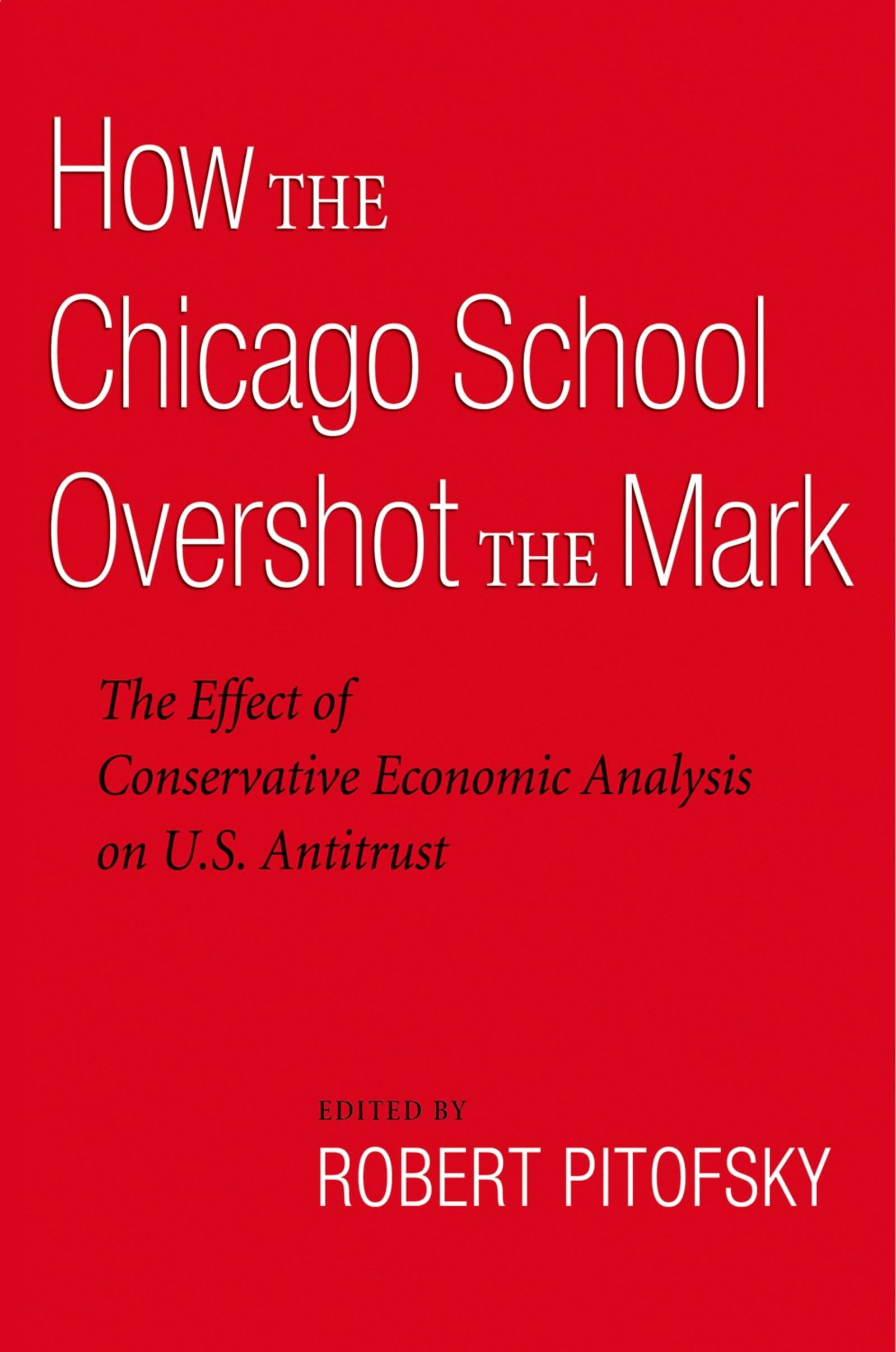
How the Chicago School Overshot the Mark: The Effect of Conservative Economic Analysis on U.S. Antitrust,Used
Sold by Ergodebooks, an authorized reseller.
Returns accepted within 30 days | support@ergodebooks.com
Shipping Information
- Free Standard Shipping — United States only
- Processing Time: 3–5 business days
- Estimated Delivery: 6–10 business days after dispatch
- Double-boxed, fully insured & discreetly packaged
- Tracking number sent via email once dispatched
Returns & Refund
Returns accepted within 30 days of delivery.
Damaged or Defective Item
Free return shipping + replacement or full refund
Wrong Item Received
Free return shipping + replacement or full refund
Change of Mind
Return shipping at customer's expense · 25% restocking fee applies
Payment Option

How the Chicago School Overshot the Mark is about the rise and recent fall of American antitrust. It is a collection of 15 essays, almost all expressing a deep concern that conservative economic analysis is leading judges and enforcement officials toward an approach that will ultimately harm consumer welfare.For the past 40 years or so, U.S. antitrust has been dominated intellectually by an unusually conservative style of economic analysis. Its advocates, often referred to as 'The Chicago School,' argue that the free market (better than any unelected band of regulators) can do a better job of achieving efficiency and encouraging innovation than intrusive regulation. The cutting edge of Chicago School doctrine originated in academia and was popularized in books by brilliant and innovative law professors like Robert Bork and Richard Posner. Oddly, a response to that kind of conservative doctrine may be put together through collections of scores of articles but until now cannot be found in any one book. This collection of essays is designed in part to remedy that situation.The chapters in this book were written by academics, former law enforcers, private sector defense lawyers, Republicans and Democrats, representatives of the left, right and center. Virtually all agree that antitrust enforcement today is better as a result of conservative analysis, but virtually all also agree that there have been examples of extreme interpretations and misinterpretations of conservative economic theory that have led American antitrust in the wrong direction. The problem is not with conservative economic analysis but with those portions of that analysis that have 'overshot the mark' producing an enforcement approach that is exceptionally generous to the private sector. If the scores of practices that traditionally have been regarded as anticompetitive are ignored, or not subjected to vigorous enforcement, prices will be higher, quality of products lower, and innovation diminished. In the end consumers will pay.
⚠️ WARNING (California Proposition 65):
This product may contain chemicals known to the State of California to cause cancer, birth defects, or other reproductive harm.
For more information, please visit www.P65Warnings.ca.gov.
- Q: What is the main topic of 'How the Chicago School Overshot the Mark'? A: The book explores the impact of conservative economic analysis on U.S. antitrust laws, detailing how this approach has evolved over the past 40 years and its implications for consumer welfare.
- Q: Who is the author of this book? A: The author of 'How the Chicago School Overshot the Mark' is Robert Pitofsky.
- Q: How many essays are included in this book? A: The book contains a collection of 15 essays contributed by various academics and professionals.
- Q: What is the publication date of this book? A: The book was published on October 14, 2008.
- Q: What is the binding type of this book? A: The book is available in paperback binding.
- Q: What is the total number of pages in 'How the Chicago School Overshot the Mark'? A: The book has a total of 328 pages.
- Q: What are the key themes discussed in the essays? A: The essays discuss the historical dominance of conservative economic analysis in antitrust, its benefits, and the potential misinterpretations that could harm enforcement and consumer welfare.
- Q: Is this book suitable for both legal professionals and general readers? A: Yes, the book is written for a diverse audience, including legal professionals, academics, and general readers interested in antitrust issues.
- Q: Does this book provide practical insights into antitrust enforcement? A: Yes, it offers insights into the implications of economic analysis on antitrust enforcement practices and the potential consequences for consumers.
- Q: What makes this book unique compared to other literature on antitrust? A: This collection uniquely addresses the critiques of conservative economic analysis in one volume, providing a comprehensive overview of differing perspectives in antitrust discussions.