
Title
How the Economy Works: Confidence, Crashes and SelfFulfilling Prophecies,Used
Sold by Ergodebooks, an authorized reseller.
Returns accepted within 30 days | support@ergodebooks.com
Shipping Information
- Free Standard Shipping — United States only
- Processing Time: 3–5 business days
- Estimated Delivery: 6–10 business days after dispatch
- Double-boxed, fully insured & discreetly packaged
- Tracking number sent via email once dispatched
Returns & Refund
Returns accepted within 30 days of delivery.
Damaged or Defective Item
Free return shipping + replacement or full refund
Wrong Item Received
Free return shipping + replacement or full refund
Change of Mind
Return shipping at customer's expense · 25% restocking fee applies
Payment Option

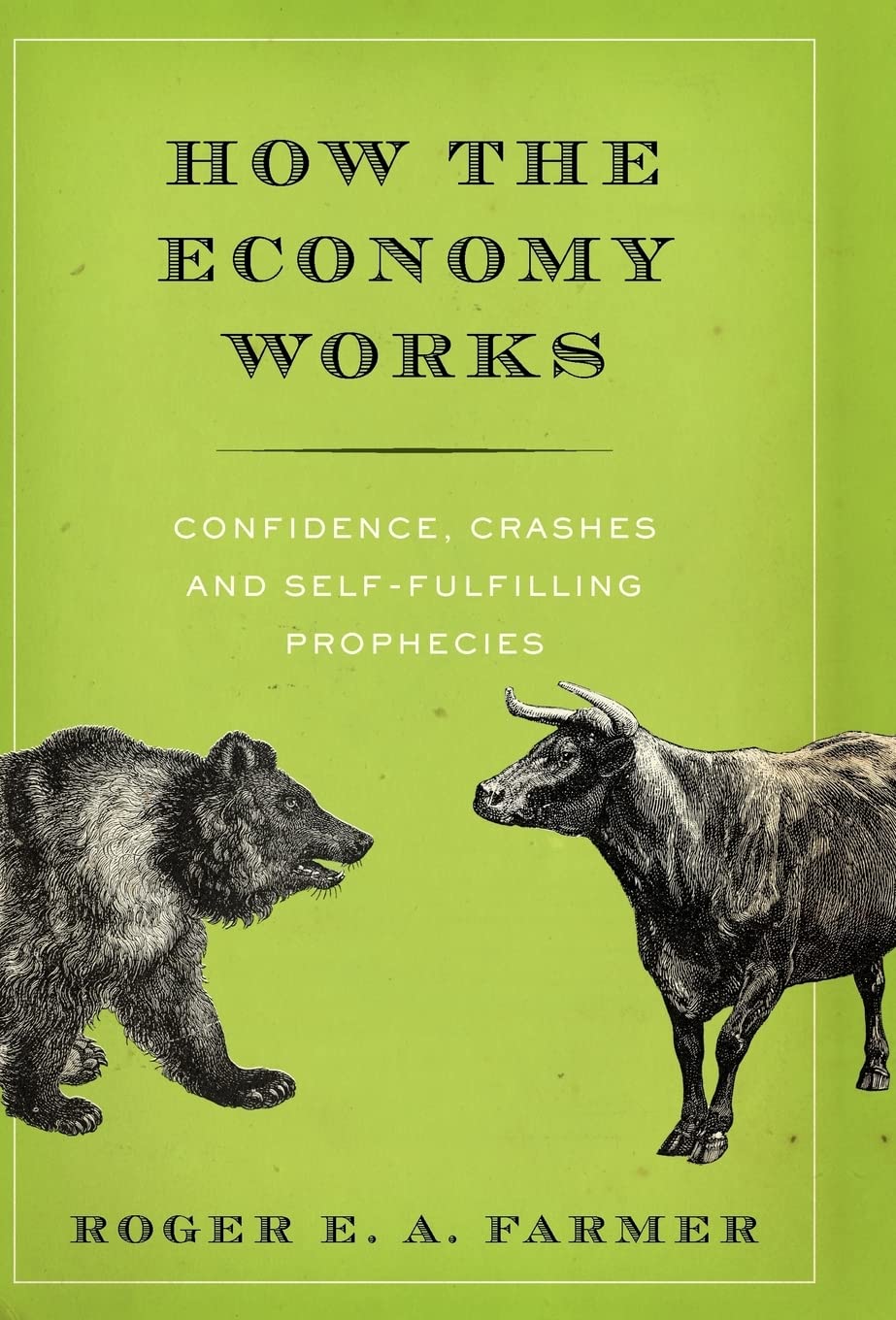
Of all the economic bubbles that have been pricked,' the editors of The Economist recently observed, 'few have burst more spectacularly than the reputation of economics itself.' Indeed, the financial crisis that crested in 2008 destroyed the credibility of the economic thinking that had guided policymakers for a generation. But what will take its place?In How the Economy Works, one of our leading economists provides a jargonfree exploration of the current crisis, offering a powerful argument for how economics must change to get us out of it. Roger E. A. Farmer traces the swings between classical and Keynesian economics since the early twentieth century, gracefully explaining the elements of both theories. During the Great Depression, Keynes challenged the longstanding idea that an economy was a selfcorrecting mechanism; but his school gave way to a resurgence of classical economics in the 1970sa rise that ended with the current crisis. Rather than simply allowing the pendulum to swing back, Farmer writes, we must synthesize the two. From classical economics, he takes the idea that a sound theory must explain how individuals behavehow our collective choices shape the economy. From Keynesian economics, he adopts the principle that markets do not always work well, that capitalism needs some guidance. The goal, he writes, is to correct the excesses of a freemarket economy without stifling entrepreneurship and instituting central planning.Recent events have shown that we cannot afford to treat economics as an ivorytower abstraction. It has a direct impact on our lives by guiding regulators and policymakers as they make decisions with farreaching practical consequences. Written in clear, accessible language, How the Economy Works makes an argument that no one should ignore.
⚠️ WARNING (California Proposition 65):
This product may contain chemicals known to the State of California to cause cancer, birth defects, or other reproductive harm.
For more information, please visit www.P65Warnings.ca.gov.