
Title
How The Other Half Eats: The Untold Story Of Food And Inequality In America
Sold by Ergodebooks, an authorized reseller.
Returns accepted within 30 days | support@ergodebooks.com
Shipping Information
- Free Standard Shipping — United States only
- Processing Time: 3–5 business days
- Estimated Delivery: 6–10 business days after dispatch
- Double-boxed, fully insured & discreetly packaged
- Tracking number sent via email once dispatched
Returns & Refund
Returns accepted within 30 days of delivery.
Damaged or Defective Item
Free return shipping + replacement or full refund
Wrong Item Received
Free return shipping + replacement or full refund
Change of Mind
Return shipping at customer's expense · 25% restocking fee applies
Payment Option

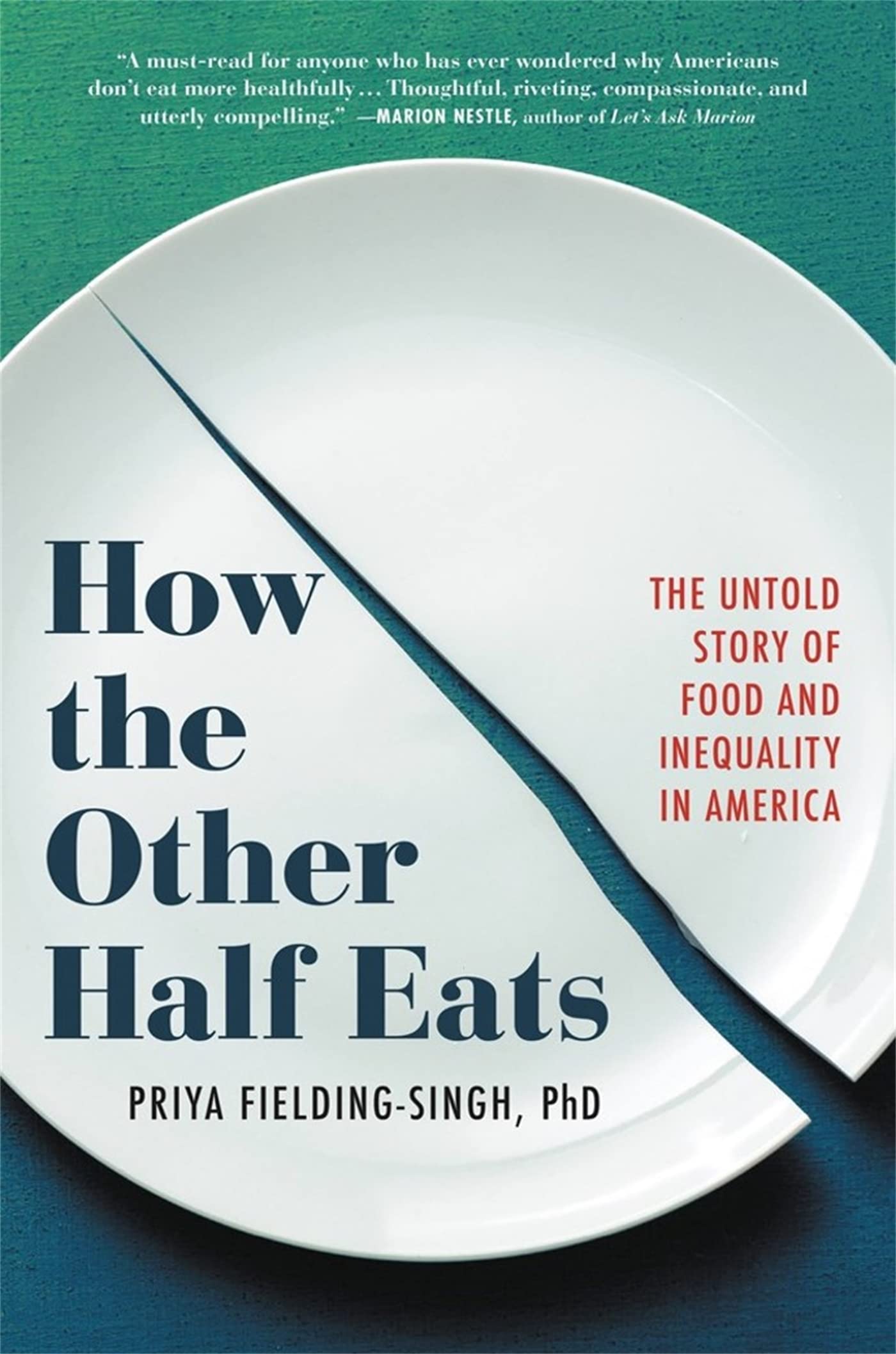
This Important Book Weaves Lyrical Storytelling And Fascinating Research Into A Compelling Narrative (San Francisco Chronicle) To Look At Dietary Differences Along Class Lines And Nutritional Disparities In America, Illuminating Exactly How Inequality Starts On The Dinner Plate.Inequality In America Manifests In Many Ways, But Perhaps Nowhere More Than In How We Eat. From Her Years Of Field Research, Sociologist And Ethnographer Priya Fieldingsingh Brings Us Into The Kitchens Of Dozens Of Families From Varied Educational, Economic, And Ethnoracial Backgrounds To Explore Howand Whywe Eat The Way We Do. We Get To Know Four Families Intimately: The Bakers, A Black Family Living Below The Federal Poverty Line; The Williamses, A Workingclass White Family Just Above It; The Ortegas, A Middleclass Latinx Family; And The Cains, An Affluent White Family.Whether It'S Worrying About How Far Pantry Provisions Can Stretch Or Whether There'S Enough Time To Get Dinner On The Table Before Soccer Practice, All Families Have Unique Experiences That Reveal Their Particular Dietary Constraints And Challenges. By Diving Into The Nuances Of These Families Lives, Fieldingsingh Lays Bare The Limits Of Efforts Narrowly Focused On Improving Families Food Access. Instead, She Reveals How Being Rich Or Poor In America Impacts Something Even More Fundamental Than The Food Families Can Afford: These Experiences Impact The Very Meaning Of Food Itself.Packed With Lyrical Storytelling And Groundbreaking Research, As Well As Fieldingsinghs Personal Experiences With Food As A Biracial, South Asian American Woman, How The Other Half Eats Illuminates Exactly How Inequality Starts On The Dinner Plate. Once Youve Taken A Seat At Tables Across America, Youll Never Think About Class, Food, And Public Health The Same Way Again.
⚠️ WARNING (California Proposition 65):
This product may contain chemicals known to the State of California to cause cancer, birth defects, or other reproductive harm.
For more information, please visit www.P65Warnings.ca.gov.
- Q: What is the page count of 'How the Other Half Eats'? A: This book has three hundred fifty-two pages. It provides an in-depth exploration of food and inequality in America.
- Q: What is the binding type of this book? A: The book is available in paperback binding. This makes it easy to handle and read.
- Q: What are the dimensions of the book? A: The book measures five point four five inches in length, one point two inches in width, and eight point two seven inches in height. These dimensions make it a convenient size for reading.
- Q: How do I read 'How the Other Half Eats'? A: You can read this book by simply picking it up and starting from the first page. It is designed for anyone interested in understanding food inequality.
- Q: Is this book suitable for young adults? A: Yes, this book is suitable for young adults and older readers. It covers complex themes related to food and inequality.
- Q: What themes does the book explore? A: The book explores themes of dietary differences, class inequality, and the meaning of food in America. It reveals how socioeconomic status affects eating habits.
- Q: How should I store this book? A: You should store the book in a cool, dry place. Avoid direct sunlight to prevent fading of the cover and pages.
- Q: Can I clean this book? A: No, you should not attempt to clean the book. If it gets dirty, gently brush off any dust with a soft cloth.
- Q: Is this book safe for all ages? A: Yes, the book is safe for all ages, although it addresses complex social issues that may require adult guidance.
- Q: What if the book arrives damaged? A: If the book arrives damaged, you should contact the seller for a return or exchange. Most sellers will accommodate reasonable requests for refunds.
- Q: How does this book compare to other books on food inequality? A: This book offers a unique perspective by combining personal narratives with research. It is particularly focused on the intersection of food and class.
- Q: Is the author of this book well-known? A: Yes, the author, Priya Fielding-Singh, is a recognized sociologist and ethnographer. Her work focuses on food and inequality.
- Q: Does this book feature personal stories? A: Yes, it features personal stories from various families, providing a rich narrative alongside research findings.
- Q: What makes this book a good choice for readers interested in nutrition? A: This book is a good choice because it not only discusses nutrition but also explores the broader societal implications of food access and inequality.
- Q: Is the research in this book based on field studies? A: Yes, the research is based on extensive field studies conducted by the author. This adds credibility and depth to the narrative.