
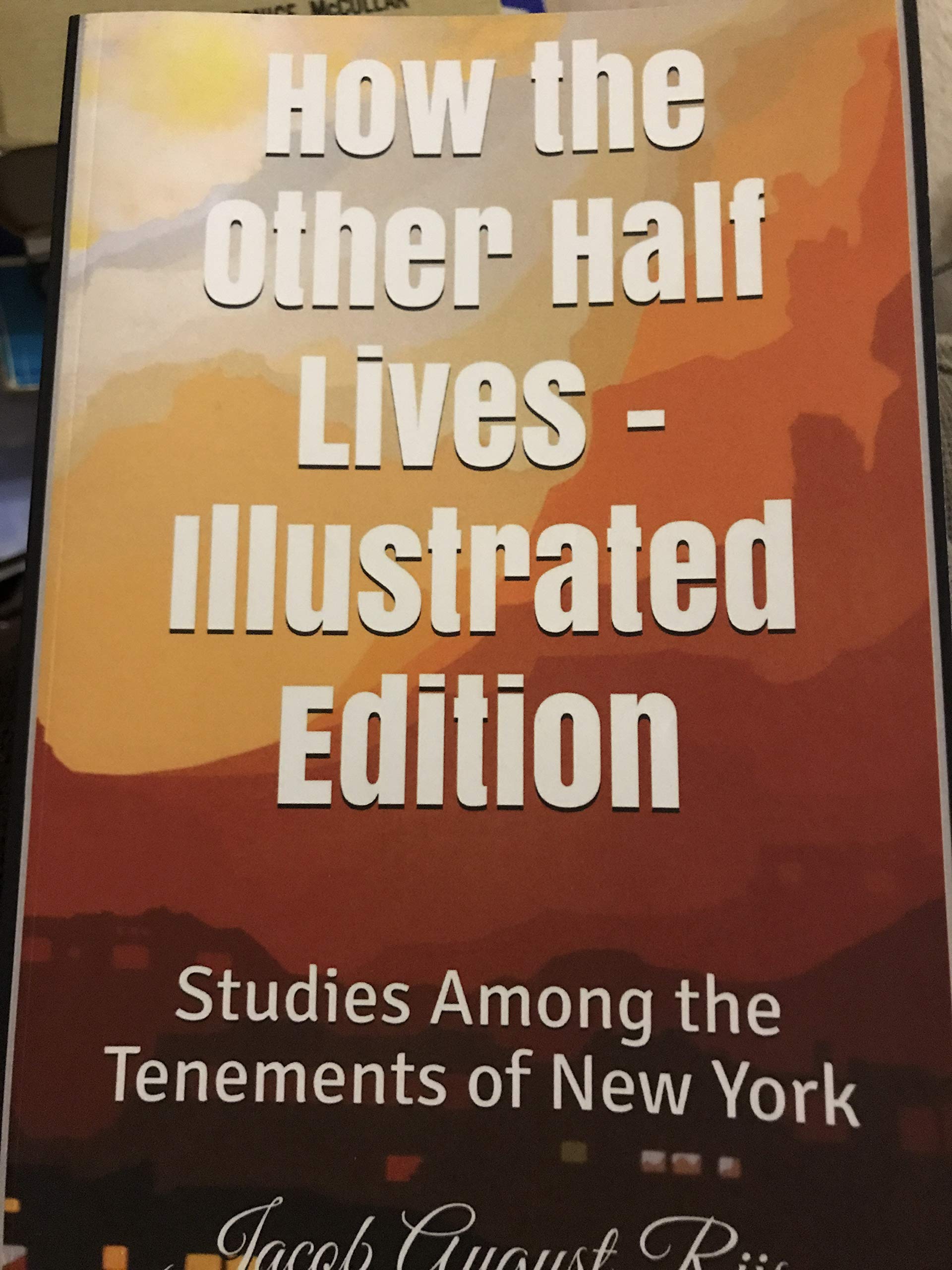
Title
How The Other Half Lives (The Bedford Series In History And Culture),Used
Sold by Ergodebooks, an authorized reseller.
Returns accepted within 30 days | support@ergodebooks.com
Shipping Information
- Free Standard Shipping — United States only
- Processing Time: 3–5 business days
- Estimated Delivery: 6–10 business days after dispatch
- Double-boxed, fully insured & discreetly packaged
- Tracking number sent via email once dispatched
Returns & Refund
Returns accepted within 30 days of delivery.
Damaged or Defective Item
Free return shipping + replacement or full refund
Wrong Item Received
Free return shipping + replacement or full refund
Change of Mind
Return shipping at customer's expense · 25% restocking fee applies
Payment Option

This Edition Of How The Other Half Lives Remains As Faithful As Possible To The Original Famed 1890 Phototext Addressing The Problems Of Tenement Housing, Immigration, And Urban Life And Work At The Beginning Of The Progressive Era Created By Jacob Riiss.
⚠️ WARNING (California Proposition 65):
This product may contain chemicals known to the State of California to cause cancer, birth defects, or other reproductive harm.
For more information, please visit www.P65Warnings.ca.gov.
- Q: How many pages does the book have? A: This book has three hundred twenty pages. It's a comprehensive edition, offering in-depth insights into urban life at the turn of the twentieth century.
- Q: What is the book's binding type? A: The binding type is paperback. This makes it lightweight and easy to handle, perfect for both reading at home and carrying around.
- Q: What are the dimensions of the book? A: The book measures five point five nine inches in length, zero point five five inches in width, and eight point three one inches in height. Its size is convenient for easy storage on bookshelves.
- Q: Who is the author of this book? A: The author is Jacob A. Riis. He was a pioneering journalist and social reformer known for his impactful work on urban poverty.
- Q: What historical issues does the book address? A: The book addresses issues of tenement housing, immigration, and urban life. It provides a vivid portrayal of the struggles faced by the lower class in America during the Progressive era.
- Q: Is this book suitable for all ages? A: Yes, it is suitable for general audiences. However, it discusses complex social issues that may be more appropriate for older children and adults.
- Q: What themes are explored in this book? A: The book explores themes of poverty, social justice, and the American immigrant experience. It serves as a historical document highlighting social conditions in the late nineteenth century.
- Q: Can I use this book for a research project? A: Yes, this book is an excellent resource for research projects. Its detailed accounts and historical context make it valuable for studies related to social history and urban development.
- Q: How should I store this paperback book? A: Store this book in a cool, dry place. Keep it upright on a bookshelf to maintain its shape and prevent damage to the cover.
- Q: Is there any special care needed for the book? A: No special care is needed, but avoid exposing it to moisture. This will help preserve the pages and binding over time.
- Q: What if my book arrives damaged? A: If your book arrives damaged, you can return it for a refund or replacement. Check the seller's return policy for specifics on how to proceed.
- Q: How long will it take to receive my book after ordering? A: Delivery times vary, but you can typically expect to receive your book within five to seven business days after ordering. Check shipping details for more accurate timelines.
- Q: Can I find similar books on urban life? A: Yes, there are many books that explore similar themes of urban life and social reform. Look for titles in the historical nonfiction genre for comparable works.
- Q: What makes this edition special? A: This edition remains faithful to the original 1890 publication. It preserves the historical context and includes the original photographs that illustrate Riis's findings.
- Q: Is this book part of a series? A: Yes, it is part of The Bedford Series in History and Culture. This series aims to provide accessible and engaging historical texts.
- Q: What is the target audience for this book? A: The target audience includes students, educators, and anyone interested in social history and urban studies. Its engaging narrative makes it appropriate for a wide range of readers.