
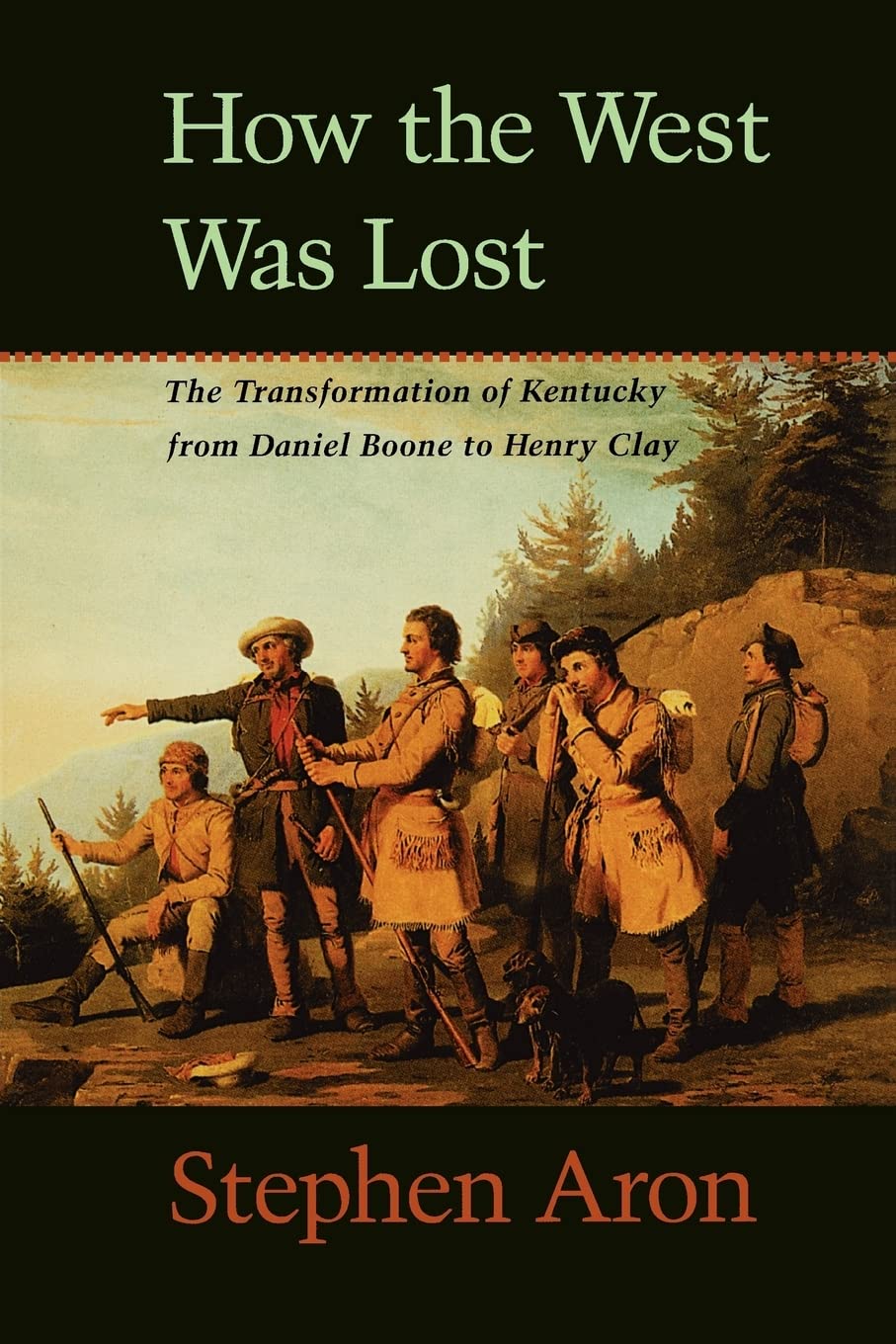
Title
How the West Was Lost: The Transformation of Kentucky From Daniel Boone to Henry Clay,New
Sold by Ergodebooks, an authorized reseller.
Returns accepted within 30 days | support@ergodebooks.com
Shipping Information
- Free Standard Shipping — United States only
- Processing Time: 3–5 business days
- Estimated Delivery: 6–10 business days after dispatch
- Double-boxed, fully insured & discreetly packaged
- Tracking number sent via email once dispatched
Returns & Refund
Returns accepted within 30 days of delivery.
Damaged or Defective Item
Free return shipping + replacement or full refund
Wrong Item Received
Free return shipping + replacement or full refund
Change of Mind
Return shipping at customer's expense · 25% restocking fee applies
Payment Option

Eighteenthcentury Kentucky was a place where Indian and European cultures collidedand, surprisingly, coincided. But this mixed world did not last, and it eventually gave way to nineteenthcentury commercial and industrial development. How the West Was Lost tracks the overlapping conquest, colonization, and consolidation of the transAppalachian frontier. Not a story of paradise lost, this is a book about possibilities lost. It focuses on the common ground between Indians and backcountry settlers which was not found, the frontier customs that were not perpetuated, the lands that were not distributed equally, the slaves who were not emancipated, the agrarian democracy that was not achieved, and the millennium that did not arrive. Seeking to explain why these dreams were not realized, Stephen Aron shows us what did happen during Kentucky's tumultuous passage from Daniel Boone's world to Henry Clay's.
⚠️ WARNING (California Proposition 65):
This product may contain chemicals known to the State of California to cause cancer, birth defects, or other reproductive harm.
For more information, please visit www.P65Warnings.ca.gov.
- Q: What is the page count of the book? A: This book has three hundred four pages. It provides a detailed exploration of Kentucky's history and culture.
- Q: What is the binding type of the book? A: The book is paperback bound. This makes it lightweight and easy to handle for reading.
- Q: Who is the author of this book? A: The author is Stephen Aron. He offers insights into Kentucky's transformation during the eighteenth century.
- Q: What is the genre of this book? A: The book falls under the State & Local category. It focuses on historical and cultural analysis.
- Q: What size is the book? A: The book measures six inches in length, zero point seventy-one inches in width, and nine point zero two inches in height. This size is standard for paperback books.
- Q: Is this book suitable for young readers? A: Yes, this book is suitable for young adult readers. It engages with historical themes that can be educational for teens.
- Q: How do I care for this book? A: To care for the book, store it in a cool, dry place. Avoid direct sunlight to prevent fading and damage.
- Q: Can I clean the book if it gets dirty? A: Yes, you can lightly dust the cover and pages with a soft cloth. Avoid using water or cleaning solutions.
- Q: What should I do if the book arrives damaged? A: If the book arrives damaged, you should contact the retailer for a replacement. Most retailers have a return policy for damaged items.
- Q: Is there a warranty for this book? A: No, there is no warranty for books. However, you can return it if it is defective upon arrival.
- Q: How does this book compare to other historical books about Kentucky? A: This book uniquely focuses on the intersection of Indian and European cultures. It offers a perspective on lost possibilities unlike many other historical accounts.
- Q: Is this book good for academic research? A: Yes, this book is suitable for academic research. It contains insights and analyses valuable for understanding Kentucky's history.
- Q: What themes are explored in this book? A: The book explores themes of colonization, cultural collision, and unfulfilled possibilities in Kentucky's history. It reflects on what was lost over time.
- Q: Does this book have illustrations? A: Yes, the book contains illustrations that complement the text. These visuals enhance the reader's understanding of historical contexts.
- Q: Can this book be used as a reference for history projects? A: Yes, this book serves as a good reference for history projects. It provides well-researched information about Kentucky's past.