If you have any questions, you are always welcome to contact us. We'll get back to you as soon as possible, withing 24 hours on weekdays.
Customer service
All questions about your order, return and delivery must be sent to our customer service team by e-mail at yourstore@yourdomain.com
Sale & Press
If you are interested in selling our products, need more information about our brand or wish to make a collaboration, please contact us at press@yourdomain.com
Help
If you have any questions, you are always welcome to contact us. We'll get back to you as soon as possible, withing 24 hours on weekdays.
Customer service
All questions about your order, return and delivery must be sent to our customer service team by e-mail at yourstore@yourdomain.com
Sale & Press
If you are interested in selling our products, need more information about our brand or wish to make a collaboration, please contact us at press@yourdomain.com
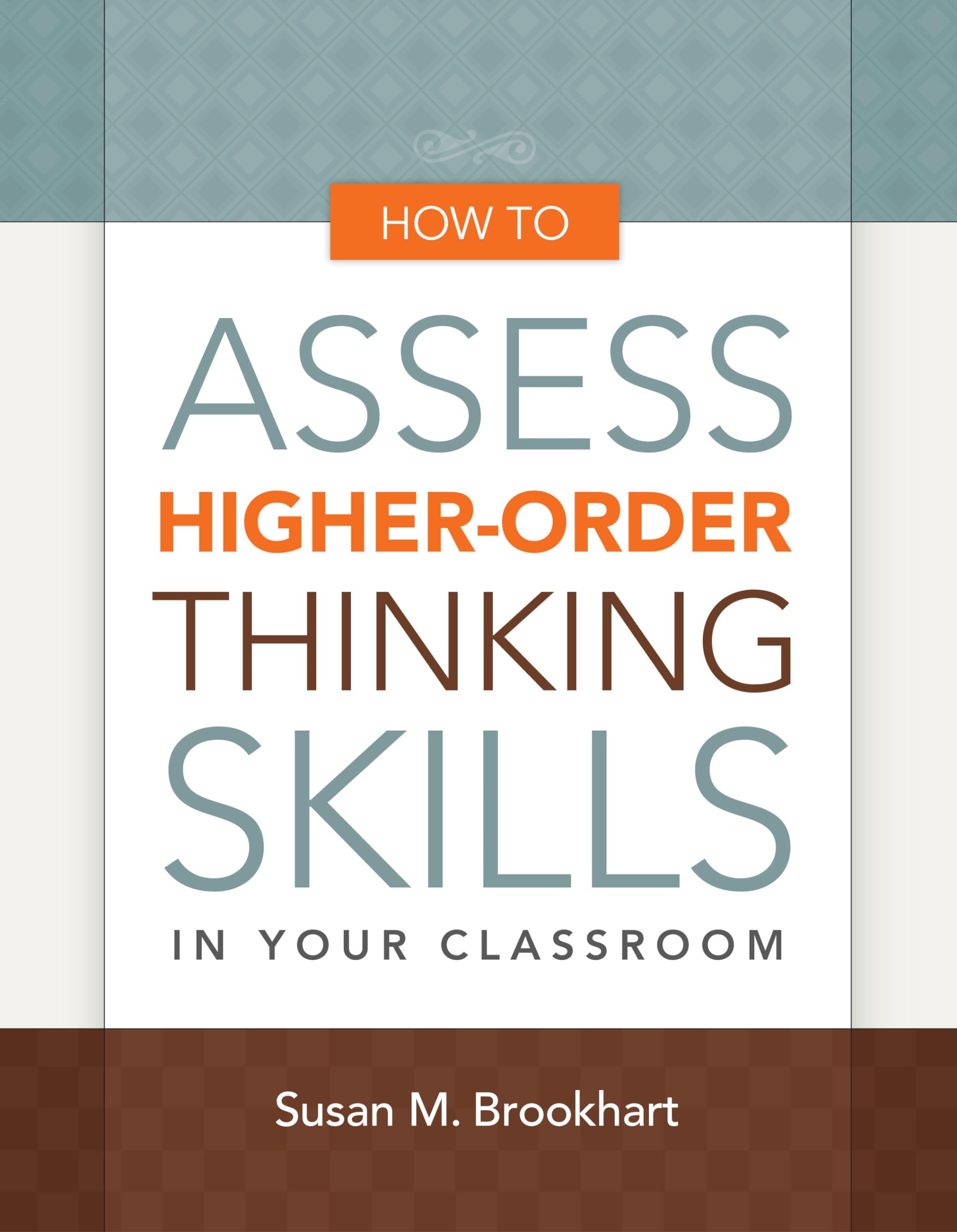
Educators know it's important to get students to engage in 'higherorder thinking.' But what does higherorder thinking actually look like? And how can K12 classroom teachers assess it across the disciplines? Author, consultant, and former classroom teacher Susan M. Brookhart answers these questions and more in this straightforward, practical guide to assessment that can help teachers determine if students are actually displaying the kind of complex thinking that current content standards emphasize.Brookhart begins by laying out principles for assessment in general and for assessment of higherorder thinking in particular. She then defines and describes aspects of higherorder thinking according to the categories established in leading taxonomies, giving specific guidance on how to assess students in the following areas:* Analysis, evaluation, and creation* Logic and reasoning* Judgment* Problem solving* Creativity and creative thinkingExamples drawn from the National Assessment of Educational Progress and from actual classroom teachers include multiplechoice items, constructedresponse (essay) items, and performance assessment tasks. Readers will learn how to use formative assessment to improve student work and then use summative assessment for grading or scoring.Aimed at elementary, middle, and high school teachers in all subject areas, How to Assess HigherOrder Thinking Skills in Your Classroom provides essential background, sound advice, and thoughtful insight into an area of increasing importance for the success of students in the classroomand in life.
⚠️ WARNING (California Proposition 65):
This product may contain chemicals known to the State of California to cause cancer,
birth defects, or other reproductive harm.
For MAP (Minimum Advertised Price) violations and Intellectual Property (IP) or Trademark concerns, please contact:
support@ergodebooks.com
⚠️ California Proposition 65 Warning: Some products sold on this website may expose you to chemicals known to the State of California to cause cancer, birth defects, or other reproductive harm. For more information, visit www.P65Warnings.ca.gov.