
Title
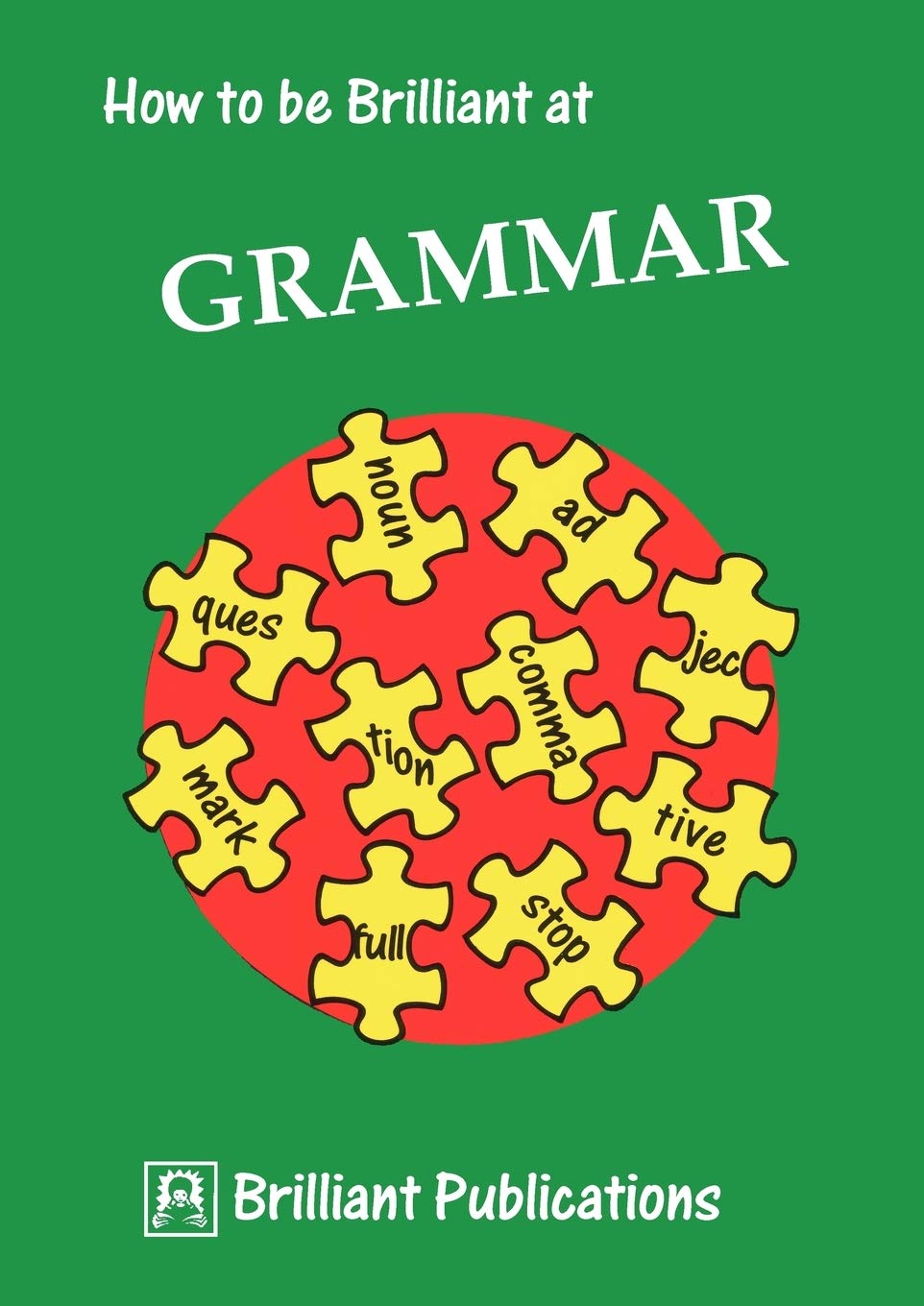
How to be Brilliant at Grammar,Used
Sold by Ergodebooks, an authorized reseller.
Returns accepted within 30 days | support@ergodebooks.com
Shipping Information
- Free Standard Shipping — United States only
- Processing Time: 3–5 business days
- Estimated Delivery: 6–10 business days after dispatch
- Double-boxed, fully insured & discreetly packaged
- Tracking number sent via email once dispatched
Returns & Refund
Returns accepted within 30 days of delivery.
Damaged or Defective Item
Free return shipping + replacement or full refund
Wrong Item Received
Free return shipping + replacement or full refund
Change of Mind
Return shipping at customer's expense · 25% restocking fee applies
Payment Option

How to be Brilliant at Grammar helps Key Stage 2 (KS2) children to talk about and understand language, and as a result to develop their own language skills. The activities and games include: recognizing the parts of speech such as nouns, plurals, adjectives, verbs, adverbs and prepositions making sentences and clauses alphabetization and ordering using punctuationThe book contains 42 reproducible sheets, designed for immediate use. Full of new and different ideas, this resource will provide hours of fun learning.The book provides a flexible, but structured, resource for teaching children to understand and use parts of speech and punctuation. The sheets are selfexplanatory and ready to use; the only extra resources needed are a pen or pencil and perhaps some extra paper.In a way grammar is about the medium and the message. Whereas the focus in school English teaching during the last two or three decades has been to a large extent upon the message, in this book we focus on the medium. Learning about grammar gives children the tools to be able to talk about and understand their language development.All words in a sentence can be divided according to their usage into eight different classes: nouns, pronouns, adjectives, verbs, adverbs, prepositions, conjunctions and interjections. A word which may ostensibly be the 'same' may have a very different meaning, according to its usage: The well dried up. (noun) I feel well today. (adjective) The tears well in her eyes. (verb) He plays well. (adverb) Well who would believe it? (interjection) Girls, as well as boys, play football. (preposition) (Current nonstandard English also uses the word 'well' in an adjectival capacity, eg 'I was well pleased' but although you can say 'the house was wellappointed', which also uses the word in an adjectival capacity, the first example is not good English.)Looking at grammar necessitates taking the language apart and assessing it in little fragments. The difficulty for children is to see the words objectively, not as meaning in their communications, but as the functional nuts and bolts of writing and speaking. They have to be able to take one or two steps backwards from the message to be able to analyse the medium. Once the medium is understood, pupils will be able to use their knowledge of grammar and punctuation as tools to improve their own writing.
⚠️ WARNING (California Proposition 65):
This product may contain chemicals known to the State of California to cause cancer, birth defects, or other reproductive harm.
For more information, please visit www.P65Warnings.ca.gov.