
Title

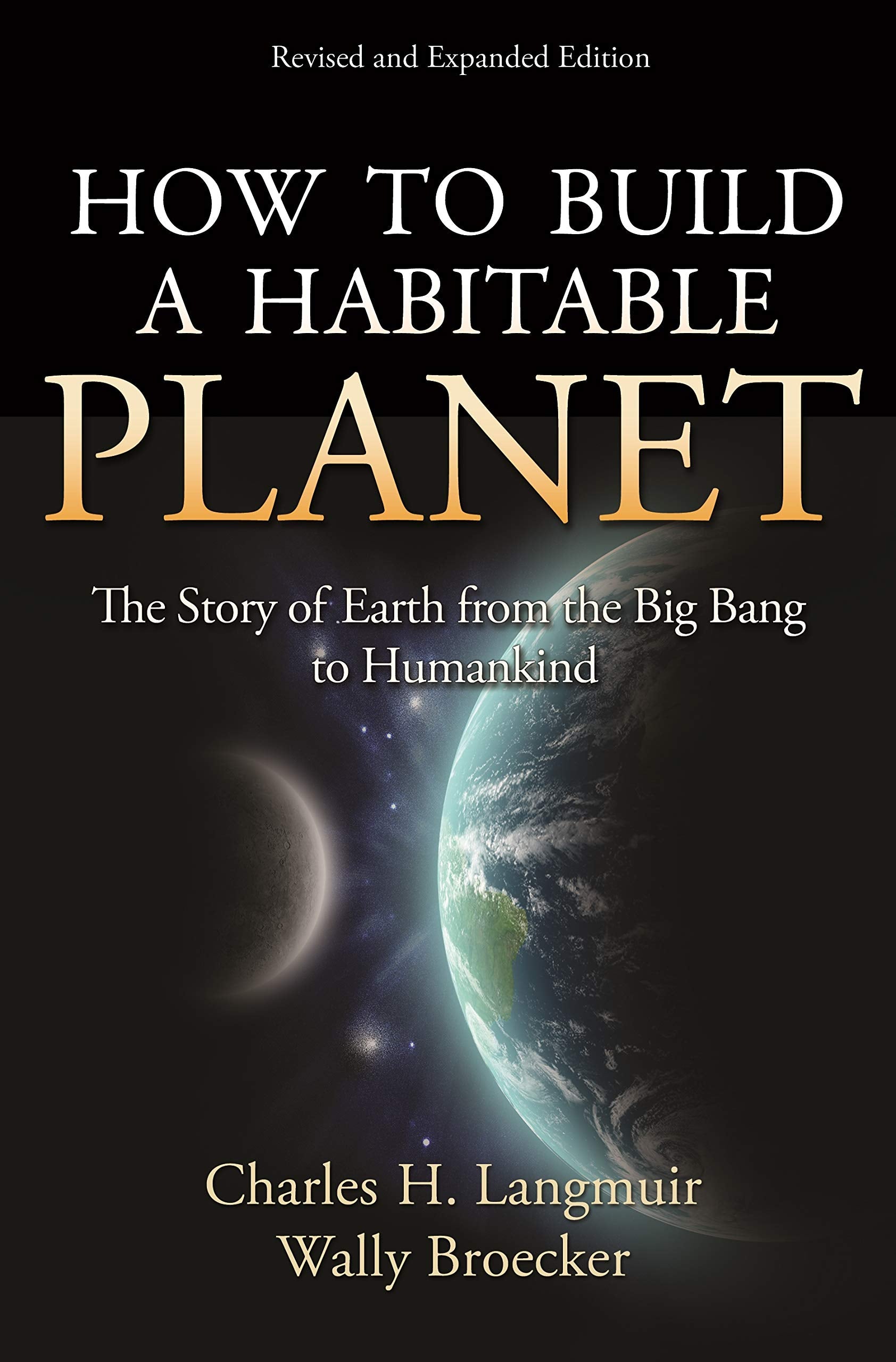
How To Build A Habitable Planet: The Story Of Earth From The Big Bang To Humankind Revised And Expanded Edition
Sold by Ergodebooks, an authorized reseller.
Returns accepted within 30 days | support@ergodebooks.com
Shipping Information
- Free Standard Shipping — United States only
- Processing Time: 3–5 business days
- Estimated Delivery: 6–10 business days after dispatch
- Double-boxed, fully insured & discreetly packaged
- Tracking number sent via email once dispatched
Returns & Refund
Returns accepted within 30 days of delivery.
Damaged or Defective Item
Free return shipping + replacement or full refund
Wrong Item Received
Free return shipping + replacement or full refund
Change of Mind
Return shipping at customer's expense · 25% restocking fee applies
Payment Option

A Classic Introduction To The Story Of Earth'S Origin And Evolutionrevised And Expanded For The Twentyfirst Centurysince Its First Publication More Than Twentyfive Years Ago, How To Build A Habitable Planet Has Established A Legendary Reputation As An Accessible Yet Scientifically Impeccable Introduction To The Origin And Evolution Of Earth, From The Big Bang Through The Rise Of Human Civilization. This Classic Account Of How Our Habitable Planet Was Assembled From The Stuff Of Stars Introduced Readers To Planetary, Earth, And Climate Science By Way Of A Fascinating Narrative. Now This Great Book Has Been Made Even Better. Harvard Geochemist Charles Langmuir Has Worked Closely With The Original Author, Wally Broecker, One Of The World'S Leading Earth Scientists, To Revise And Expand The Book For A New Generation Of Readers For Whom Active Planetary Stewardship Is Becoming Imperative.Interweaving Physics, Astronomy, Chemistry, Geology, And Biology, This Sweeping Account Tells Earths Complete Story, From The Synthesis Of Chemical Elements In Stars, To The Formation Of The Solar System, To The Evolution Of A Habitable Climate On Earth, To The Origin Of Life And Humankind. The Book Also Addresses The Search For Other Habitable Worlds In The Milky Way And Contemplates Whether Earth Will Remain Habitable As Our Influence On Global Climate Grows. It Concludes By Considering The Ways In Which Humankind Can Sustain Earths Habitability And Perhaps Even Participate In Further Planetary Evolution.Like No Other Book, How To Build A Habitable Planet Provides An Understanding Of Earth In Its Broadest Context, As Well As A Greater Appreciation Of Its Possibly Rare Ability To Sustain Life Over Geologic Time.Leading Schools That Have Ordered, Recommended For Reading, Or Adopted This Book For Course Use: Arizona State Universitybrooklyn College Cunycolumbia Universitycornell Universityeth Zurichgeorgia Institute Of Technologyharvard Universityjohns Hopkins Universityluther Collegenorthwestern Universityohio State Universityoxford Brookes Universitypan American Universityrutgers Universitystate University Of New York At Binghamtontexas A&M Universitytrinity College Dublinuniversity Of Bristoluniversity Of Californialos Angelesuniversity Of Cambridgeuniversity Of Chicagouniversity Of Colorado At Boulderuniversity Of Glasgowuniversity Of Leicesteruniversity Of Maine, Farmingtonuniversity Of Michiganuniversity Of North Carolina At Chapel Hilluniversity Of North Georgiauniversity Of Nottinghamuniversity Of Oregonuniversity Of Oxforduniversity Of Portsmouthuniversity Of Southamptonuniversity Of Ulsteruniversity Of Victoriauniversity Of Wyomingwestern Kentucky Universityyale University
⚠️ WARNING (California Proposition 65):
This product may contain chemicals known to the State of California to cause cancer, birth defects, or other reproductive harm.
For more information, please visit www.P65Warnings.ca.gov.
- Q: What is the total number of pages in the book? A: The book contains seven hundred thirty-six pages. This comprehensive length provides an in-depth exploration of Earth's history and evolution.
- Q: What are the dimensions of this book? A: The book measures seven point zero one inches in length, two point zero one inches in width, and ten inches in height. These dimensions make it a substantial hardcover edition.
- Q: Who is the author of 'How to Build a Habitable Planet'? A: The author is Charles H. Langmuir, a Harvard geochemist. He collaborated with Wally Broecker to revise and expand the book for contemporary readers.
- Q: Is this book suitable for high school students? A: Yes, the book is suitable for high school students. Its accessible narrative style makes complex scientific concepts understandable for a younger audience.
- Q: How does this book help with understanding Earth's evolution? A: The book interweaves multiple scientific disciplines to outline Earth's evolution from the Big Bang to humankind. It provides a holistic view of planetary and climate science.
- Q: Can this book be used as a textbook in college courses? A: Yes, many leading universities have adopted this book for course use. Institutions like Harvard and Yale recommend it for its academic rigor and engaging narrative.
- Q: What is the best way to care for this hardcover book? A: To care for the book, keep it in a cool, dry place and avoid exposure to direct sunlight. This helps preserve the cover and pages over time.
- Q: Is this book safe for children to read? A: Yes, the book is safe for children, but parental guidance is advised due to complex themes. Its educational content can stimulate interest in science.
- Q: How should I store this book to maintain its condition? A: Store the book upright on a shelf with other books of similar size. Avoid stacking heavy items on top to prevent damage to the spine.
- Q: What are the main themes covered in this book? A: The main themes include the origin of life, climate evolution, and planetary stewardship. The book discusses Earth's habitability and the search for other worlds.
- Q: Is this book appropriate for beginners in Earth science? A: Yes, the book is appropriate for beginners. It provides a foundational understanding of Earth science in an engaging and accessible manner.
- Q: What if I receive a damaged book? A: If you receive a damaged book, contact the seller for return instructions. Most sellers will offer a replacement or refund for damaged items.
- Q: How does this book compare to other Earth science textbooks? A: This book is unique for its narrative style and interdisciplinary approach. Unlike many textbooks, it emphasizes storytelling to convey scientific concepts.
- Q: Can I use this book for independent study? A: Yes, this book is ideal for independent study. Its thorough explanations and engaging format allow readers to explore Earth science at their own pace.
- Q: What kind of readers will enjoy this book? A: Readers interested in Earth's history, science enthusiasts, and students will particularly enjoy this book. Its broad appeal makes it suitable for diverse audiences.
- Q: Does the book include illustrations or diagrams? A: Yes, the book includes illustrations and diagrams to enhance understanding. These visual aids complement the text and clarify complex topics.