
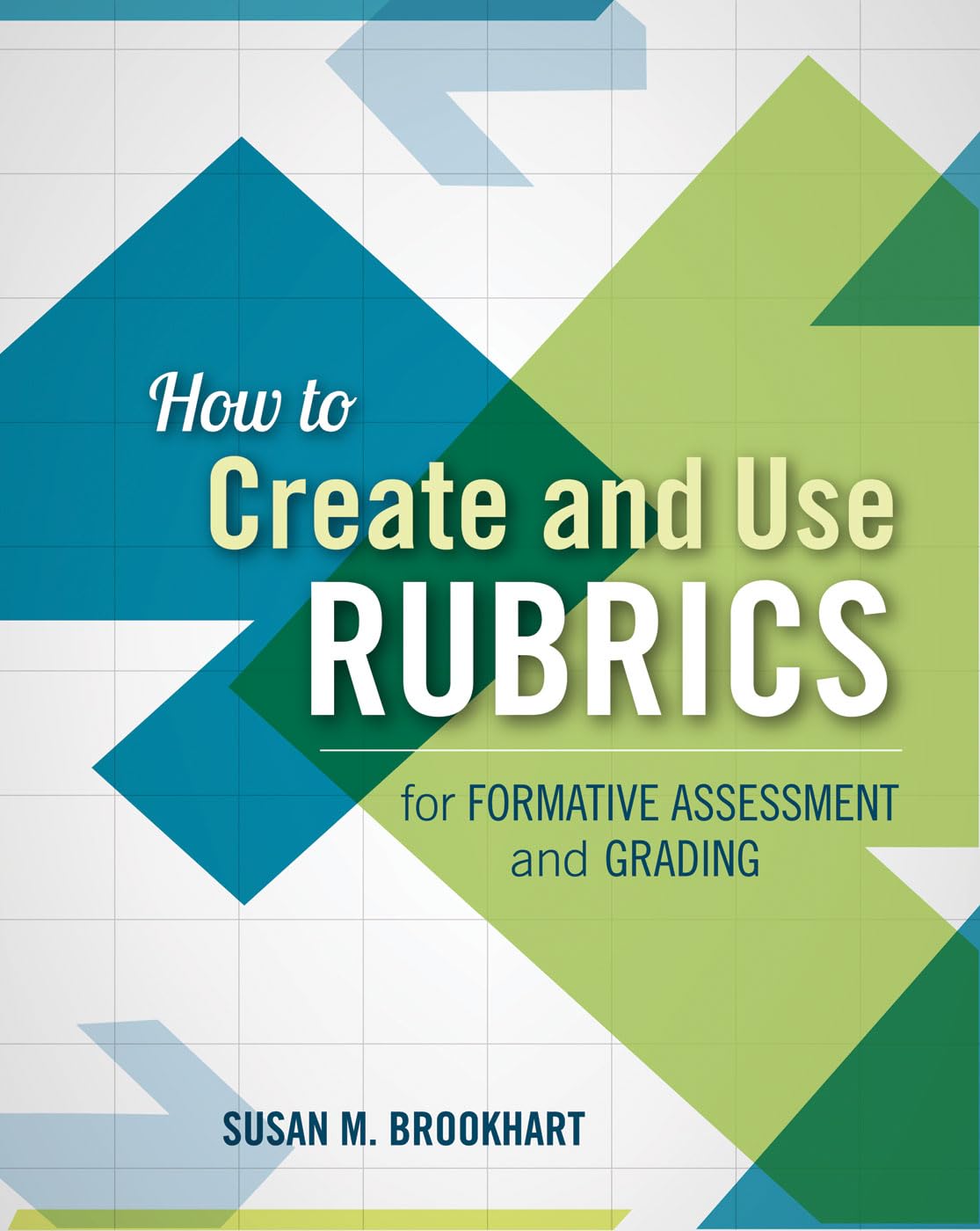
Title
How to Create and Use Rubrics for Formative Assessment and Grading,Used
Sold by Ergodebooks, an authorized reseller.
Returns accepted within 30 days | support@ergodebooks.com
Shipping Information
- Free Standard Shipping — United States only
- Processing Time: 3–5 business days
- Estimated Delivery: 6–10 business days after dispatch
- Double-boxed, fully insured & discreetly packaged
- Tracking number sent via email once dispatched
Returns & Refund
Returns accepted within 30 days of delivery.
Damaged or Defective Item
Free return shipping + replacement or full refund
Wrong Item Received
Free return shipping + replacement or full refund
Change of Mind
Return shipping at customer's expense · 25% restocking fee applies
Payment Option

What is a rubric? A rubric is a coherent set of criteria for student work that describes levels of performance quality. Sounds simple enough, right? Unfortunately, rubrics are commonly misunderstood and misused.The good news is that when rubrics are created and used correctly, they are strong tools that support and enhance classroom instruction and student learning. In this comprehensive guide, author Susan M. Brookhart identifies two essential components of effective rubrics: (1) criteria that relate to the learning (not the 'tasks') that students are being asked to demonstrate and (2) clear descriptions of performance across a continuum of quality. She outlines the difference between various kinds of rubrics (for example, general versus taskspecific, and analytic versus holistic), explains when using each type of rubric is appropriate, and highlights examples from all grade levels and assorted content areas. In addition, Brookhart addresses* Common misconceptions about rubrics;* Important differences between rubrics and other assessment tools such as checklists and rating scales, and when such alternatives can be useful; and* How to use rubrics for formative assessment and grading, including standardsbased grading and report card grades.Intended for educators who are already familiar with rubrics as well as those who are not, this book is a complete resource for writing effective rubrics and for choosing wisely from among the many rubrics that are available on the Internet and from other sources. And it makes the case that rubrics, when used appropriately, can improve outcomes by helping teachers teach and helping students learn.
⚠️ WARNING (California Proposition 65):
This product may contain chemicals known to the State of California to cause cancer, birth defects, or other reproductive harm.
For more information, please visit www.P65Warnings.ca.gov.
- Q: What is a rubric? A: A rubric is a coherent set of criteria for evaluating student work, describing various levels of performance quality.
- Q: How does this book help in creating effective rubrics? A: This book outlines essential components of effective rubrics, including criteria related to learning and clear performance descriptions, helping educators develop and use rubrics correctly.
- Q: What are the types of rubrics discussed in the book? A: The book discusses various types of rubrics, including general versus task-specific and analytic versus holistic, explaining when to use each type.
- Q: Who is the intended audience for this book? A: The book is intended for educators familiar with rubrics and those new to them, offering comprehensive guidance for all levels of experience.
- Q: What are some common misconceptions about rubrics addressed in the book? A: The book addresses misconceptions regarding the purpose and design of rubrics, clarifying their proper use in assessment.
- Q: How can rubrics improve student learning? A: When used appropriately, rubrics can enhance student learning by providing clear expectations and feedback, helping students understand how to meet learning objectives.
- Q: Can this book assist in standards-based grading? A: Yes, the book includes guidance on using rubrics for standards-based grading and report card assessments.
- Q: What is the condition of the book? A: The book is listed as 'Used Book in Good Condition', ensuring that it remains a reliable resource.
- Q: Is this book suitable for all grade levels? A: Yes, the book provides examples and strategies applicable across various grade levels and content areas.
- Q: When was this book published? A: The book was published on January 11, 2013.