
Title

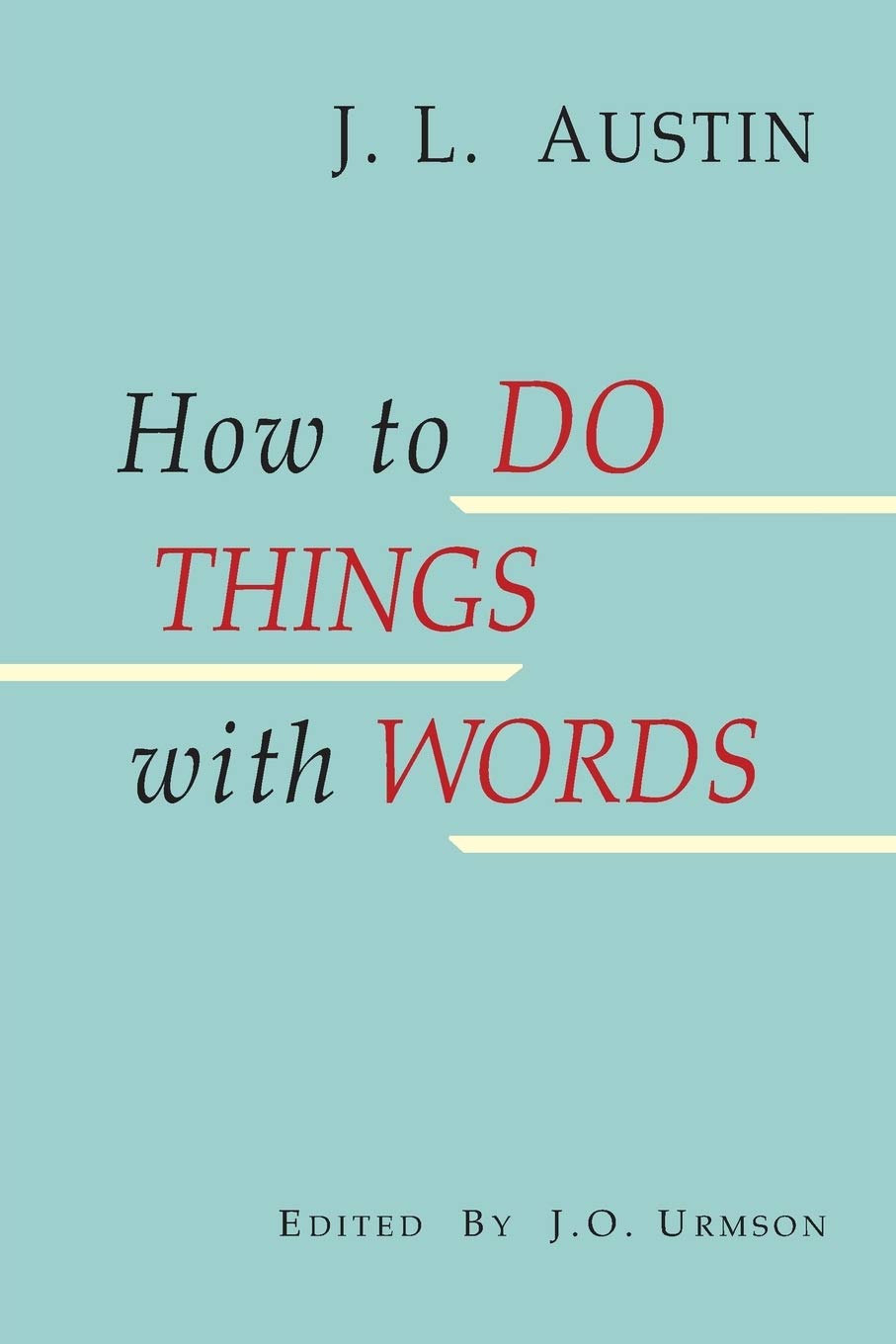
How To Do Things With Words
Sold by Ergodebooks, an authorized reseller.
Returns accepted within 30 days | support@ergodebooks.com
Shipping Information
- Free Standard Shipping — United States only
- Processing Time: 3–5 business days
- Estimated Delivery: 6–10 business days after dispatch
- Double-boxed, fully insured & discreetly packaged
- Tracking number sent via email once dispatched
Returns & Refund
Returns accepted within 30 days of delivery.
Damaged or Defective Item
Free return shipping + replacement or full refund
Wrong Item Received
Free return shipping + replacement or full refund
Change of Mind
Return shipping at customer's expense · 25% restocking fee applies
Payment Option

2018 Reprint Of 1962 Edition. Full Facsimile Of The Original Edition, Not Reproduced With Optical Recognition Software. Reprint Of The First Edition. John L. Austin Was A British Philosopher Of Language And Leading Proponent Of Ordinary Language Philosophy, Perhaps Best Known For Developing The Theory Of Speech Acts. Austin Pointed Out That We Use Language To Do Things As Well As To Assert Things, And That The Utterance Of A Statement Like I Promise To Do Soandso Is Best Understood As Doing Something Making A Promise Rather Than Making An Assertion About Anything. Hence The Name Of One Of His Bestknown Works 'How To Do Things With Words'. Austin, In Providing His Theory Of Speech Acts, Makes A Significant Challenge To The Philosophy Of Language, Far Beyond Merely Elucidating A Class Of Morphological Sentence Forms That Function To Do What They Name. Austin'S Work Ultimately Suggests That All Speech And All Utterance Is The Doing Of Something With Words And Signs, Challenging A Metaphysics Of Language That Would Posit Denotative, Propositional Assertion As The Essence Of Language And Meaning.
⚠️ WARNING (California Proposition 65):
This product may contain chemicals known to the State of California to cause cancer, birth defects, or other reproductive harm.
For more information, please visit www.P65Warnings.ca.gov.
- Q: What is the size of the book? A: The book measures six inches in length, zero point four five inches in width, and nine point zero two inches in height.
- Q: How many pages does it have? A: The book contains one hundred seventy-eight pages, providing a comprehensive exploration of its topics.
- Q: What type of binding does this book have? A: The book is available in paperback binding, making it lightweight and easy to handle.
- Q: Who is the author of the book? A: The author is John L. Austin, a prominent British philosopher noted for his work in language philosophy.
- Q: What is the main subject of this book? A: The book focuses on semantics and the philosophy of language, particularly speech acts.
- Q: How do I read this book? A: To read this book, simply open it and follow the text from beginning to end, as it is designed for all readers interested in philosophy.
- Q: Is this book suitable for beginners? A: Yes, this book is suitable for beginners as it introduces fundamental concepts in language philosophy.
- Q: What age group is this book appropriate for? A: This book is generally suitable for adults and mature teens interested in philosophy and linguistics.
- Q: How should I store this book? A: Store the book in a cool, dry place, upright on a shelf to prevent warping or damage.
- Q: Can I clean the book's cover? A: Yes, you can gently wipe the cover with a soft, dry cloth to remove dust or smudges.
- Q: What if the book arrives damaged? A: If the book arrives damaged, you should contact the seller for a return or exchange.
- Q: Is there a warranty for this book? A: Typically, books do not come with a warranty, but check with the retailer for their specific return policy.
- Q: Can I gift this book to someone? A: Yes, this book makes a great gift for anyone interested in philosophy and the intricacies of language.
- Q: What makes this book unique? A: This book is a full facsimile reprint of the original 1962 edition, maintaining the integrity of Austin's work.
- Q: How does this book compare to other philosophy books? A: This book stands out due to its focus on speech acts and its historical significance in ordinary language philosophy.