

Title
How to House the Homeless,Used
Sold by Ergodebooks, an authorized reseller.
Returns accepted within 30 days | support@ergodebooks.com
Shipping Information
- Free Standard Shipping — United States only
- Processing Time: 3–5 business days
- Estimated Delivery: 6–10 business days after dispatch
- Double-boxed, fully insured & discreetly packaged
- Tracking number sent via email once dispatched
Returns & Refund
Returns accepted within 30 days of delivery.
Damaged or Defective Item
Free return shipping + replacement or full refund
Wrong Item Received
Free return shipping + replacement or full refund
Change of Mind
Return shipping at customer's expense · 25% restocking fee applies
Payment Option

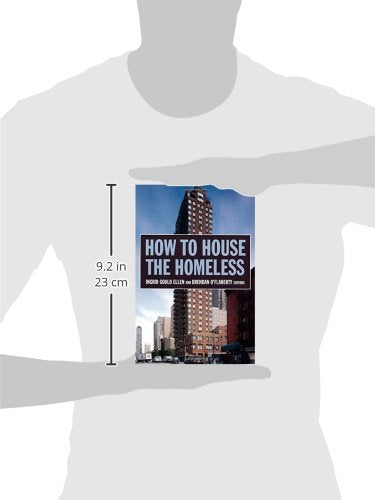
How to House the Homeless, editors Ingrid Gould Ellen and Brendan O'Flaherty propose that the answers entail rethinking how housing markets operate and developing more efficient interventions in existing service programs. The book critically reassesses where we are now, analyzes the most promising policies and programs going forward, and offers a new agenda for future research. How to House the Homeless makes clear the inextricable link between homelessness and housing policy. Contributor Jill Khadduri reviews the current residential services system and housing subsidy programs. For the chronically homeless, she argues, a combination of assisted housing approaches can reach the greatest number of people and, specifically, an expanded Housing Choice Voucher system structured by location, income, and housing type can more efficiently reach people atrisk of becoming homeless and reduce time spent homeless. Robert Rosenheck examines the options available to homeless people with mental health problems and reviews the costeffectiveness of five service models: system integration, supported housing, clinical case management, benefits outreach, and supported employment. He finds that only programs that subsidize housing make a noticeable dent in homelessness, and that no one program shows significant benefits in multiple domains of life. Contributor Sam Tsemberis assesses the development and costeffectiveness of the Housing First program, which serves mentally ill homeless people in more than four hundred cities. He asserts that the program's high housing retention rate and general effectiveness make it a viable candidate for replication across the country. Steven Raphael makes the case for a strong link between homelessness and local housing market regulationswhich affect housing affordabilityand shows that the problem is more prevalent in markets with stricter zoning laws. Finally, Brendan O'Flaherty bridges the theoretical gap between the worlds of public health and housing research, evaluating the pros and cons of subsidized housing programs and the economics at work in the rental housing market and home ownership. Ultimately, he suggests, the most viable strategies will serve as safety nets"social insurance"to reach people who are homeless now and to prevent homelessness in the future. It is crucial that the links between effective policy and the whole cycle of homelessnesslife conditions, service systems, and housing marketsbe made clear now. With a keen eye on the big picture of housing policy, How to House the Homeless shows what works and what doesn't in reducing the numbers of homeless and reaching those most at risk.
⚠️ WARNING (California Proposition 65):
This product may contain chemicals known to the State of California to cause cancer, birth defects, or other reproductive harm.
For more information, please visit www.P65Warnings.ca.gov.