
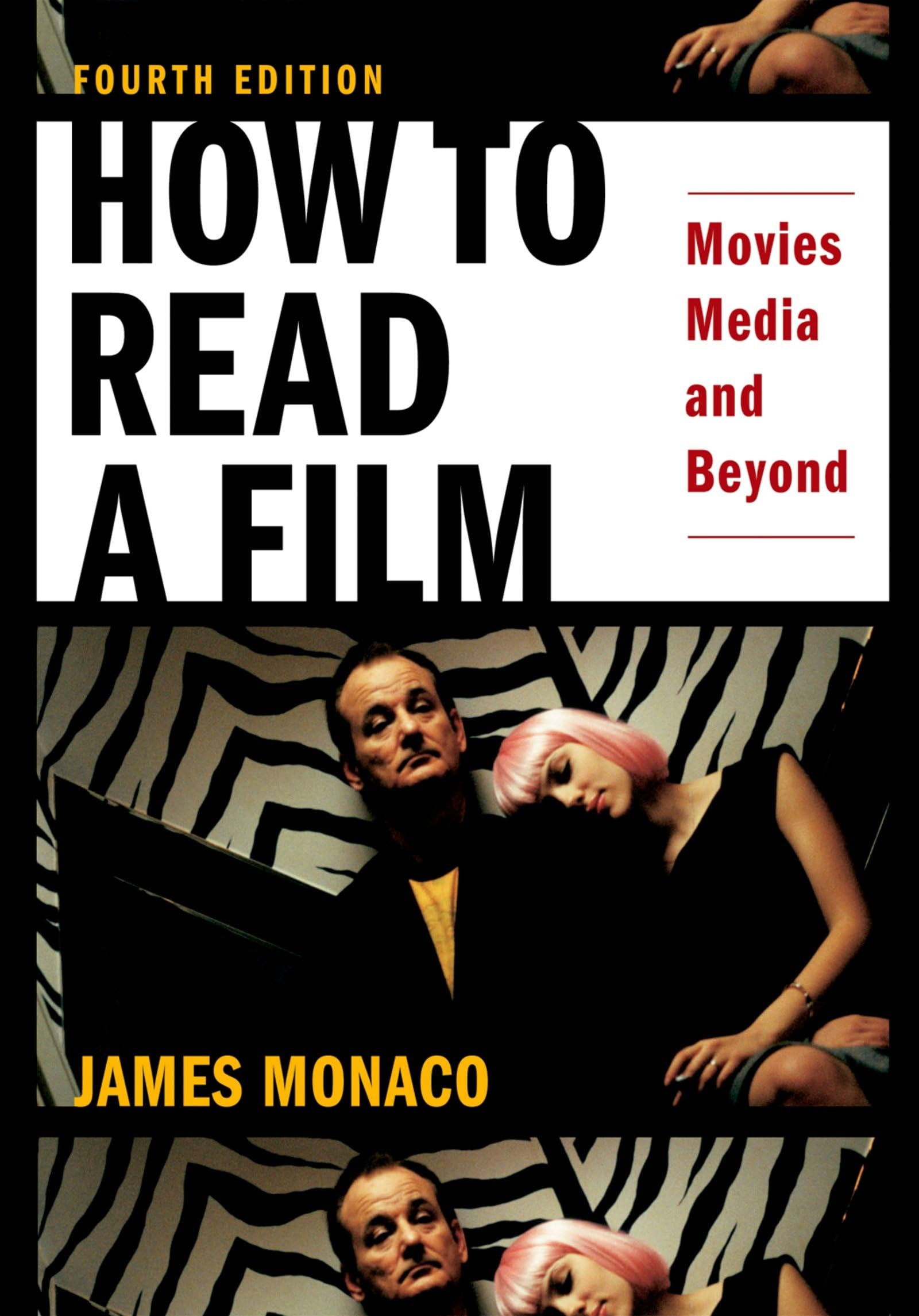
Title
How To Read A Film: Movies, Media, And Beyond,New
Sold by Ergodebooks, an authorized reseller.
Returns accepted within 30 days | support@ergodebooks.com
Shipping Information
- Free Standard Shipping — United States only
- Processing Time: 3–5 business days
- Estimated Delivery: 6–10 business days after dispatch
- Double-boxed, fully insured & discreetly packaged
- Tracking number sent via email once dispatched
Returns & Refund
Returns accepted within 30 days of delivery.
Damaged or Defective Item
Free return shipping + replacement or full refund
Wrong Item Received
Free return shipping + replacement or full refund
Change of Mind
Return shipping at customer's expense · 25% restocking fee applies
Payment Option

Richard Gilman Referred To How To Read A Film As Simply 'The Best Single Work Of Its Kind.' And Janet Maslin In The New York Times Book Review Marveled At James Monaco'S Ability To Collect 'An Enormous Amount Of Useful Information And Assemble It In An Exhilaratingly Simple And Systematic Way.' Indeed, Since Its Original Publication In 1977, This Hugely Popular Book Has Become The Definitive Source On Film And Media.Now, James Monaco Offers A Special Anniversary Edition Of His Classic Work, Featuring A New Preface And Several New Sections, Including An 'Essential Library: One Hundred Books About Film And Media You Should Read' And 'One Hundred Films You Should See.' As In Previous Editions, Monaco Once Again Looks At Film From Many Vantage Points, As Both Art And Craft, Sensibility And Science, Tradition And Technology. After Examining Film'S Close Relation To Other Narrative Media Such As The Novel, Painting, Photography, Television, And Even Music, The Book Discusses The Elements Necessary To Understand How Films Convey Meaning, And, More Importantly, How We Can Best Discern All That A Film Is Attempting To Communicate. In Addition, Monaco Stresses The Stillevolving Digital Context Of Film Throughoutone Of The New Sections Looks At The Untrustworthy Nature Of Digital Images And Soundand His Chapter On Multimedia Brings Media Criticism Into The Twentyfirst Century With A Thorough Discussion Of Topics Like Virtual Reality, Cyberspace, And The Proximity Of Both To Film.With Hundreds Of Illustrative Blackandwhite Film Stills And Diagrams, How To Read A Film Is An Indispensable Addition To The Library Of Everyone Who Loves The Cinema And Wants To Understand It Better.
⚠️ WARNING (California Proposition 65):
This product may contain chemicals known to the State of California to cause cancer, birth defects, or other reproductive harm.
For more information, please visit www.P65Warnings.ca.gov.
- Q: How many pages does this book have? A: This book has seven hundred thirty-six pages. It offers an extensive exploration of film and media.
- Q: What is the binding type of this book? A: The binding type of this book is paperback. This makes it flexible and lightweight for easy reading.
- Q: What are the dimensions of the book? A: The book measures six point four two inches in length, one point three inches in width, and nine point one inches in height. These dimensions make it convenient for handling.
- Q: Who is the author of 'How to Read a Film'? A: The author is James Monaco. He is well-known for his expertise in film and media studies.
- Q: What is the main theme of this book? A: The main theme revolves around understanding film as an art and craft. It explores the communication of meaning through cinematic techniques.
- Q: What type of audience is this book suitable for? A: This book is suitable for anyone interested in film and media, including both beginners and seasoned enthusiasts. It offers valuable insights for diverse readers.
- Q: How do I approach reading this book? A: To approach reading this book, start with the preface and essential sections. This will provide context and guide you through the various topics.
- Q: Is this book appropriate for children? A: Yes, this book is appropriate for older children and teens interested in film. However, parental guidance is recommended based on maturity and comprehension.
- Q: How should I store this book to keep it in good condition? A: Store this book upright on a shelf away from direct sunlight. This will help prevent damage to the binding and pages.
- Q: Can I use this book for academic purposes? A: Yes, this book is excellent for academic purposes. Its comprehensive analysis makes it a valuable resource for film studies courses.
- Q: What if the book arrives damaged? A: If the book arrives damaged, contact the seller for a return or exchange policy. Most sellers offer a satisfaction guarantee.
- Q: Are there any illustrations in this book? A: Yes, the book contains hundreds of illustrative black-and-white film stills and diagrams. These visuals enhance the understanding of the text.
- Q: Does this book include a bibliography? A: Yes, the book includes a bibliography of recommended readings. This is found in the 'Essential Library' section.
- Q: Is there a digital version available? A: Yes, a digital version of this book is available. It can be accessed on various e-reading platforms.
- Q: What makes this book a classic in film studies? A: This book is considered a classic due to its comprehensive approach and clear explanations. It has been a go-to resource since its original publication.