If you have any questions, you are always welcome to contact us. We'll get back to you as soon as possible, withing 24 hours on weekdays.
Customer service
All questions about your order, return and delivery must be sent to our customer service team by e-mail at yourstore@yourdomain.com
Sale & Press
If you are interested in selling our products, need more information about our brand or wish to make a collaboration, please contact us at press@yourdomain.com
Help
If you have any questions, you are always welcome to contact us. We'll get back to you as soon as possible, withing 24 hours on weekdays.
Customer service
All questions about your order, return and delivery must be sent to our customer service team by e-mail at yourstore@yourdomain.com
Sale & Press
If you are interested in selling our products, need more information about our brand or wish to make a collaboration, please contact us at press@yourdomain.com
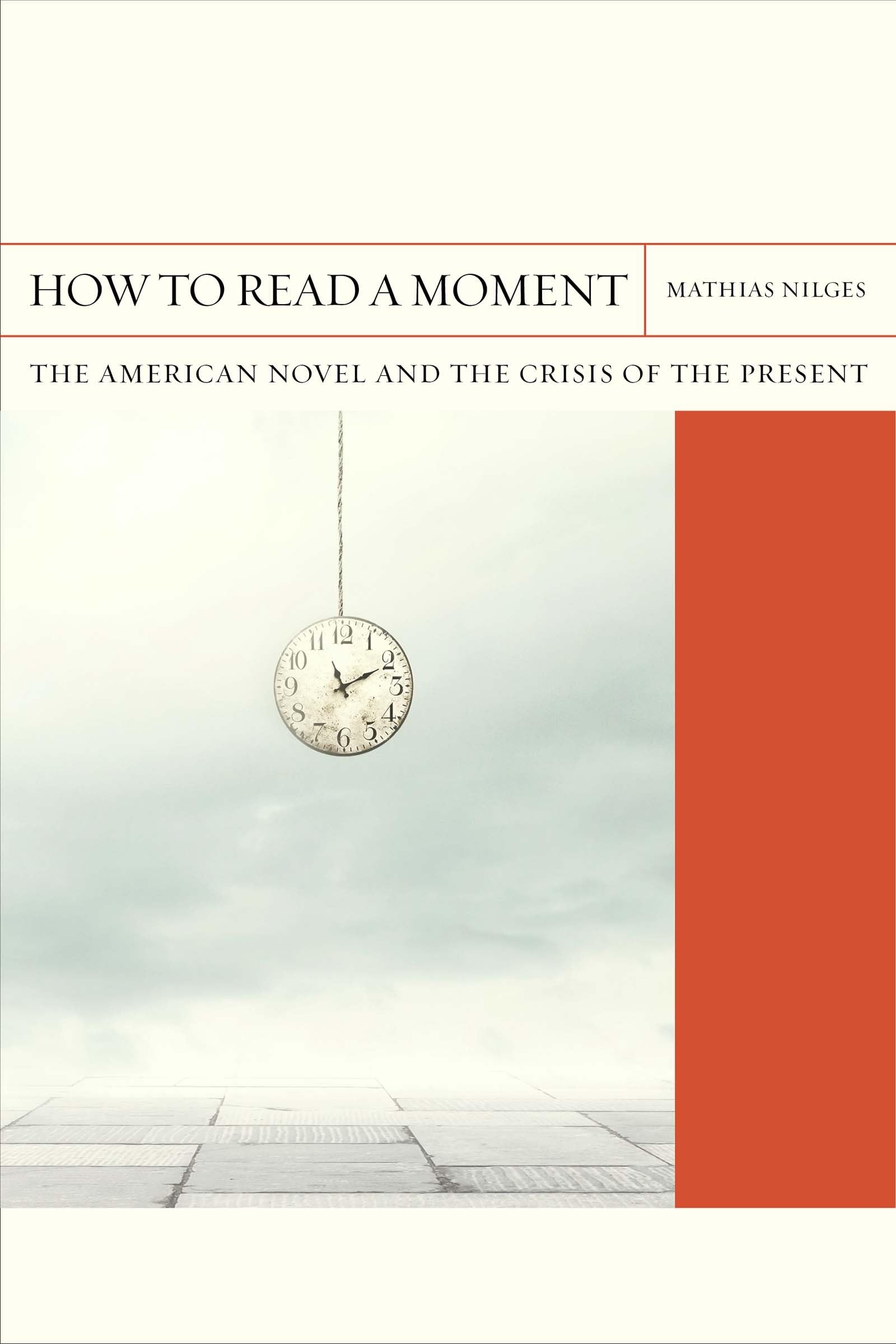
In How to Read a Moment, Mathias Nilges shows that time is inseparable from the stories we tell about it, demonstrating that the contemporary American novel offers new ways to make sense of the temporality that governs our present.Time is a thing that grows scarcer every day, observes one of Don DeLillos characters. The future is gone, The Baffler argues. Wheres my hoverboard!? a meme demands. Contemporary capitalism, a system that insists that everything happen at once, creates problems for social thought and narrative alike. After all, how does one tell the time of instantaneity? In this moment of ondemand service and instant trading, it has become difficult to imagine the future.The novel emerged as the art form of a rapidly changing modern world, a way of telling time in its progress. Nilges argues that this historical mission is renewed today through works that understand contemporaneity as a form of time shaping that props up our material world and cultural imagination. But the contemporary American novel does not simply associate our present with a crisis of futurity. Through analyses of works by authors such as DeLillo, Jennifer Egan, Charles Yu, and Colson Whitehead, Nilges illustrates that the novel presents ways to make sense of the temporality that controls our purportedly fully contemporary world. In so doing, the novel recovers a sense of possibility and hope, forwarding a dazzling argument for its own importance today.
⚠️ WARNING (California Proposition 65):
This product may contain chemicals known to the State of California to cause cancer,
birth defects, or other reproductive harm.
For MAP (Minimum Advertised Price) violations and Intellectual Property (IP) or Trademark concerns, please contact:
support@ergodebooks.com
⚠️ California Proposition 65 Warning: Some products sold on this website may expose you to chemicals known to the State of California to cause cancer, birth defects, or other reproductive harm. For more information, visit www.P65Warnings.ca.gov.