
Title
How To Read And Critique A Scientific Research Article: Notes To Guide Students Reading Primary Literature (With Teaching Tips F,Used
Sold by Ergodebooks, an authorized reseller.
Returns accepted within 30 days | support@ergodebooks.com
Shipping Information
- Free Standard Shipping — United States only
- Processing Time: 3–5 business days
- Estimated Delivery: 6–10 business days after dispatch
- Double-boxed, fully insured & discreetly packaged
- Tracking number sent via email once dispatched
Returns & Refund
Returns accepted within 30 days of delivery.
Damaged or Defective Item
Free return shipping + replacement or full refund
Wrong Item Received
Free return shipping + replacement or full refund
Change of Mind
Return shipping at customer's expense · 25% restocking fee applies
Payment Option

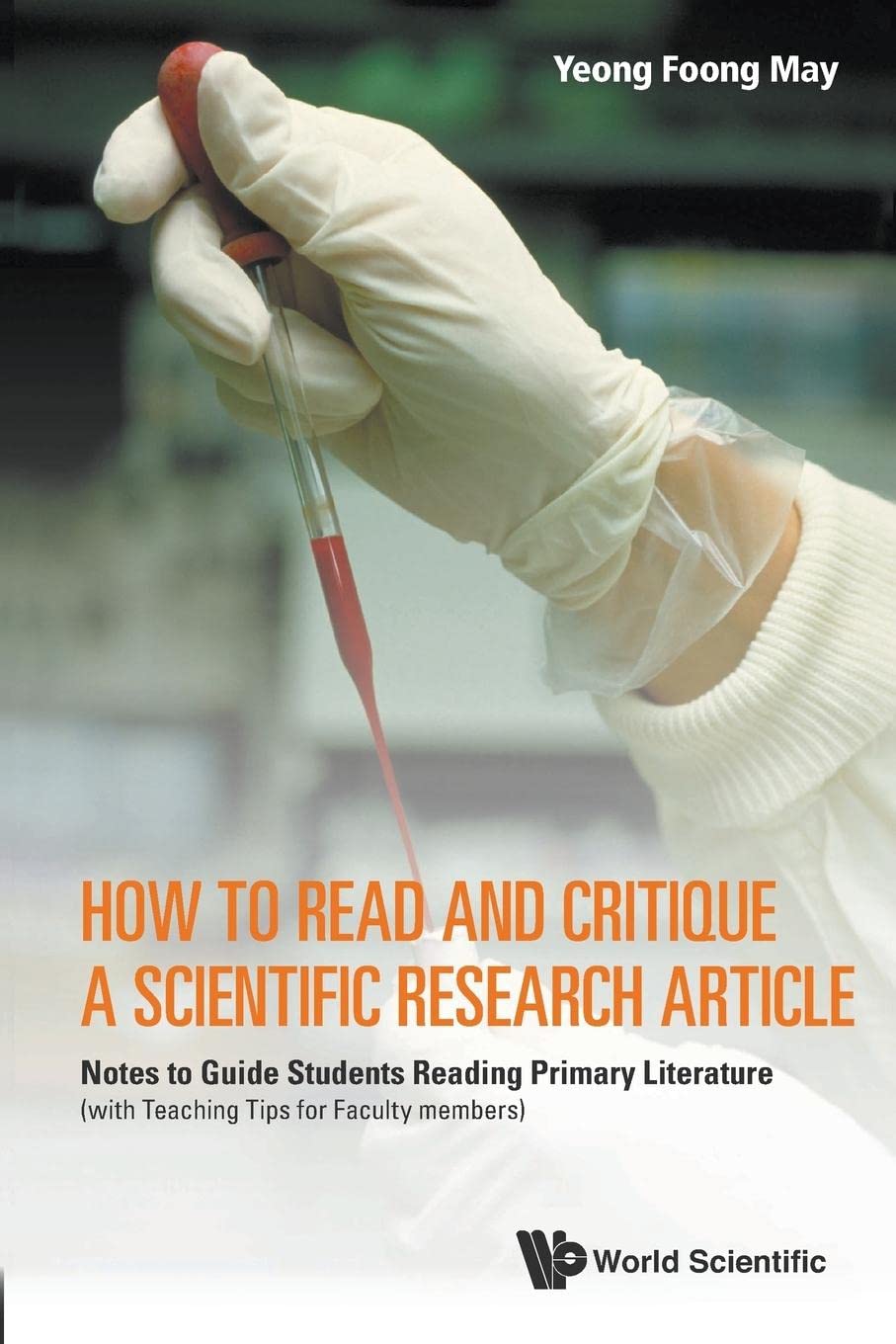
Given the explosion of information and knowledge in the field of Life Sciences, adapting primary literature as materials in course work as part of active learning seems to be more effective in improving scientific literacy among science undergraduates than the pure transmission of content knowledge using traditional textbooks. In addition, students also read research articles as part of undertaking laboratory research projects useful for preparing them for graduate school. As such, a good grasp of reading and analytical skills is needed for students to understand how their research project contributes to the field that they are working in. Such skills are being taught at Uk and Usa universities. In Asia, this approach in teaching has not yet been as widespread, although similar ideas are beginning to be used in education. Written as a quick guide for undergraduate students and faculty members dealing with scientific research articles as part of a module or research project, this book will be useful, especially in Asia, for students and faculty members as the universities look to incorporating the use of scientific research articles in their undergraduate teaching. For Life Science students, the first time they encounter a primary literature can be rather daunting, though with proper guidance, they can overcome the initial difficulties and become confident in dealing with scientific articles. This guidebook provides a structured approach to reading a research article, guiding the reader stepbystep through each section, with tips on how to look out for key points and how to evaluate each section. Overall, by helping undergraduate students to overcome their anxieties in reading scientific literature, the book will enable the students to appreciate better the process of scientific investigations and how knowledge is derived in science.
⚠️ WARNING (California Proposition 65):
This product may contain chemicals known to the State of California to cause cancer, birth defects, or other reproductive harm.
For more information, please visit www.P65Warnings.ca.gov.