
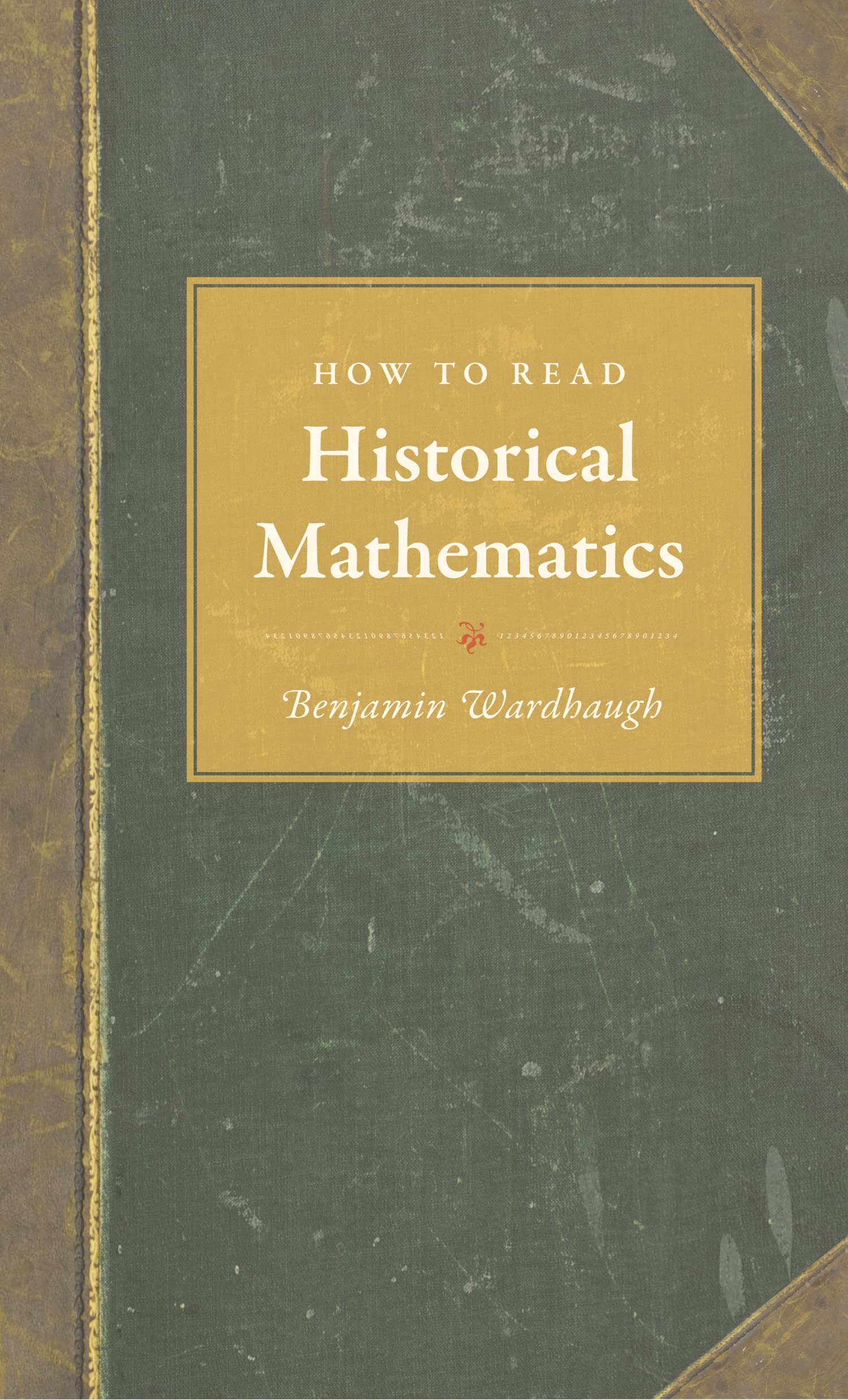
Title
How To Read Historical Mathematics,Used
Sold by Ergodebooks, an authorized reseller.
Returns accepted within 30 days | support@ergodebooks.com
Shipping Information
- Free Standard Shipping — United States only
- Processing Time: 3–5 business days
- Estimated Delivery: 6–10 business days after dispatch
- Double-boxed, fully insured & discreetly packaged
- Tracking number sent via email once dispatched
Returns & Refund
Returns accepted within 30 days of delivery.
Damaged or Defective Item
Free return shipping + replacement or full refund
Wrong Item Received
Free return shipping + replacement or full refund
Change of Mind
Return shipping at customer's expense · 25% restocking fee applies
Payment Option

Techniques for deciphering texts by early mathematiciansWritings by early mathematicians feature language and notations that are quite different from what we're familiar with today. Sourcebooks on the history of mathematics provide some guidance, but what has been lacking is a guide tailored to the needs of readers approaching these writings for the first time. How to Read Historical Mathematics fills this gap by introducing readers to the analytical questions historians ask when deciphering historical texts.Sampling actual writings from the history of mathematics, Benjamin Wardhaugh reveals the questions that will unlock the meaning and significance of a given textWho wrote it, why, and for whom? What was its author's intended meaning? How did it reach its present form? Is it original or a translation? Why is it important today? Wardhaugh teaches readers to think about what the original text might have looked like, to consider where and when it was written, and to formulate questions of their own. Readers pick up new skills with each chapter, and gain the confidence and analytical sophistication needed to tackle virtually any text in the history of mathematics. Introduces readers to the methods of textual analysis used by historians Uses actual source material as examples Features boxed summaries, discussion questions, and suggestions for further reading Supplements all major sourcebooks in mathematics history Designed for easy reference Ideal for students and teachers
⚠️ WARNING (California Proposition 65):
This product may contain chemicals known to the State of California to cause cancer, birth defects, or other reproductive harm.
For more information, please visit www.P65Warnings.ca.gov.
- Q: What is the page count of 'How to Read Historical Mathematics'? A: This book has one hundred thirty-six pages. It provides a comprehensive overview of techniques for deciphering historical mathematics texts.
- Q: What are the dimensions of this book? A: The book measures five point twenty-five inches in length, zero point seventy-five inches in width, and eight point five inches in height. These dimensions make it portable for easy reading.
- Q: What type of binding does this book have? A: This book is bound in hardcover. This durable binding is designed to withstand frequent use.
- Q: Who is the author of 'How to Read Historical Mathematics'? A: The author is Benjamin Wardhaugh. He specializes in the history of mathematics and offers insights into historical texts.
- Q: What topics are covered in this book? A: The book discusses techniques for analyzing historical mathematical texts. It includes questions historians ask when interpreting these writings.
- Q: Is 'How to Read Historical Mathematics' suitable for beginners? A: Yes, this book is suitable for beginners. It introduces analytical methods tailored for readers approaching historical mathematics for the first time.
- Q: How can I use this book to understand historical texts? A: You can use this book to learn about the analytical questions critical for deciphering historical texts. Each chapter builds your skills and confidence.
- Q: Are there discussion questions included in the book? A: Yes, the book features discussion questions. These questions are designed to enhance comprehension and stimulate further analysis.
- Q: Is this book appropriate for students? A: Yes, this book is ideal for students. It supplements major sourcebooks in mathematics history and is designed for easy reference.
- Q: How should I store 'How to Read Historical Mathematics'? A: Store this book in a cool, dry place to prevent damage. Keeping it upright on a shelf can help maintain its shape.
- Q: Is there a warranty for this book? A: No, books typically do not come with a warranty. However, check the return policy of your retailer for any purchase concerns.
- Q: What if the book arrives damaged? A: If the book arrives damaged, you should contact the retailer for their return or exchange policy. Most retailers will provide a replacement.
- Q: Can I find further reading suggestions in the book? A: Yes, the book includes suggestions for further reading. These recommendations help deepen your understanding of historical mathematics.
- Q: What makes this book different from other mathematics history sourcebooks? A: This book focuses specifically on teaching readers how to analyze historical texts, unlike many general sourcebooks. It emphasizes textual analysis methods.
- Q: Is this book useful for teachers as well? A: Yes, this book is beneficial for teachers. It provides analytical tools and resources for teaching historical mathematics effectively.