
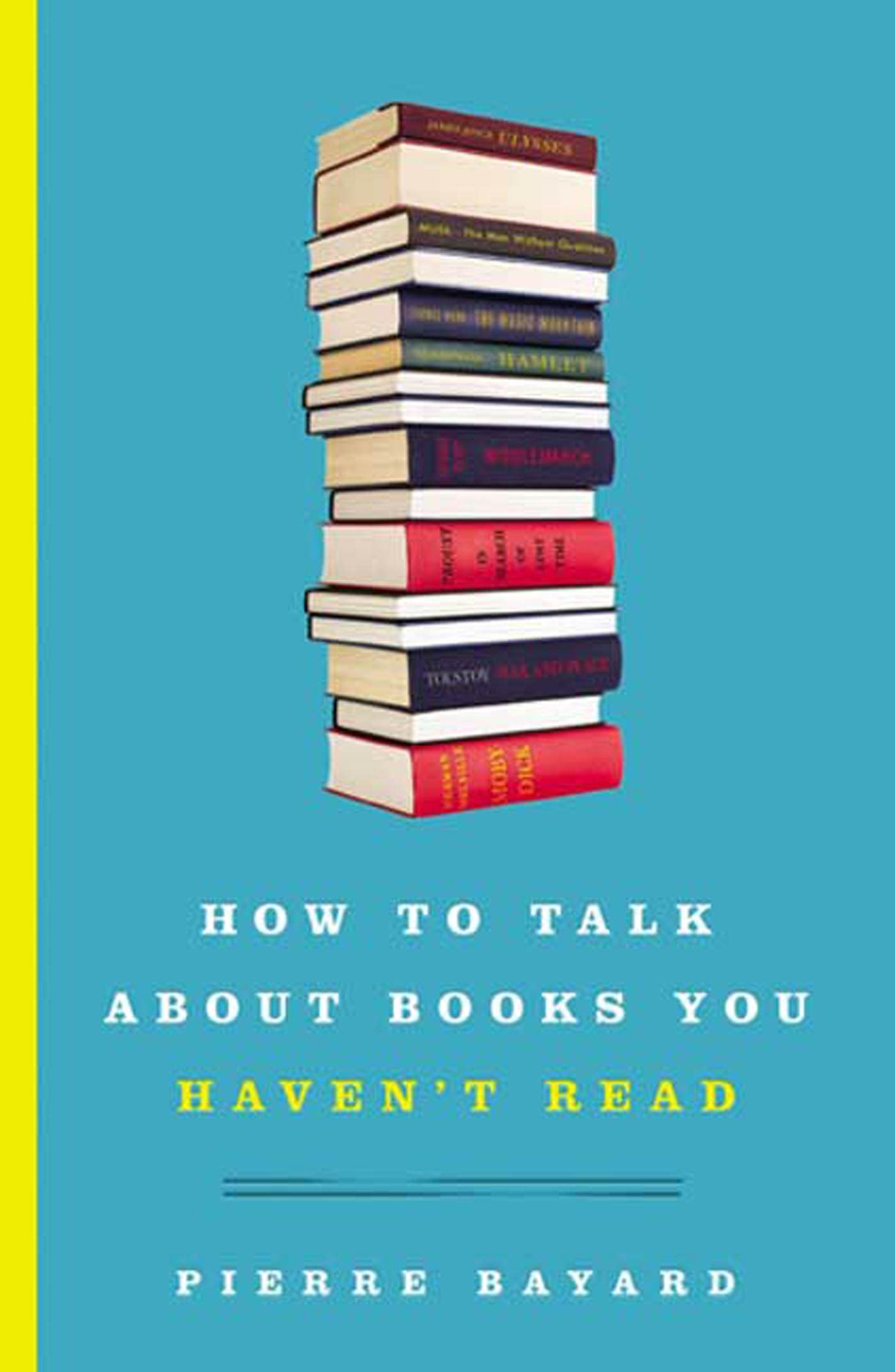
Title
How to Talk About Books You Haven't Read,Used
Sold by Ergodebooks, an authorized reseller.
Returns accepted within 30 days | support@ergodebooks.com
Shipping Information
- Free Standard Shipping — United States only
- Processing Time: 3–5 business days
- Estimated Delivery: 6–10 business days after dispatch
- Double-boxed, fully insured & discreetly packaged
- Tracking number sent via email once dispatched
Returns & Refund
Returns accepted within 30 days of delivery.
Damaged or Defective Item
Free return shipping + replacement or full refund
Wrong Item Received
Free return shipping + replacement or full refund
Change of Mind
Return shipping at customer's expense · 25% restocking fee applies
Payment Option

If civilized people are expected to have read all important works of literature, and thousands more books are published every year, what are we supposed to do in those awkward social situations in which we're forced to talk about books we haven't read? In this delightfully witty, provocative book, a huge hit in France that has drawn huge attention from critics around the world, literature professor and psychoanalyst Bayard argues that it's actually more important to know a book's role in our collective library than its details. Using examples from such writers as Graham Greene, Oscar Wilde, Montaigne, and Umberto Eco, and even the movie Groundhog Day, he describes the many varieties of 'nonreading' and the horribly sticky social situations that might confront us, and then offers his advice on what to do. Practical, funny, and thoughtprovoking, How to Talk About Books You Haven't Read is in the end a love letter to books, offering a whole new perspective on how we read and absorb them. It's the book that readers everywhere will be talking aboutand despite themselves, readingthis holiday season.Check out these articles about the French edition of How to Talk about Books you Haven't Read:New York Times 'Read It? No, but You Can Skim a Few Pages and Fake It' by Alan Riding(also published in the International Herald Tribune)Chronicle of Higher Education 'Huckleberry Who? by Lennard J. DavisTimes Online (UK edition) 'Viewpoint' by Sarah VineThe Harvard Crimson 'You've Read 'Gravity's Rainbow'? Bullshit'm by Madeline K. B. RossBroad Street Review 'The only book you'll ever need' by Leonard Boasberg
⚠️ WARNING (California Proposition 65):
This product may contain chemicals known to the State of California to cause cancer, birth defects, or other reproductive harm.
For more information, please visit www.P65Warnings.ca.gov.
- Q: What is the main theme of 'How to Talk About Books You Haven't Read'? A: The main theme of the book is about navigating social situations where discussing books you haven't read is necessary. The author, Pierre Bayard, emphasizes the importance of knowing a book's cultural significance rather than its details.
- Q: Who is the author of this book? A: The author of 'How to Talk About Books You Haven't Read' is Pierre Bayard, a literature professor and psychoanalyst.
- Q: What type of book is this? A: This book falls under the category of Criticism & Theory and is presented in a hardcover format.
- Q: What can I expect from the writing style of this book? A: The writing style is witty, provocative, and thought-provoking, making it engaging and enjoyable for readers.
- Q: How many pages does the book have? A: The book contains 208 pages.
- Q: When was 'How to Talk About Books You Haven't Read' published? A: The book was published on November 4, 2007.
- Q: Is this book suitable for someone who hasn't read many classic books? A: Yes, this book is particularly suitable for those who have not read many classic works, as it provides insights into how to discuss literature without needing to have read every book.
- Q: What condition is the used book in? A: The used book is listed in good condition.
- Q: Are there any specific authors or works referenced in the book? A: Yes, the book references works and authors such as Graham Greene, Oscar Wilde, Montaigne, and Umberto Eco.
- Q: What kind of advice does the author provide for discussing unread books? A: The author offers practical advice on how to engage in conversations about books you haven't read, including understanding their role in literary culture and using contextual knowledge.