
Title
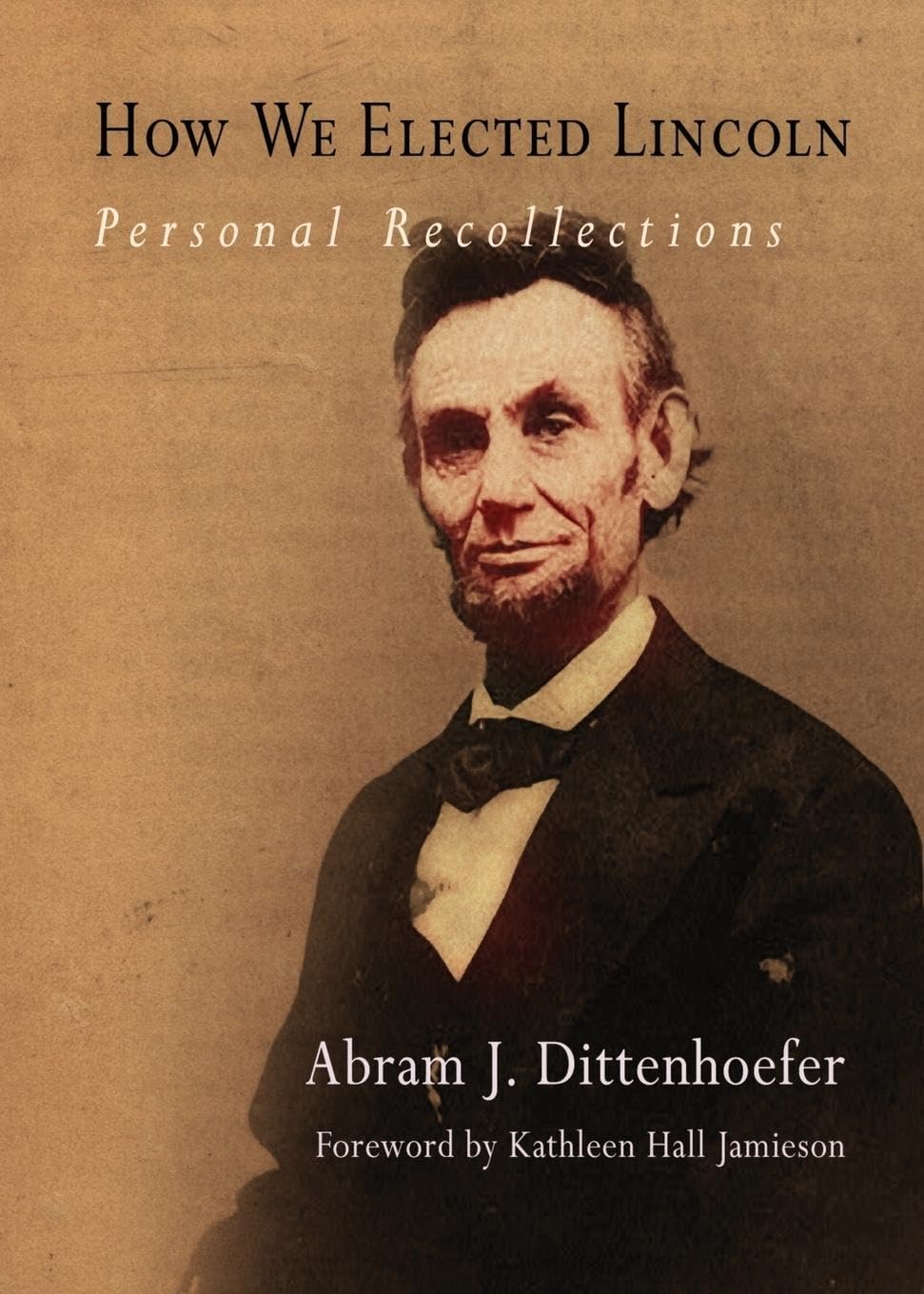
How We Elected Lincoln: Personal Recollections,Used
Sold by Ergodebooks, an authorized reseller.
Returns accepted within 30 days | support@ergodebooks.com
Shipping Information
- Free Standard Shipping — United States only
- Processing Time: 1–3 business days
- Estimated Delivery: 3–5 business days after dispatch
- Double-boxed, fully insured & discreetly packaged
- Tracking number sent via email once dispatched
- Orders over $250 require signature upon delivery. Taxes calculated at checkout.
Returns & Refund
Returns accepted within 30 days of delivery.
Damaged or Defective Item
Free return shipping + replacement or full refund
Wrong Item Received
Free return shipping + replacement or full refund
Change of Mind
Return shipping at customer's expense · 25% restocking fee applies
Payment Option

Abram J. Dittenhoefer was a young South Carolinian who embraced abolition and moved to New York in order to work for the newly formed Republican party and its antislavery platform. Even though he was in his early twenties, he quickly established himself as a savvy and creative campaigner, and when he encountered Abraham Lincoln in New York City on February 27, 1860, a mutual friendship and trust were established. Soon, Dittenhoefer became a member of Lincoln's political circle, and he helped direct both of Lincoln's successful bids for the presidency.In How We Elected Lincoln, originally published in 1916 and appearing now for the first time in paperback, we have the only firsthand account of Lincoln's political campaigns. Here Lincoln emerges as a real human being, full of doubts and convictions, while the usual dryasdust recitation of political facts is transformed into heated, vivid, nailbiting episodes. Lincoln was an underdog in both of his elections, and Dittenhoefer conveys the extreme tension and acrimony of each campaign. Drama surrounds this wartime president who faced a grueling reelection campaign at the same moment he was grappling with the darkest moments for his Union cause. Faced with competition within his own party, Lincoln resigned himself to defeat but continued to make astute decisions. The sudden success of Ulysses S. Grant on the battlefield in the autumn of 1864 turned the tide for both the Union Army and Lincoln's fortunes with the electorate. According to Dittenhoefer, Lincoln's greatest legacy was the eradication of American slavery, and in this compact account the author shows from direct experience the difficulties and resistance Lincoln encountered while working to achieve his goal.
⚠️ WARNING (California Proposition 65):
This product may contain chemicals known to the State of California to cause cancer, birth defects, or other reproductive harm.
For more information, please visit www.P65Warnings.ca.gov.