
Title
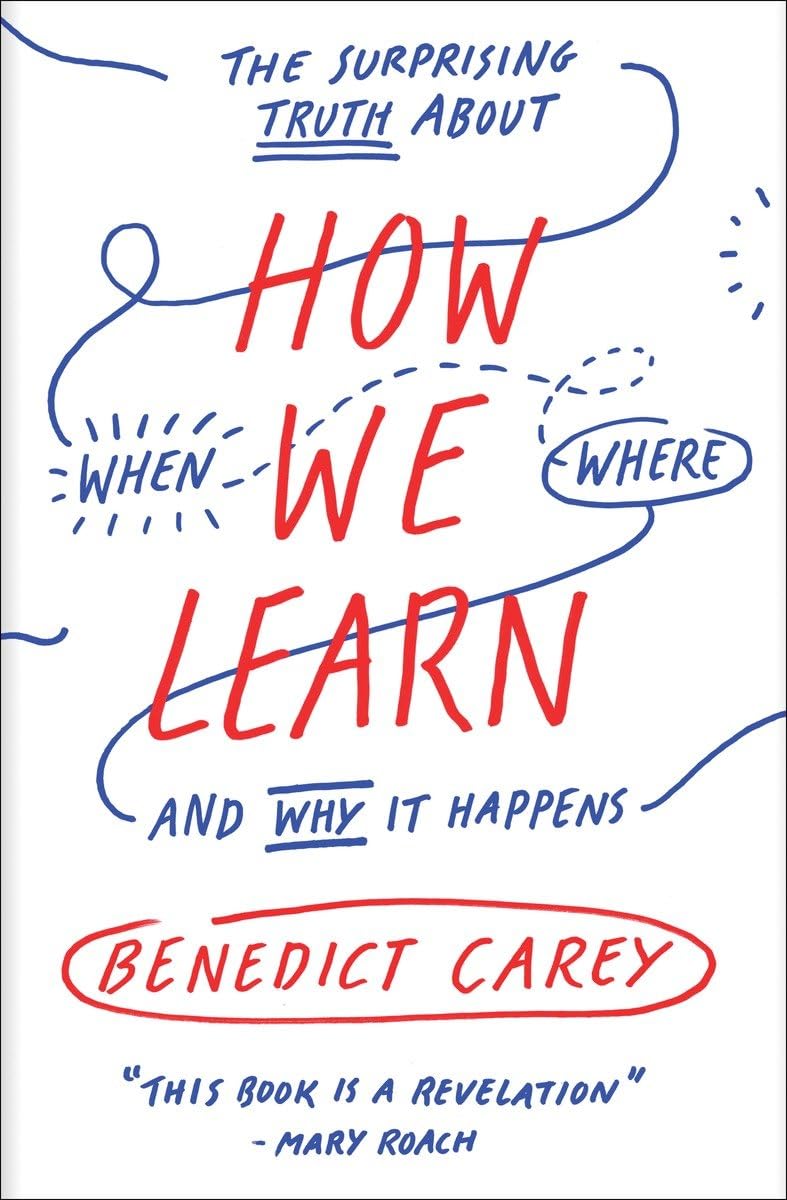
How We Learn: The Surprising Truth About When, Where, and Why It Happens,Used
Sold by Ergodebooks, an authorized reseller.
Returns accepted within 30 days | support@ergodebooks.com
Shipping Information
- Free Standard Shipping — United States only
- Processing Time: 3–5 business days
- Estimated Delivery: 6–10 business days after dispatch
- Double-boxed, fully insured & discreetly packaged
- Tracking number sent via email once dispatched
Returns & Refund
Returns accepted within 30 days of delivery.
Damaged or Defective Item
Free return shipping + replacement or full refund
Wrong Item Received
Free return shipping + replacement or full refund
Change of Mind
Return shipping at customer's expense · 25% restocking fee applies
Payment Option

In the tradition of The Power of Habit and Thinking, Fast and Slow comes a practical, playful, and endlessly fascinating guide to what we really know about learning and memory todayand how we can apply it to our own lives.From an early age, it is drilled into our heads: Restlessness, distraction, and ignorance are the enemies of success. Were told that learning is all selfdiscipline, that we must confine ourselves to designated study areas, turn off the music, and maintain a strict ritual if we want to ace that test, memorize that presentation, or nail that piano recital.But what if almost everything we were told about learning is wrong? And what if there was a way to achieve more with less effort?In How We Learn, awardwinning science reporter Benedict Carey sifts through decades of education research and landmark studies to uncover the truth about how our brains absorb and retain information. What he discovers is that, from the moment we are born, we are all learning quickly, efficiently, and automatically; but in our zeal to systematize the process we have ignored valuable, naturally enjoyable learning tools like forgetting, sleeping, and daydreaming. Is a dedicated desk in a quiet room really the best way to study? Can altering your routine improve your recall? Are there times when distraction is good? Is repetition necessary? Careys search for answers to these questions yields a wealth of strategies that make learning more a part of our everyday livesand less of a chore.By road testing many of the counterintuitive techniques described in this book, Carey shows how we can flex the neural muscles that make deep learning possible. Along the way he reveals why teachers should give final exams on the first day of class, why its wise to interleave subjects and concepts when learning any new skill, and when its smarter to stay up late prepping for that presentation than to rise early for one last cram session. And if this requires some suspension of disbelief, thats because the research defies what weve been told, throughout our lives, about how best to learn.The brain is not like a muscle, at least not in any straightforward sense. It is something else altogether, sensitive to mood, to timing, to circadian rhythms, as well as to location and environment. It doesnt take orders well, to put it mildly. If the brain is a learning machine, then it is an eccentric one. In How We Learn, Benedict Carey shows us how to exploit its quirks to our advantage.
⚠️ WARNING (California Proposition 65):
This product may contain chemicals known to the State of California to cause cancer, birth defects, or other reproductive harm.
For more information, please visit www.P65Warnings.ca.gov.