If you have any questions, you are always welcome to contact us. We'll get back to you as soon as possible, withing 24 hours on weekdays.
Customer service
All questions about your order, return and delivery must be sent to our customer service team by e-mail at yourstore@yourdomain.com
Sale & Press
If you are interested in selling our products, need more information about our brand or wish to make a collaboration, please contact us at press@yourdomain.com
Help
If you have any questions, you are always welcome to contact us. We'll get back to you as soon as possible, withing 24 hours on weekdays.
Customer service
All questions about your order, return and delivery must be sent to our customer service team by e-mail at yourstore@yourdomain.com
Sale & Press
If you are interested in selling our products, need more information about our brand or wish to make a collaboration, please contact us at press@yourdomain.com
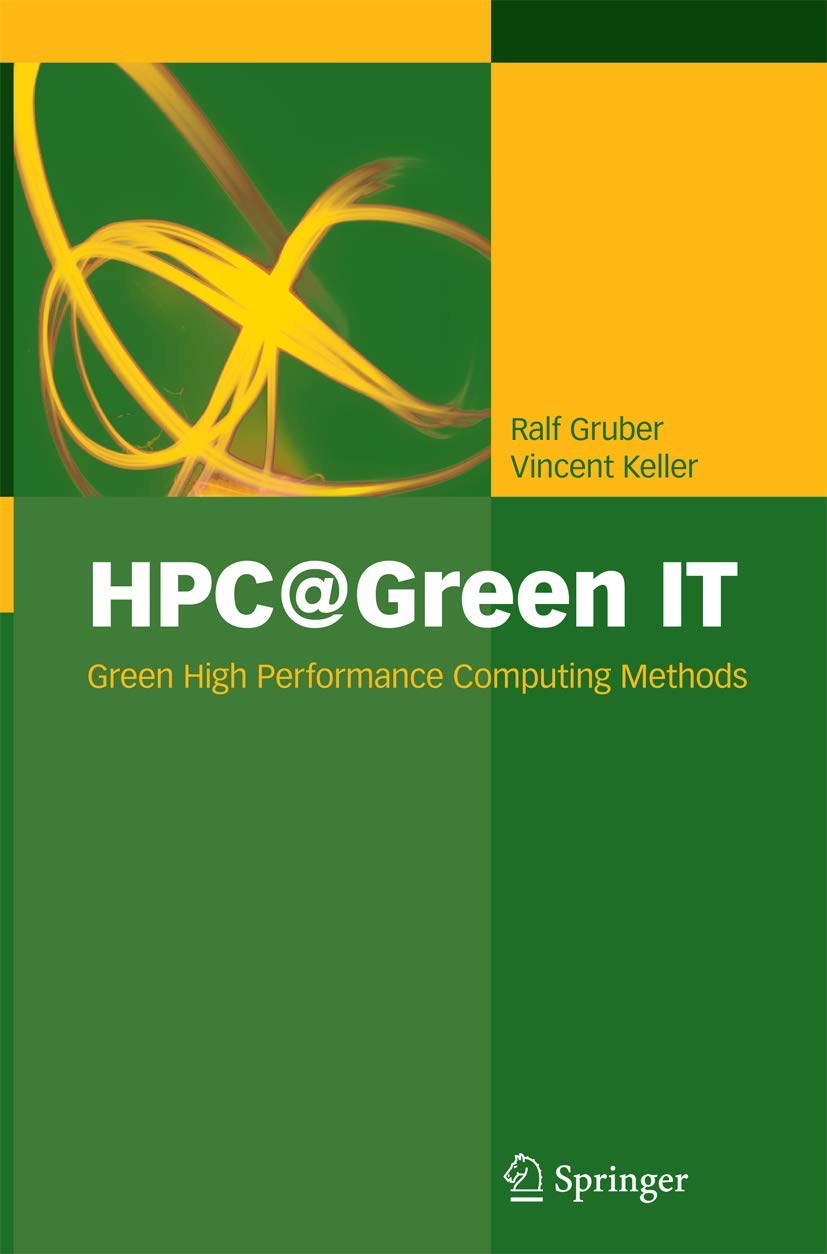
Making the most ef?cient use of computer systems has rapidly become a leading topic of interest for the computer industry and its customers alike. However, the focus of these discussions is often on single, isolated, and speci?c architectural and technological improvements for power reduction and conservation, while ignoring the fact that power ef?ciency as a ratio of performance to power consumption is equally in?uenced by performance improvements and architectural power red tion. Furthermore, ef?ciency can be in?uenced on all levels of todays system hi archies from single cores all the way to distributed Grid environments. To improve execution and power ef?ciency requires progress in such diverse ?elds as program optimization, optimization of program scheduling, and power reduction of idling system components for all levels of the system hierarchy. Improving computer system ef?ciency requires improving system performance and reducing system power consumption. To research and reach reasonable conc sions about system performance we need to not only understand the architectures of our computer systems and the available array of code transformations for p formance optimizations, but we also need to be able to express this understanding in performance models good enough to guide decisions about code optimizations for speci?c systems. This understanding is necessary on all levels of the system hierarchy from single cores to nodes to full high performance computing (HPC) systems, and eventually to Grid environments with multiple systems and resources.
⚠️ WARNING (California Proposition 65):
This product may contain chemicals known to the State of California to cause cancer,
birth defects, or other reproductive harm.
For MAP (Minimum Advertised Price) violations and Intellectual Property (IP) or Trademark concerns, please contact:
support@ergodebooks.com
⚠️ California Proposition 65 Warning: Some products sold on this website may expose you to chemicals known to the State of California to cause cancer, birth defects, or other reproductive harm. For more information, visit www.P65Warnings.ca.gov.