
Title
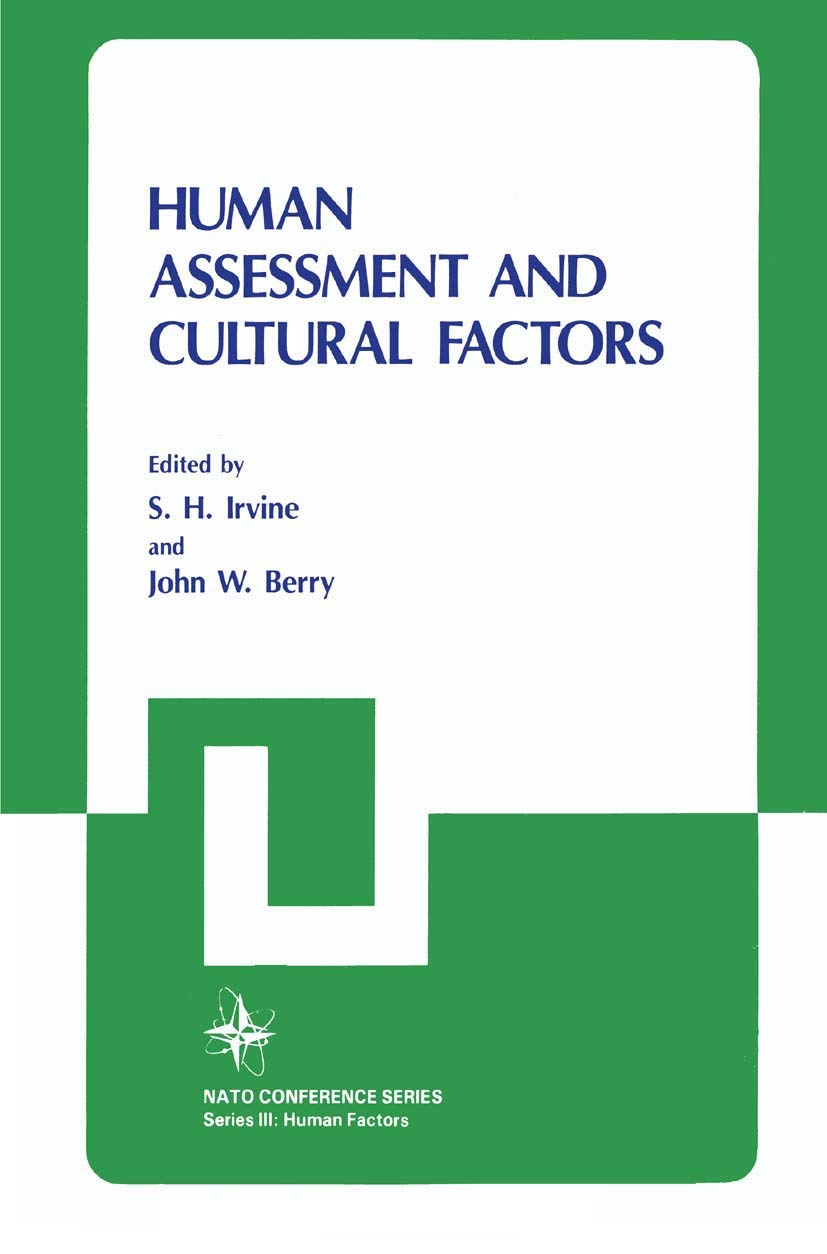
Human Assessment and Cultural Factors (Nato Conference Series, 21),New
Sold by Ergodebooks, an authorized reseller.
Returns accepted within 30 days | support@ergodebooks.com
Shipping Information
- Free Standard Shipping — United States only
- Processing Time: 3–5 business days
- Estimated Delivery: 6–10 business days after dispatch
- Double-boxed, fully insured & discreetly packaged
- Tracking number sent via email once dispatched
Returns & Refund
Returns accepted within 30 days of delivery.
Damaged or Defective Item
Free return shipping + replacement or full refund
Wrong Item Received
Free return shipping + replacement or full refund
Change of Mind
Return shipping at customer's expense · 25% restocking fee applies
Payment Option

Against the background of NATO's Istanbul conference of 1971 (Cronbach and Drenth, 1972), the Kingston conference shows that great progress has been made by the community of crosscultural psychologists. The progress is as much in the psychology of the investigators as in the investigations being reported. In 1971 the investigators were mostly strangers to each other. Behind their reports lay radically different field experiences, disparate research traditions, and mutually contradictory social ideals. Istanbul was not a Tower of Babel, but participants did speak past each other. Now a community exists, thanks to the meetings of NATO and the International Association for CrossCultural Psychology, to flourishing journals, and the Triandis et a1. (1980) Handbook. The members tend to know each other, can anticipate how their formu lations will fallon the ears of others, and accept superficially divergent approaches as making up a collective enterprise. Ten years ago there was open conflict between those who con fronted exotic peoples with traditional tests and applied tradi tional interpretations to the responses, and the relativists who insisted that tasks, test taking, and interpretation cannot be 'standardized' in the ways that matter. Today's investigators are conscious of the need to revalidate tasks carried into alien settings; they often prefer to redesign the mode of presentation and to attune the subject to test taking. They face the diffi culties squarely and recognize that even the best means of coping are only partially successful.
⚠️ WARNING (California Proposition 65):
This product may contain chemicals known to the State of California to cause cancer, birth defects, or other reproductive harm.
For more information, please visit www.P65Warnings.ca.gov.