
Title
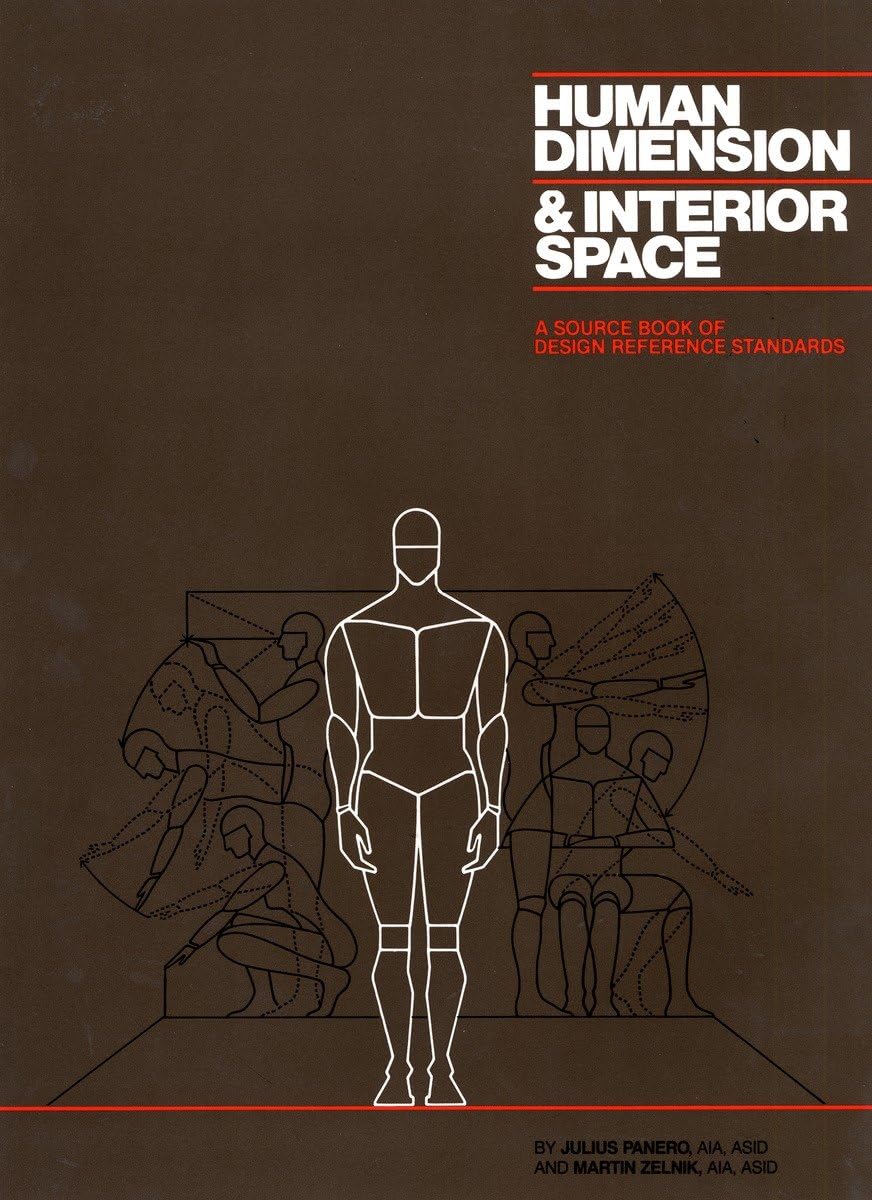
Human Dimension & Interior Space: A Source Book Of Design Reference Standards
Sold by Ergodebooks, an authorized reseller.
Returns accepted within 30 days | support@ergodebooks.com
Shipping Information
- Free Standard Shipping — United States only
- Processing Time: 3–5 business days
- Estimated Delivery: 6–10 business days after dispatch
- Double-boxed, fully insured & discreetly packaged
- Tracking number sent via email once dispatched
Returns & Refund
Returns accepted within 30 days of delivery.
Damaged or Defective Item
Free return shipping + replacement or full refund
Wrong Item Received
Free return shipping + replacement or full refund
Change of Mind
Return shipping at customer's expense · 25% restocking fee applies
Payment Option

The Study Of Human Body Measurements On A Comparative Basis Is Known As Anthropometrics. Its Applicability To The Design Process Is Seen In The Physical Fit, Or Interface, Between The Human Body And The Various Components Of Interior Space.Human Dimension And Interior Space Is The First Major Anthropometrically Based Reference Book Of Design Standards For Use By All Those Involved With The Physical Planning And Detailing Of Interiors, Including Interior Designers, Architects, Furniture Designers, Builders, Industrial Designers, And Students Of Design. The Use Of Anthropometric Data, Although No Substitute For Good Design Or Sound Professional Judgment Should Be Viewed As One Of The Many Tools Required In The Design Process. This Comprehensive Overview Of Anthropometrics Consists Of Three Parts.The First Part Deals With The Theory And Application Of Anthropometrics And Includes A Special Section Dealing With Physically Disabled And Elderly People. It Provides The Designer With The Fundamentals Of Anthropometrics And A Basic Understanding Of How Interior Design Standards Are Established. The Second Part Contains Easytoread, Illustrated Anthropometric Tables, Which Provide The Most Current Data Available On Human Body Size, Organized By Age And Percentile Groupings. Also Included Is Data Relative To The Range Of Joint Motion And Body Sizes Of Children. The Third Part Contains Hundreds Of Dimensioned Drawings, Illustrating In Plan And Section The Proper Anthropometrically Based Relationship Between User And Space. The Types Of Spaces Range From Residential And Commercial To Recreational And Institutional, And All Dimensions Include Metric Conversions.In The Epilogue, The Authors Challenge The Interior Design Profession, The Building Industry, And The Furniture Manufacturer To Seriously Explore The Problem Of Adjustability In Design. They Expose The Fallacy Of Designing To Accommodate The Socalled Average Man, Who, In Fact, Does Not Exist. Using Government Data, Including Studies Prepared By Dr. Howard Stoudt, Dr. Albert Damon, And Dr. Ross Mcfarland, Formerly Of The Harvard School Of Public Health, And Jean Roberts Of The U.S. Public Health Service, Panero And Zelnik Have Devised A System Of Interior Design Reference Standards, Easily Understood Through A Series Of Charts And Situation Drawings. With Human Dimension And Interior Space, These Standards Are Now Accessible To All Designers Of Interior Environments.
⚠️ WARNING (California Proposition 65):
This product may contain chemicals known to the State of California to cause cancer, birth defects, or other reproductive harm.
For more information, please visit www.P65Warnings.ca.gov.
- Q: What are the dimensions of the book? A: The book measures nine point three inches in length, one point zero four inches in width, and twelve point two inches in height.
- Q: How many pages does the book have? A: The book contains three hundred twenty pages, providing a comprehensive overview of anthropometrics in interior design.
- Q: What type of binding does this book have? A: This book is bound in hardcover, ensuring durability and longevity for frequent use.
- Q: Who is the author of this book? A: The author of this book is Julius Panero, who has extensive expertise in interior design and anthropometrics.
- Q: What is the main focus of this book? A: The main focus of the book is on anthropometric data and its application to the design of interior spaces.
- Q: Is this book suitable for beginners in interior design? A: Yes, this book is suitable for beginners, as it provides fundamental concepts and illustrated tables for easy understanding.
- Q: Can this book be used by professionals in architecture? A: Yes, professionals in architecture can use this book as a reference for design standards and anthropometric data.
- Q: Is this book helpful for designing spaces for elderly individuals? A: Yes, the book includes a special section addressing the needs of elderly individuals and physically disabled people.
- Q: How should I care for this hardcover book? A: To care for this hardcover book, keep it in a dry place, avoid direct sunlight, and handle it gently to prevent damage.
- Q: Is there any special maintenance required for this book? A: No special maintenance is required; simply store it properly and avoid exposure to moisture.
- Q: What if the book arrives damaged? A: If the book arrives damaged, contact the seller for return or exchange options, as they typically have a customer support policy.
- Q: Can I return the book if I'm not satisfied? A: Yes, you can usually return the book if you are not satisfied, but check the specific return policy of the seller.
- Q: Is this book a good reference for furniture design? A: Yes, this book serves as a valuable reference for furniture designers by providing relevant anthropometric data.
- Q: How does this book compare to other design reference books? A: This book is unique due to its focus on anthropometrics, making it a specialized resource compared to general design books.
- Q: Is this book suitable for design students? A: Yes, design students will find this book beneficial as it covers essential principles of human dimensions in design.
- Q: Does this book include illustrations? A: Yes, the book includes illustrated tables and dimensioned drawings to aid understanding of anthropometric concepts.