If you have any questions, you are always welcome to contact us. We'll get back to you as soon as possible, withing 24 hours on weekdays.
Customer service
All questions about your order, return and delivery must be sent to our customer service team by e-mail at yourstore@yourdomain.com
Sale & Press
If you are interested in selling our products, need more information about our brand or wish to make a collaboration, please contact us at press@yourdomain.com
Help
If you have any questions, you are always welcome to contact us. We'll get back to you as soon as possible, withing 24 hours on weekdays.
Customer service
All questions about your order, return and delivery must be sent to our customer service team by e-mail at yourstore@yourdomain.com
Sale & Press
If you are interested in selling our products, need more information about our brand or wish to make a collaboration, please contact us at press@yourdomain.com
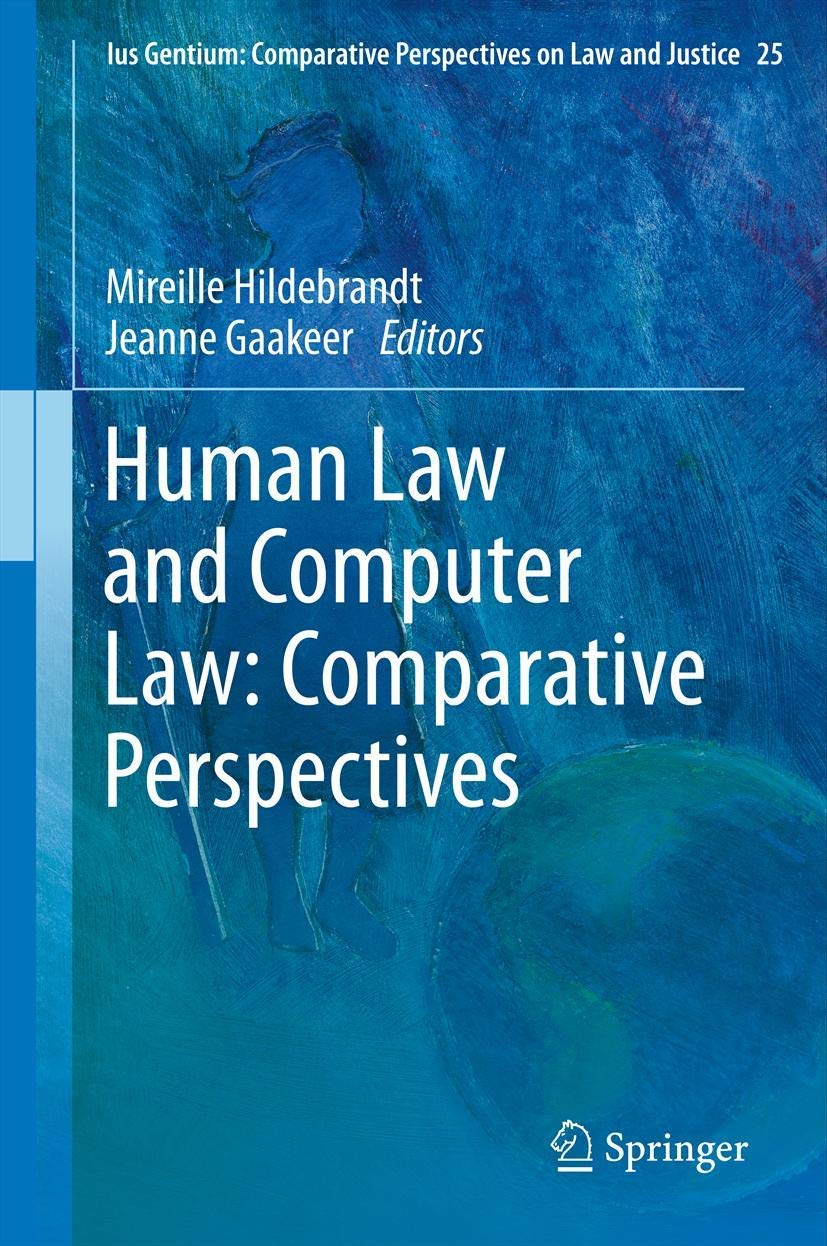
The focus of this book is on the epistemological and hermeneutic implications of data science and artificial intelligence for democracy and the Rule of Law. How do the normative effects of automated decision systems or the interventions of robotic fellow beings compare to the legal effect of written and unwritten law? To investigate these questions the book brings together two disciplinary perspectives rarely combined within the framework of one volume. One starts from the perspective of code and law and the other develops from the domain of law and literature. Integrating original analyses of relevant novels or films, the authors discuss how computational technologies challenge traditional forms of legal thought and affect the regulation of human behavior. Thus, pertinent questions are raised about the theoretical assumptions underlying both scientific and legal practice.
⚠️ WARNING (California Proposition 65):
This product may contain chemicals known to the State of California to cause cancer,
birth defects, or other reproductive harm.
For MAP (Minimum Advertised Price) violations and Intellectual Property (IP) or Trademark concerns, please contact:
support@ergodebooks.com
⚠️ California Proposition 65 Warning: Some products sold on this website may expose you to chemicals known to the State of California to cause cancer, birth defects, or other reproductive harm. For more information, visit www.P65Warnings.ca.gov.