If you have any questions, you are always welcome to contact us. We'll get back to you as soon as possible, withing 24 hours on weekdays.
Customer service
All questions about your order, return and delivery must be sent to our customer service team by e-mail at yourstore@yourdomain.com
Sale & Press
If you are interested in selling our products, need more information about our brand or wish to make a collaboration, please contact us at press@yourdomain.com
Help
If you have any questions, you are always welcome to contact us. We'll get back to you as soon as possible, withing 24 hours on weekdays.
Customer service
All questions about your order, return and delivery must be sent to our customer service team by e-mail at yourstore@yourdomain.com
Sale & Press
If you are interested in selling our products, need more information about our brand or wish to make a collaboration, please contact us at press@yourdomain.com
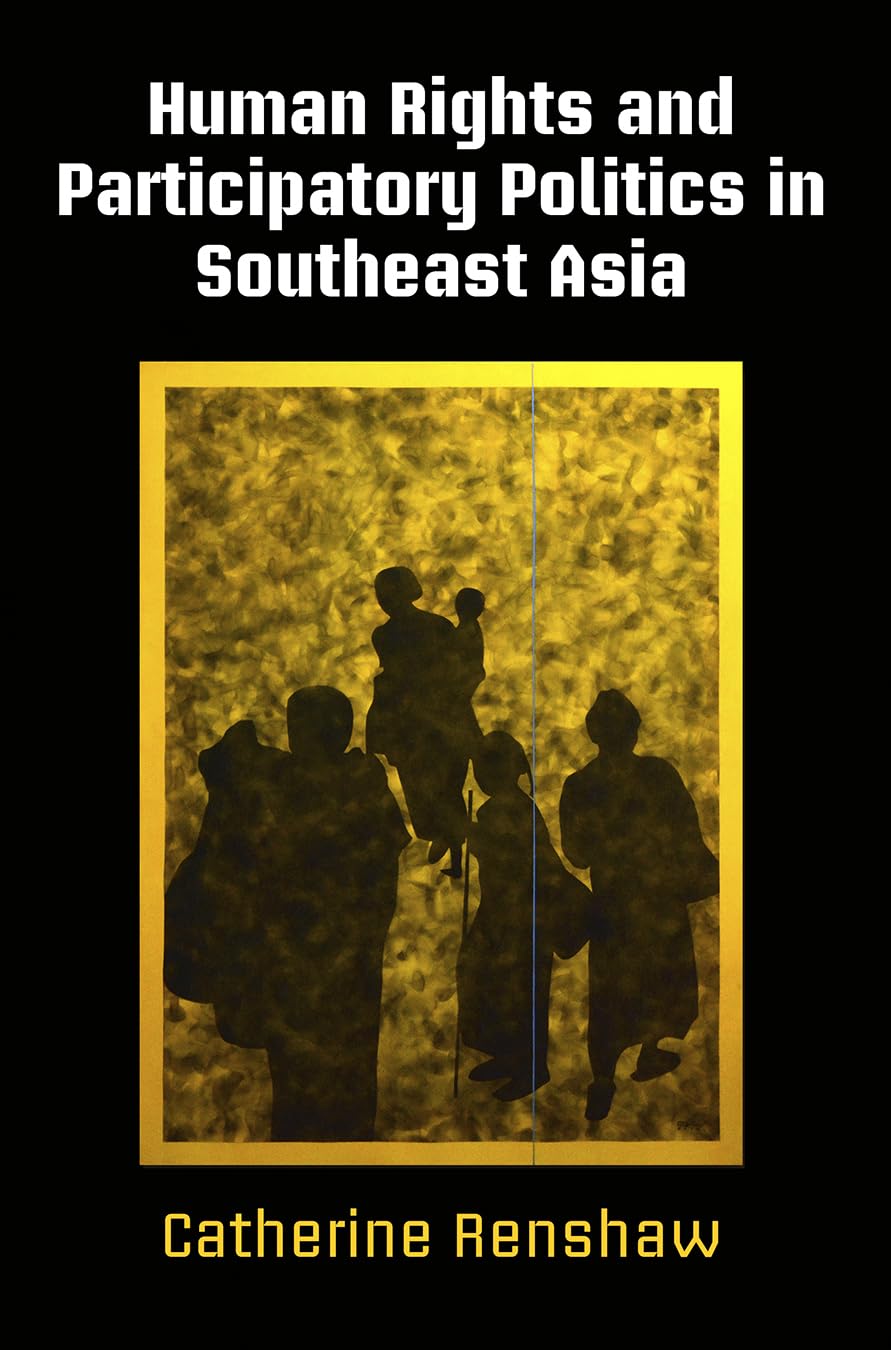
In Human Rights and Participatory Politics in Southeast Asia, Catherine Renshaw recounts an extraordinary period of human rights institutionbuilding in Southeast Asia. She begins her account in 2007, when the ten members of the Association of Southeast Asian Nations (ASEAN) signed the ASEAN charter, committing members for the first time to principles of human rights, democracy, and the rule of law. In 2009, the ASEAN Intergovernmental Commission on Human Rights was established with a mandate to uphold internationally recognized human rights standards. In 2013, the ASEAN Human Rights Declaration was adopted as a framework for human rights cooperation in the region and a mechanisim for ASEAN community building. Renshaw explains why these developments emerged when they did and assesses the impact of these institutions in the first decade of their existence.In her examination of ASEAN, Renshaw asks how human rights can be implemented in and between states that are politically diverseVietnam and Laos are Communist; Brunei Darussalam is an Islamic sultanate; Myanmar is in transition from a military dictatorship; the Philippines and Indonesia are established multiparty democracies; while the remaining members are less easily defined. Renshaw cautions that ASEAN is limited in its ability to shape the practices of its members because it lacks a preponderance of democratic states. However, she concludes that, in the absence of a global legalized human rights order, the most significant practical advancements in the promotion of human rights have emerged from regional institutions such as the ASEAN.
⚠️ WARNING (California Proposition 65):
This product may contain chemicals known to the State of California to cause cancer,
birth defects, or other reproductive harm.
For MAP (Minimum Advertised Price) violations and Intellectual Property (IP) or Trademark concerns, please contact:
support@ergodebooks.com
⚠️ California Proposition 65 Warning: Some products sold on this website may expose you to chemicals known to the State of California to cause cancer, birth defects, or other reproductive harm. For more information, visit www.P65Warnings.ca.gov.