
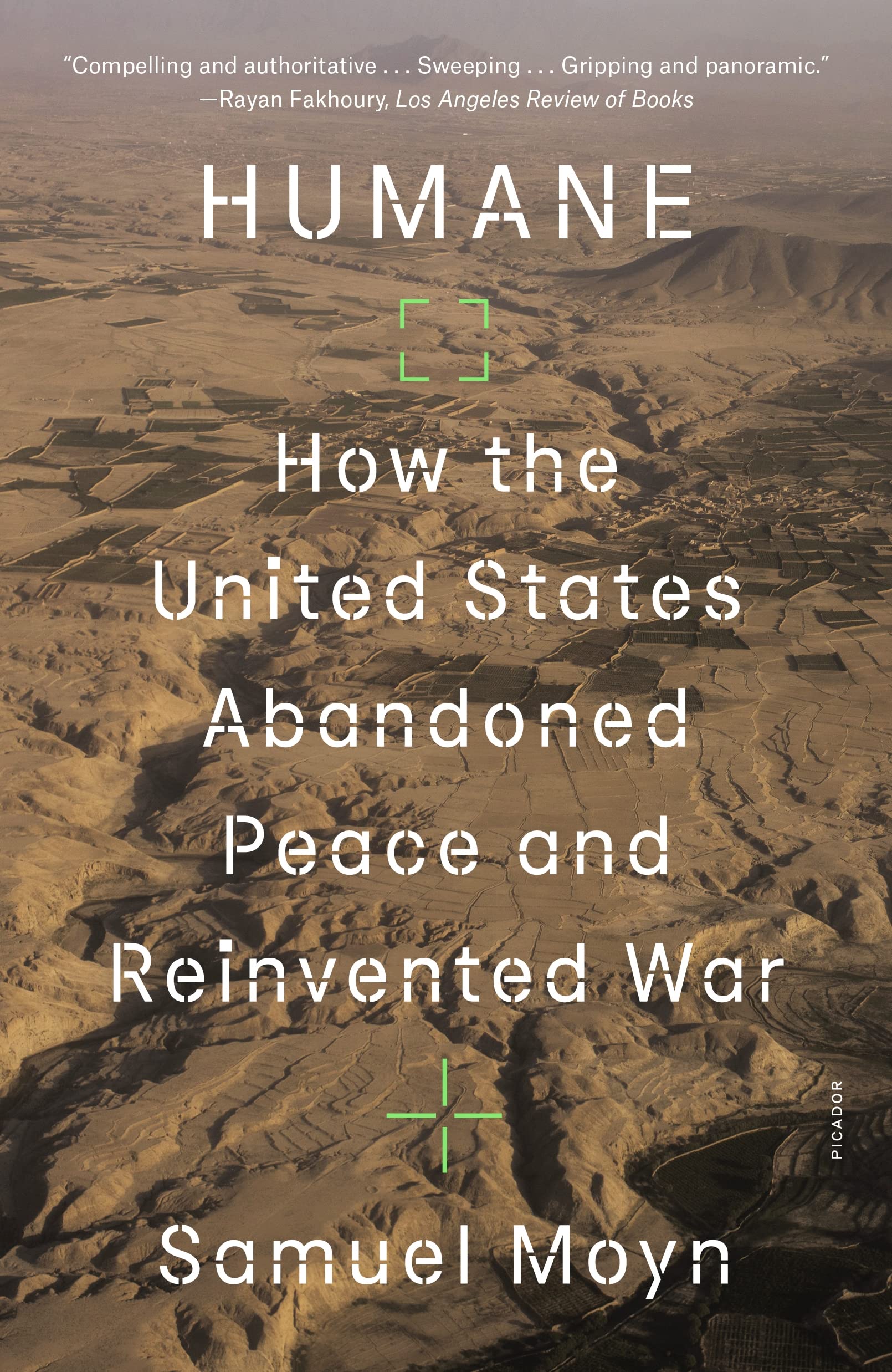
Title
Humane: How the United States Abandoned Peace and Reinvented War,Used
Sold by Ergodebooks, an authorized reseller.
Returns accepted within 30 days | support@ergodebooks.com
Shipping Information
- Free Standard Shipping — United States only
- Processing Time: 3–5 business days
- Estimated Delivery: 6–10 business days after dispatch
- Double-boxed, fully insured & discreetly packaged
- Tracking number sent via email once dispatched
Returns & Refund
Returns accepted within 30 days of delivery.
Damaged or Defective Item
Free return shipping + replacement or full refund
Wrong Item Received
Free return shipping + replacement or full refund
Change of Mind
Return shipping at customer's expense · 25% restocking fee applies
Payment Option

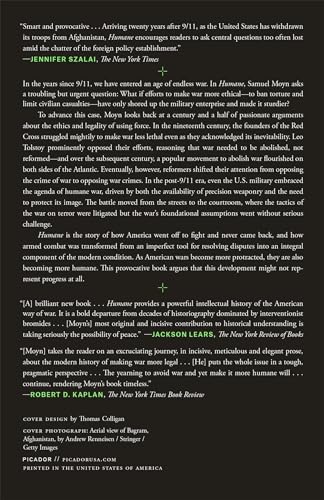
A prominent historian exposes the dark side of making war more humaneIn the years since 9/11, we have entered an age of endless war, with the United States exercising dominion everywhere. In Humane, Samuel Moyn asks a troubling but urgent question: What if efforts to make war more ethicalto ban torture and limit civilian casualtieshave only shored up the military enterprise and made it sturdier?To advance this case, Moyn looks back at a century and a half of passionate arguments about the ethics and law of using force. In the nineteenth century, the founders of the Red Cross struggled mightily to make war less lethal even as they acknowledged its inevitability. Leo Tolstoy prominently opposed their efforts, reasoning that war needed to be abolished, not reformedand over the subsequent century, a popular movement to abolish war flourished on both sides of the Atlantic. Eventually, however, reformers shifted their attention from opposing the crime of war to opposing war crimes.In the post9/11 era, the U.S. military embraced the agenda of humane war, driven by both the availability of precision weaponry and the need to protect its image. The battle moved from the streets to the courtroom, where the tactics of the war on terror were litigated but the war? foundational assumptions went without serious challenge. These trends have only accelerated since. Even as the Obama and Trump administrations spoke of American power and morality in radically different tones, they ushered in the second decade of the ?orever?war.Humane is the story of how America went off to fight and never came back, and how armed combat was transformed from an imperfect tool for resolving disputes into an integral component of the modern condition. As American wars become more protracted, they are also becoming more humane. This provocative book argues that this development might not represent progress at all.
⚠️ WARNING (California Proposition 65):
This product may contain chemicals known to the State of California to cause cancer, birth defects, or other reproductive harm.
For more information, please visit www.P65Warnings.ca.gov.
- Q: How many pages does this book have? A: This book has four hundred sixteen pages. It provides an in-depth exploration of the ethics of modern warfare.
- Q: What is the binding type of the book? A: The book is available in paperback binding. This makes it lightweight and easy to handle for reading.
- Q: What are the dimensions of the book? A: The book measures five point six inches in length, one point two inches in width, and eight point seven inches in height. This size is portable for reading on the go.
- Q: Who is the author of this book? A: The author of the book is Samuel Moyn. He is a prominent historian known for his work on the ethics of war.
- Q: What is the main theme of the book? A: The main theme revolves around how the United States has redefined warfare post nine eleven. It critically examines the ethics and implications of humane warfare.
- Q: Is this book suitable for academic study? A: Yes, this book is suitable for academic study. It provides historical insights and critical analysis of war ethics that can be valuable for students and scholars.
- Q: How should I care for this book? A: To care for this book, keep it in a dry place away from direct sunlight. This will prevent fading and ensure longevity.
- Q: Is this book appropriate for younger readers? A: No, this book is not appropriate for younger readers. Its themes and discussions on war may not be suitable for children.
- Q: Can this book be used for research on modern warfare? A: Yes, this book can be used for research on modern warfare. It explores various historical and ethical perspectives that are relevant to contemporary discussions.
- Q: What if the book arrives damaged? A: If the book arrives damaged, you should contact customer support for a replacement. Most retailers offer return policies for damaged items.
- Q: Is there a specific audience for this book? A: Yes, the book targets readers interested in history, ethics, and military studies. It appeals to those who want a deeper understanding of warfare's evolution.
- Q: How does this book compare to other war history books? A: This book uniquely focuses on the transformation of warfare into humane practices, unlike many other war history books that may not critique this aspect.
- Q: What are the key arguments presented in the book? A: The key arguments include the notion that efforts to make war humane may actually reinforce military actions rather than diminish them. Moyn challenges the ethics behind these actions.
- Q: Is there a specific reading level for this book? A: The book is best suited for adult readers and scholars. It contains complex themes that require a mature understanding.
- Q: Does the book include any illustrations or images? A: No, the book does not include illustrations or images. It primarily focuses on text and analysis.