
Title

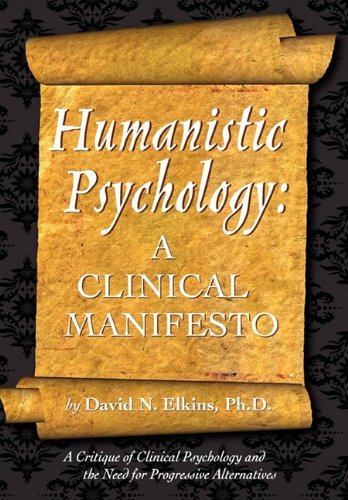
Humanistic Psychology: A Clinical Manifesto. A Critique Of Clinical Psychology And The Need For Progressive Alternatives
Sold by Ergodebooks, an authorized reseller.
Returns accepted within 30 days | support@ergodebooks.com
Shipping Information
- Free Standard Shipping — United States only
- Processing Time: 3–5 business days
- Estimated Delivery: 6–10 business days after dispatch
- Double-boxed, fully insured & discreetly packaged
- Tracking number sent via email once dispatched
Returns & Refund
Returns accepted within 30 days of delivery.
Damaged or Defective Item
Free return shipping + replacement or full refund
Wrong Item Received
Free return shipping + replacement or full refund
Change of Mind
Return shipping at customer's expense · 25% restocking fee applies
Payment Option

Humanistic Psychology: A Clinical Manifesto Is Destined To Impact Not Only The Face Of Humanistic Psychology, But The Field Of Psychotherapy In General. David N. Elkins, A Long Time Leading Voice In Humanistic Psychology, Presents A Compelling Case About What Is Wrong With Contemporary Psychotherapy And How, Through A Reenvisioned Humanistic Psychology, It Needs To Change. The Book Challenges The Medical Model In Psychotherapy And Summarizes Contemporary Analyses And Metaanalyses Of Psychotherapy Research That Make It Clear That Contextual Factors Not Techniques Are The Primary Determinants Of Therapeutic Effectiveness. With A Foreword Written By Natalie Rogers, Daughter Of Carl Rogers, One Of The Most Influential Clinical Psychologists Of The Past Century, Elkins Is Already Receiving The Praise From Many Leading Figures In The Humanistic Psychology Movement.
⚠️ WARNING (California Proposition 65):
This product may contain chemicals known to the State of California to cause cancer, birth defects, or other reproductive harm.
For more information, please visit www.P65Warnings.ca.gov.
- Q: How many pages does this book have? A: This book has one hundred ninety-six pages. It's a comprehensive read on humanistic psychology and psychotherapy.
- Q: What is the binding type of this book? A: This book is paperback bound. This makes it lightweight and easy to handle for reading.
- Q: Who is the author of this book? A: The author is David N. Elkins. He is a prominent figure in the field of humanistic psychology.
- Q: What themes are explored in this book? A: This book explores themes of psychotherapy, humanistic psychology, and alternative therapeutic approaches. It critiques contemporary practices and emphasizes contextual factors in therapy.
- Q: Is this book suitable for beginners in psychology? A: Yes, this book is suitable for beginners. It provides insights into humanistic psychology that can benefit both novices and practitioners.
- Q: What is the recommended reading level for this book? A: This book is recommended for adult readers. It addresses complex themes in psychology that may require a mature understanding.
- Q: How should I care for this paperback book? A: To care for this paperback book, store it in a cool, dry place and avoid exposure to direct sunlight. This will help maintain its condition over time.
- Q: Can this book be returned if I'm not satisfied? A: Yes, this book can typically be returned if not satisfied. Check the retailer’s return policy for specific details.
- Q: What if the book arrives damaged? A: If the book arrives damaged, you should contact the retailer for a replacement or refund. Most retailers have policies in place for damaged items.
- Q: Is this book suitable for a psychology course? A: Yes, this book is suitable for a psychology course. It offers critical insights that can enhance discussions and understanding of psychotherapy.
- Q: How does this book compare to traditional psychotherapy texts? A: This book differs from traditional psychotherapy texts by focusing on humanistic approaches and contextual factors rather than solely on techniques.
- Q: What makes this book a critique of clinical psychology? A: This book critiques clinical psychology by challenging the medical model and emphasizing the need for progressive alternatives in therapy.
- Q: Who wrote the foreword for this book? A: The foreword for this book was written by Natalie Rogers. She is the daughter of Carl Rogers, a significant figure in psychology.
- Q: What type of readers would benefit from this book? A: Readers interested in psychotherapy, humanistic psychology, and alternative therapeutic practices would benefit from this book.
- Q: Does this book provide practical applications for therapy? A: Yes, the book discusses practical applications for therapy, focusing on contextual factors that influence therapeutic effectiveness.