If you have any questions, you are always welcome to contact us. We'll get back to you as soon as possible, withing 24 hours on weekdays.
Customer service
All questions about your order, return and delivery must be sent to our customer service team by e-mail at yourstore@yourdomain.com
Sale & Press
If you are interested in selling our products, need more information about our brand or wish to make a collaboration, please contact us at press@yourdomain.com
Help
If you have any questions, you are always welcome to contact us. We'll get back to you as soon as possible, withing 24 hours on weekdays.
Customer service
All questions about your order, return and delivery must be sent to our customer service team by e-mail at yourstore@yourdomain.com
Sale & Press
If you are interested in selling our products, need more information about our brand or wish to make a collaboration, please contact us at press@yourdomain.com
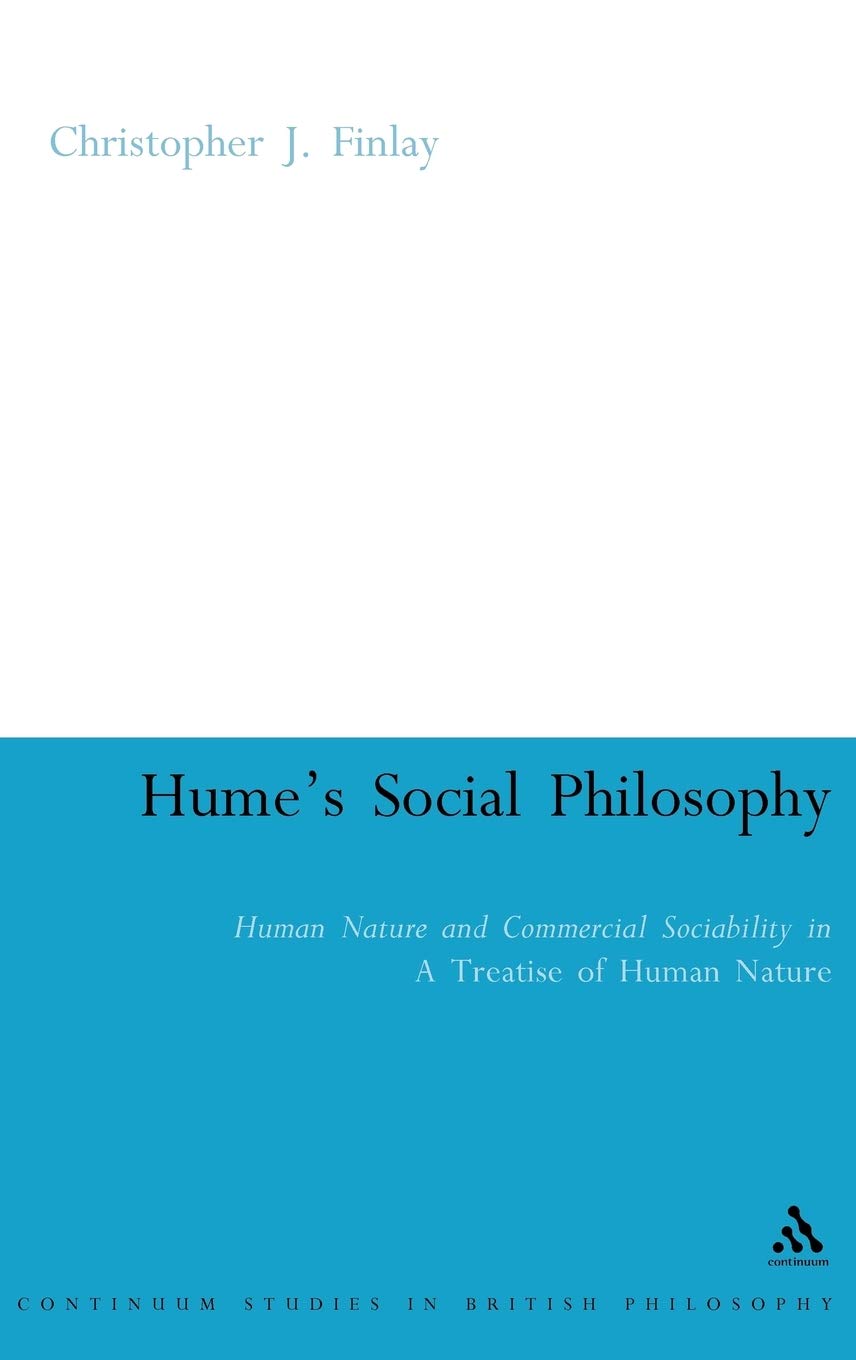
In Hume's Social Philosophy, Christopher J Finlay presents a highly original and engaging reading of David Hume's landmark text, A Treatise of Human Nature, and political writings published immediately after it, articulating a unified view of his theory of human nature in society and his political philosophy. The book explores the hitherto neglected social contexts within which Hume's ideas were conceived. While a great deal of attention has previously been given to Hume's intellectual and literary contexts, important connections can also be made between the fundamentals of Hume's philosophy and the social world in which it was developed.Finlay argues that Hume's unified theory of human nature, conceived in terms of passions, reason and sociability, was meant to account for human nature in its most articulate manifestations, in the commercial and 'polite' social contexts of eighteenthcentury Europe. Through careful exegetical study of Hume's analysis of reasoning and the passions, Finlay explores the diverse aspects of sociability which the Treatise of Human Nature invokes. In particular, this study finds in the Treatise an important exploration of the tensions between the selfish motivations of individuals and their propensity to bond with others in complex and diverse kinds of social group. Analysis of Book III of the Treatise and of essays published afterwards shows how the various individualist and social propensities explored through the passions are addressed in Hume's theories of justice, morals and politics.
⚠️ WARNING (California Proposition 65):
This product may contain chemicals known to the State of California to cause cancer,
birth defects, or other reproductive harm.
For MAP (Minimum Advertised Price) violations and Intellectual Property (IP) or Trademark concerns, please contact:
support@ergodebooks.com
⚠️ California Proposition 65 Warning: Some products sold on this website may expose you to chemicals known to the State of California to cause cancer, birth defects, or other reproductive harm. For more information, visit www.P65Warnings.ca.gov.