If you have any questions, you are always welcome to contact us. We'll get back to you as soon as possible, withing 24 hours on weekdays.
Customer service
All questions about your order, return and delivery must be sent to our customer service team by e-mail at yourstore@yourdomain.com
Sale & Press
If you are interested in selling our products, need more information about our brand or wish to make a collaboration, please contact us at press@yourdomain.com
Help
If you have any questions, you are always welcome to contact us. We'll get back to you as soon as possible, withing 24 hours on weekdays.
Customer service
All questions about your order, return and delivery must be sent to our customer service team by e-mail at yourstore@yourdomain.com
Sale & Press
If you are interested in selling our products, need more information about our brand or wish to make a collaboration, please contact us at press@yourdomain.com
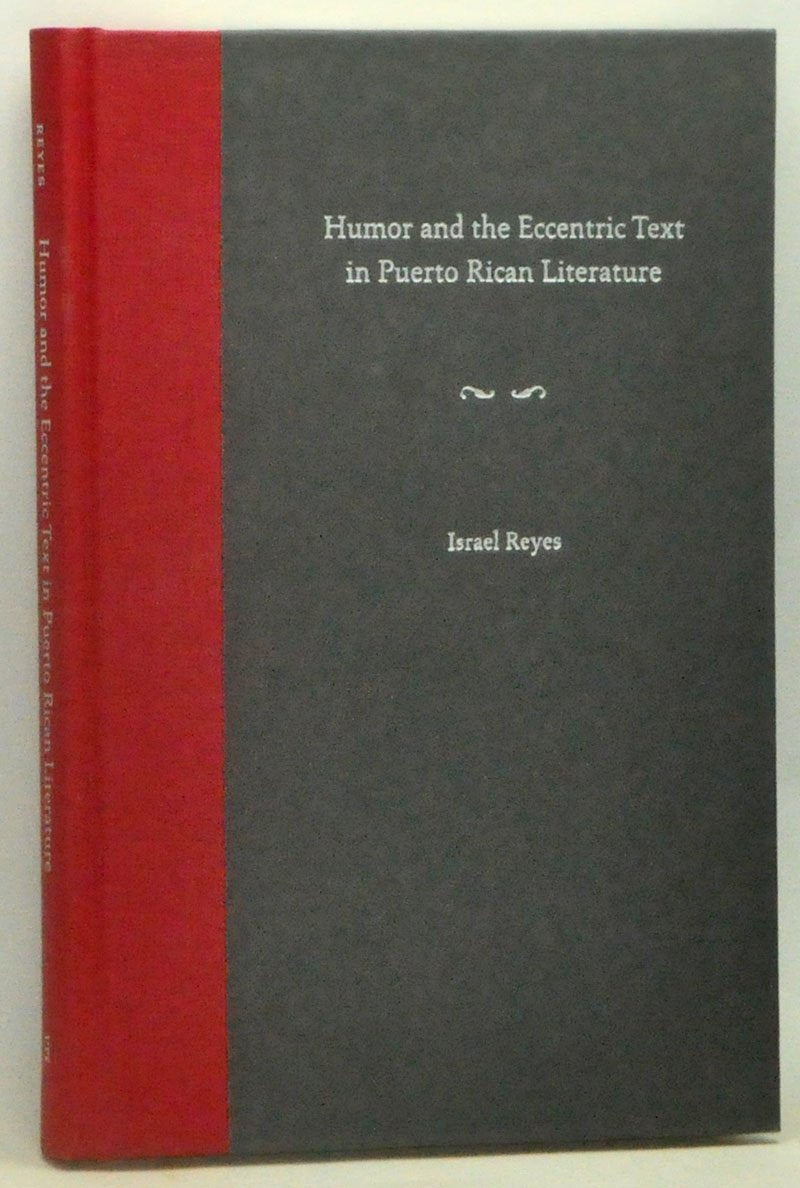
Puerto Rican writers from the island and mainland have long used a variety of comic genres and forms to affirm an autonomous national identity and resist cultural hegemony and assimilation. The use of selfreflexive humor has allowed these writers to produce eccentric texts that reflect not only on their own textuality but also on their role as an intervention in the literary discourse on national identity. Reyes analyzes the works of Nemesio Canales, Luis Rafael Snchez, Ana Lydia Vega, and Pedro Pietri to argue that their works resituate the parameters of national identity by blurring the lines between the subject and object of humor, the inside and outside of the text, and the here and there of the diasporic Puerto Rican nation.Framing his discussion in the context of Latin American, Latino, and Caribbean traditions, Reyes argues that humor and the eccentric text reimagine Puerto Rican national identity from the perspective of incongruity. He demonstrates how, through selfreflexive humor, these writers expose the many incongruities in Puerto Rican national identity yet also explore the relationship between author and reader. While demonstrating the genres own instabilities, Reyes argues, humor in Puerto Rican literature negotiates incongruity and allows for a national identity to emerge from multiple centers of articulation.
⚠️ WARNING (California Proposition 65):
This product may contain chemicals known to the State of California to cause cancer,
birth defects, or other reproductive harm.
For MAP (Minimum Advertised Price) violations and Intellectual Property (IP) or Trademark concerns, please contact:
support@ergodebooks.com
⚠️ California Proposition 65 Warning: Some products sold on this website may expose you to chemicals known to the State of California to cause cancer, birth defects, or other reproductive harm. For more information, visit www.P65Warnings.ca.gov.