
Title
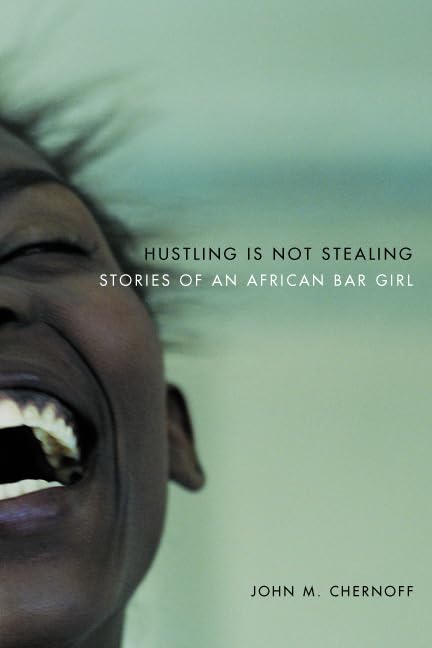
Hustling Is Not Stealing: Stories Of An African Bar Girl
Sold by Ergodebooks, an authorized reseller.
Returns accepted within 30 days | support@ergodebooks.com
Shipping Information
- Free Standard Shipping — United States only
- Processing Time: 3–5 business days
- Estimated Delivery: 6–10 business days after dispatch
- Double-boxed, fully insured & discreetly packaged
- Tracking number sent via email once dispatched
Returns & Refund
Returns accepted within 30 days of delivery.
Damaged or Defective Item
Free return shipping + replacement or full refund
Wrong Item Received
Free return shipping + replacement or full refund
Change of Mind
Return shipping at customer's expense · 25% restocking fee applies
Payment Option

While living in West Africa in the 1970s, John Chernoff recorded the stories of Hawa, a spirited and brilliant but uneducated woman whose insistence on being respected and treated fairly propelled her, ironically, into a life of marginality and luck as an ashawo, or bar girl. Rejecting traditional marriage options and cut off from family support, she is like many women in Africa who come to depend on the help they receive from one another, from boyfriends, and from the men they meet in bars and nightclubs. Refusing to see herself as a victim, Hawa embraces the freedom her lifestyle permits and seeks the broadest experience available to her.In Hustling Is Not Stealing and its followup, Exchange Is Not Robbery, a chronicle of exploitation is transformed by verbal art into an ebullient comedy. In Hustling Is Not Stealing, Hawa is a playful warrior struggling against circumstances in Ghana and Togo. In Exchange Is Not Robbery, Hawa returns to her native Burkina Faso, where she achieves greater control over her life but faces new difficulties. As a woman making sacrifices to live independently, Hawa sees her own situation become more complex as she confronts an atmosphere in Burkina Faso that is in some ways more challenging than the one she left behind, and the moral ambiguities of her life begin to intensify.Combining elements of folklore and memoir, Hawas stories portray the diverse social landscape of West Africa. Individually the anecdotes can be funny, shocking, or poignant; assembled together they offer a sweeping critical and satirical vision.
⚠️ WARNING (California Proposition 65):
This product may contain chemicals known to the State of California to cause cancer, birth defects, or other reproductive harm.
For more information, please visit www.P65Warnings.ca.gov.