
Title
Huxley's Church and Maxwell's Demon: From Theistic Science to Naturalistic Science,Used
Sold by Ergodebooks, an authorized reseller.
Returns accepted within 30 days | support@ergodebooks.com
Shipping Information
- Free Standard Shipping — United States only
- Processing Time: 3–5 business days
- Estimated Delivery: 6–10 business days after dispatch
- Double-boxed, fully insured & discreetly packaged
- Tracking number sent via email once dispatched
Returns & Refund
Returns accepted within 30 days of delivery.
Damaged or Defective Item
Free return shipping + replacement or full refund
Wrong Item Received
Free return shipping + replacement or full refund
Change of Mind
Return shipping at customer's expense · 25% restocking fee applies
Payment Option

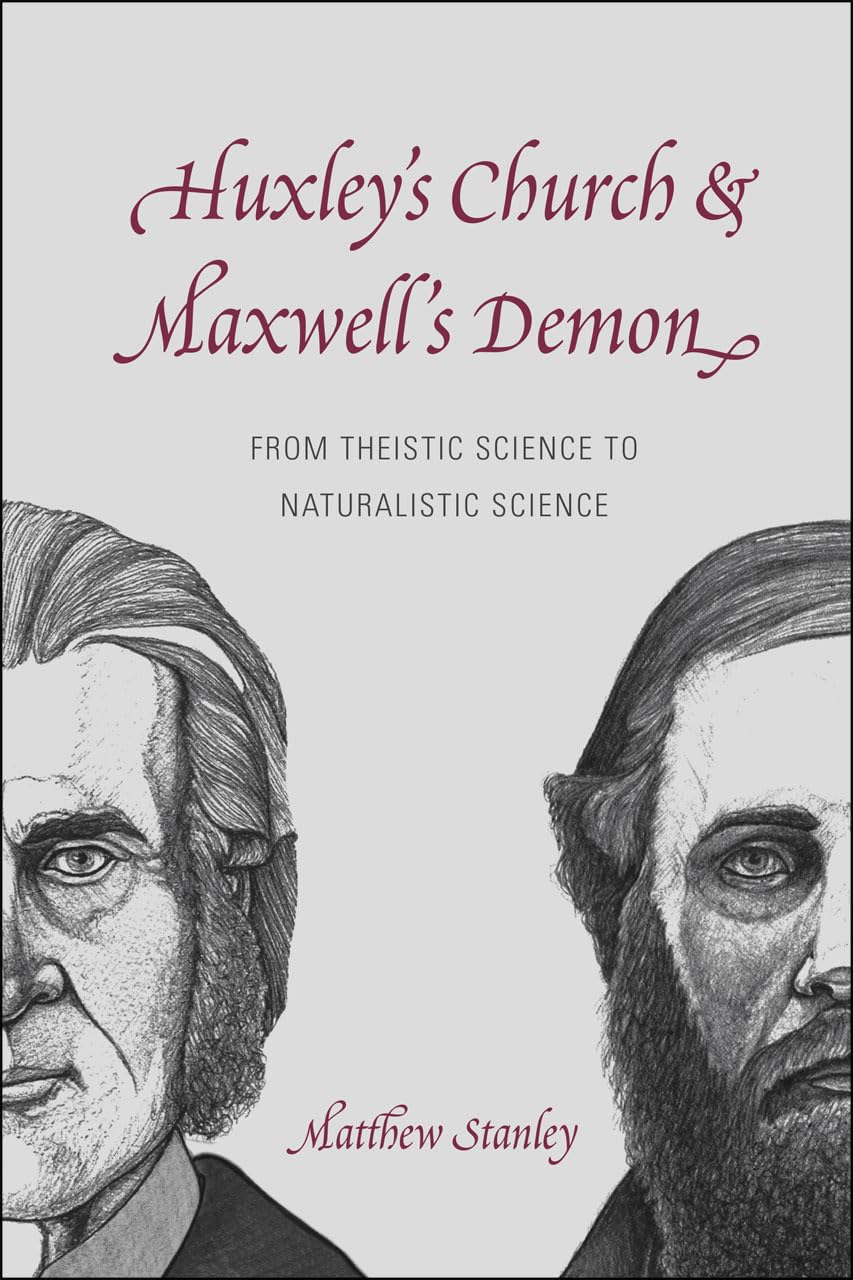
During the Victorian period, the practice of science shifted from a religious context to a naturalistic one. It is generally assumed that this shift occurred because naturalistic science was distinct from and superior to theistic science. Yet as Huxleys Church and Maxwells Demon reveals, most of the methodological values underlying scientific practice were virtually identical for the theists and the naturalists: each agreed on the importance of the uniformity of natural laws, the use of hypothesis and theory, the moral value of science, and intellectual freedom. But if scientific naturalism did not rise to dominance because of its methodological superiority, then how did it triumph?Matthew Stanley explores the overlap and shift between theistic and naturalistic science through a parallel study of two major scientific figures: James Clerk Maxwell, a devout Christian physicist, and Thomas Henry Huxley, the iconoclast biologist who coined the word agnostic. Both were deeply engaged in the methodological, institutional, and political issues that were crucial to the theisticnaturalistic transformation. What Stanleys analysis of these figures reveals is that the scientific naturalists executed a number of strategies over a generation to gain control of the institutions of scientific education and to reimagine the history of their discipline. Rather than a sudden revolution, the similarity between theistic and naturalistic science allowed for a relatively smooth transition in practice from the old guard to the new.
⚠️ WARNING (California Proposition 65):
This product may contain chemicals known to the State of California to cause cancer, birth defects, or other reproductive harm.
For more information, please visit www.P65Warnings.ca.gov.