If you have any questions, you are always welcome to contact us. We'll get back to you as soon as possible, withing 24 hours on weekdays.
Customer service
All questions about your order, return and delivery must be sent to our customer service team by e-mail at yourstore@yourdomain.com
Sale & Press
If you are interested in selling our products, need more information about our brand or wish to make a collaboration, please contact us at press@yourdomain.com
Help
If you have any questions, you are always welcome to contact us. We'll get back to you as soon as possible, withing 24 hours on weekdays.
Customer service
All questions about your order, return and delivery must be sent to our customer service team by e-mail at yourstore@yourdomain.com
Sale & Press
If you are interested in selling our products, need more information about our brand or wish to make a collaboration, please contact us at press@yourdomain.com
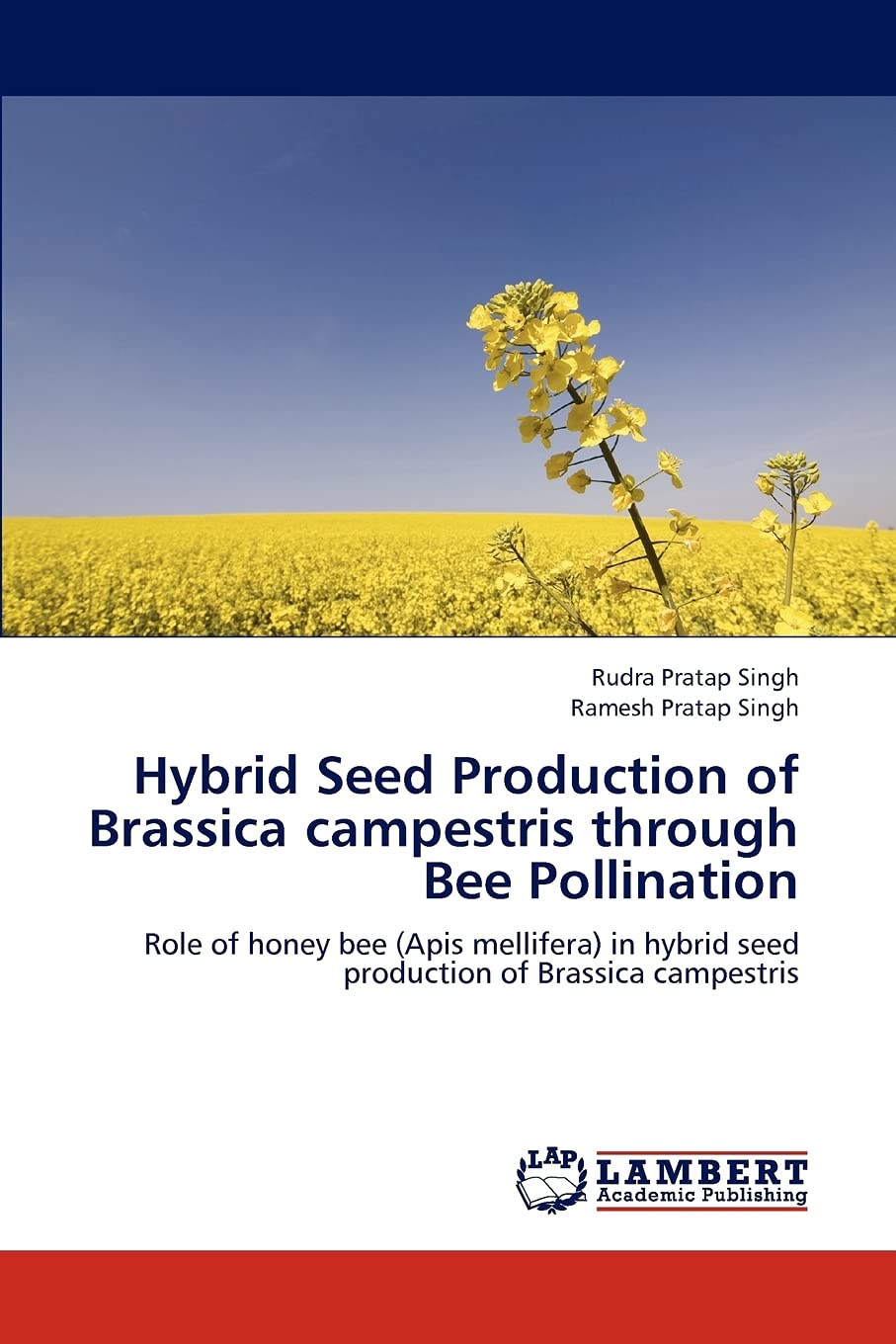
The studies carried out on the role of honey bee (Apis mellifera) in hybrid seed production of Brassica campestris showed the highest number of pollen and nectar collectors of Apis mellifera and were recorded 45.6 and 24.6 per square meter crop area of B campestris respectively during day hours of 12.00 to 2.00 pm, which were significantly greater than the rest of foraging observations. In bee pollinated plants, the number of pods per plant, number of seeds per pod, number of seeds per plant, seed yield per plant and weight of 1000 seeds in BP plants were about 1.3, 1.1, 1.44, 1.53 and 1.62 times greater than NP plants,respectively. As such worker bees observed for foraging to collect the nectar and pollen after spraying of the insecticide i.e. Confidor 200 SL (Imidacloprid) in the concentration of 0.025g a.i., 0.030g a.i.and 0.035g a.i., but bee poisonong were neither observed in bee hive nor in field. During foraging, honey bees provide the opportunity for transference of pollen from male fertile to male sterile plant and resulted the production of hybrid seeds.
⚠️ WARNING (California Proposition 65):
This product may contain chemicals known to the State of California to cause cancer,
birth defects, or other reproductive harm.
For MAP (Minimum Advertised Price) violations and Intellectual Property (IP) or Trademark concerns, please contact:
support@ergodebooks.com
⚠️ California Proposition 65 Warning: Some products sold on this website may expose you to chemicals known to the State of California to cause cancer, birth defects, or other reproductive harm. For more information, visit www.P65Warnings.ca.gov.