If you have any questions, you are always welcome to contact us. We'll get back to you as soon as possible, withing 24 hours on weekdays.
Customer service
All questions about your order, return and delivery must be sent to our customer service team by e-mail at yourstore@yourdomain.com
Sale & Press
If you are interested in selling our products, need more information about our brand or wish to make a collaboration, please contact us at press@yourdomain.com
Help
If you have any questions, you are always welcome to contact us. We'll get back to you as soon as possible, withing 24 hours on weekdays.
Customer service
All questions about your order, return and delivery must be sent to our customer service team by e-mail at yourstore@yourdomain.com
Sale & Press
If you are interested in selling our products, need more information about our brand or wish to make a collaboration, please contact us at press@yourdomain.com
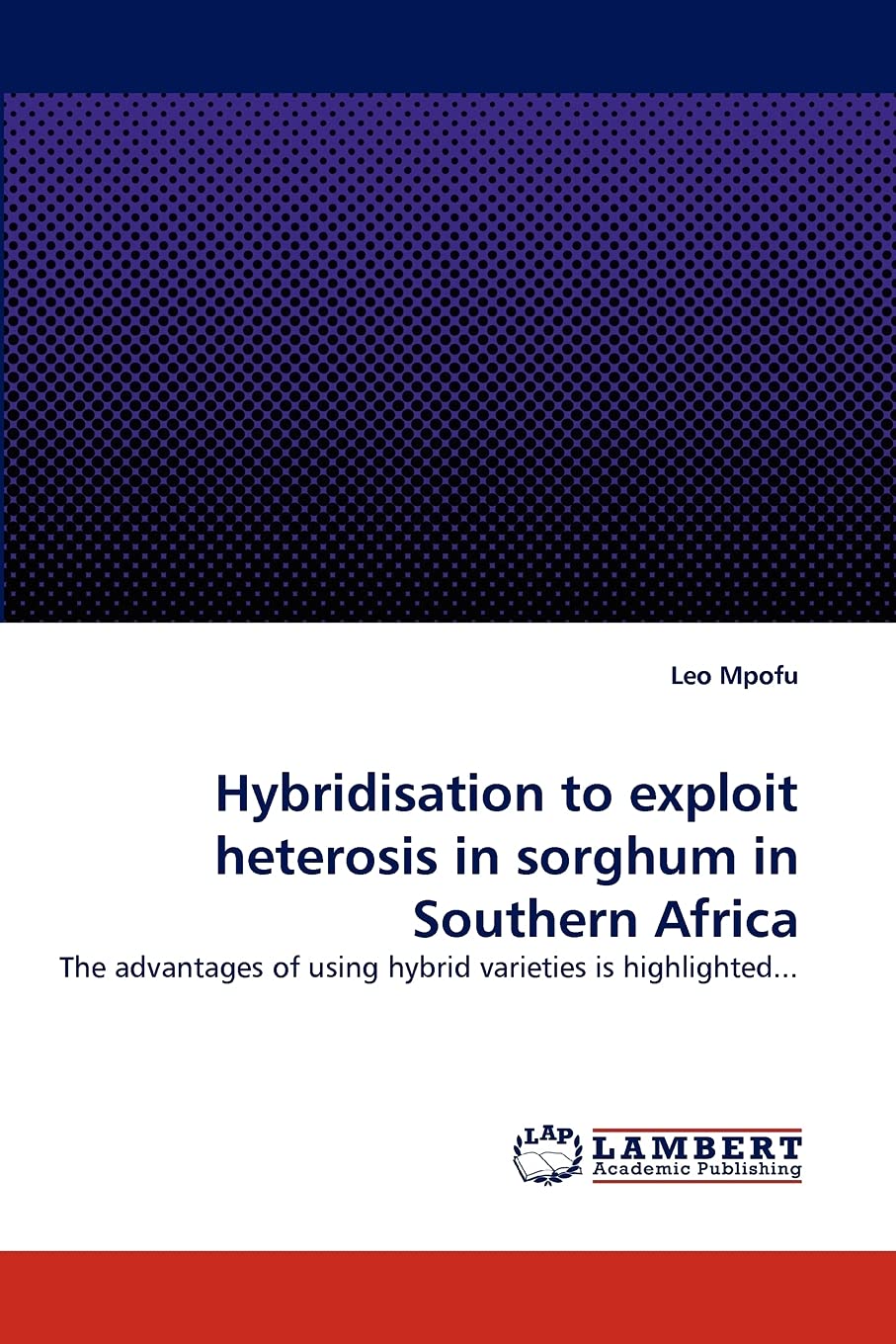
Sorghum farmers in Southern Africa get the lowest grain yield the world over. This is because they use traditional farming practices with minimal inputs on traditional varieties or landraces. Use of hybrid seed was first reported in maize in the 1920s. Hybrid varieties have an advantage of beign uniform and more vigorous. This is due to the heterosis that comes about by crossing genetically divergent parent lines. Heterosis (for any trait)can be summed up as superiority of hybrid offspring over best parent. In this study, a selected set of genotypes is evaluated in the US and Southern Africa to evaluate the level of haterosis for yield and other important agronomic characters of sorghum. The results indicate presence of significant heterosis that can be used by researchers to release new higher yielding sorghum hybrids for the benefit of all sorghum growers in the region. The author would like to thank Texas A&M Department of Crop Science for all the work that was done to bring out this information.
⚠️ WARNING (California Proposition 65):
This product may contain chemicals known to the State of California to cause cancer,
birth defects, or other reproductive harm.
For MAP (Minimum Advertised Price) violations and Intellectual Property (IP) or Trademark concerns, please contact:
support@ergodebooks.com
⚠️ California Proposition 65 Warning: Some products sold on this website may expose you to chemicals known to the State of California to cause cancer, birth defects, or other reproductive harm. For more information, visit www.P65Warnings.ca.gov.