
Title
Ideology, Power, Text: Selfrepresentation And The Peasant Other In Modern Chinese Literature,Used
Sold by Ergodebooks, an authorized reseller.
Returns accepted within 30 days | support@ergodebooks.com
Shipping Information
- Free Standard Shipping — United States only
- Processing Time: 3–5 business days
- Estimated Delivery: 6–10 business days after dispatch
- Double-boxed, fully insured & discreetly packaged
- Tracking number sent via email once dispatched
Returns & Refund
Returns accepted within 30 days of delivery.
Damaged or Defective Item
Free return shipping + replacement or full refund
Wrong Item Received
Free return shipping + replacement or full refund
Change of Mind
Return shipping at customer's expense · 25% restocking fee applies
Payment Option

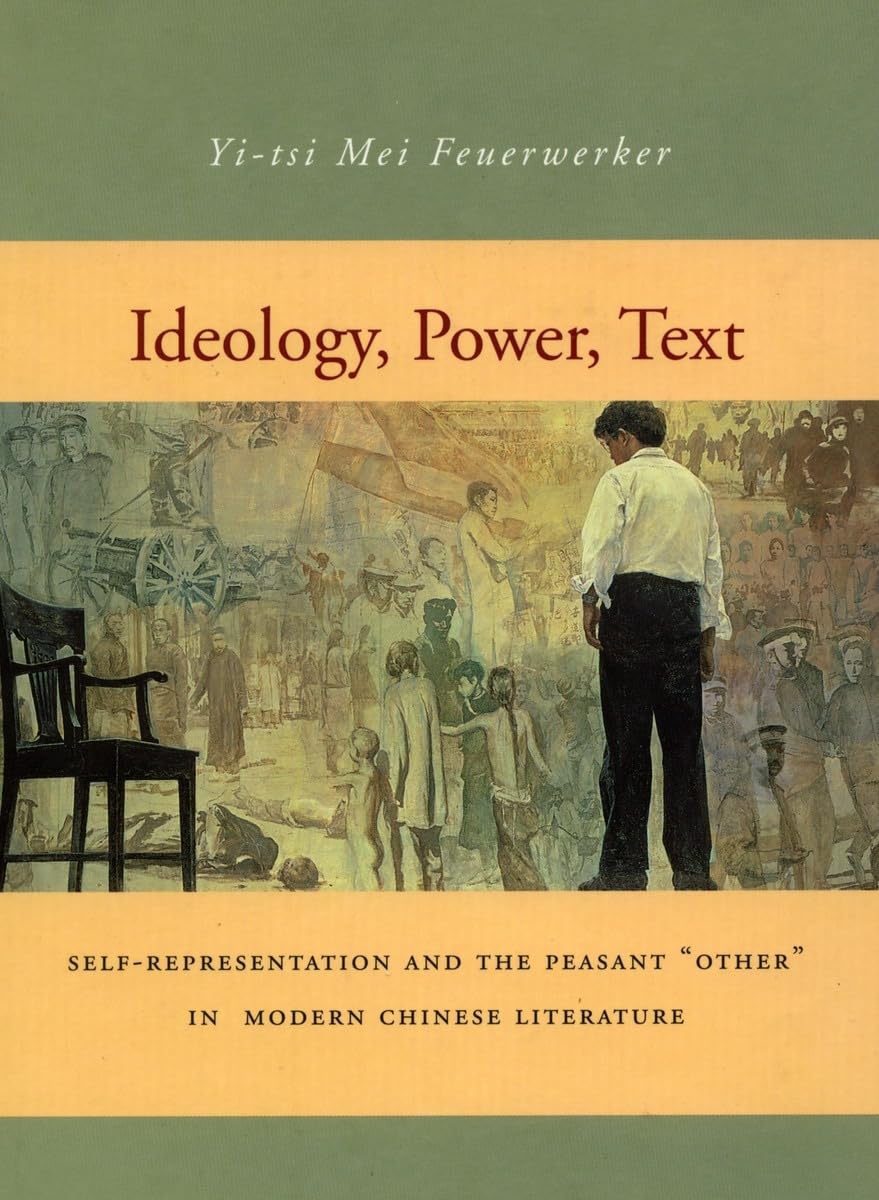
The division between the scholargentry class and the people was an enduring theme of the traditional Chinese agrarianbureaucratic state. Twentiethcentury elites recast this as a division between intellectuals and peasants and made the confrontation between the writing/intellectual self and the peasant other a central concern of literature. The author argues that, in the process, they created the peasantry, the downtrodden rural masses represented as proper objects of political action and shifting ideological agendas. Throughout this transition, language or discourse has been not only a weapon of struggle but the center of controversy and contention. Because of this primacy of language, the authors main approach is the close reading or, rather, rereading of significant narrative fictions from four literary generations to demonstrate how historical, ideological, and cultural issues are absorbed, articulated, and debated within the text. Three chapters each focus on one representative author. The fiction of Lu Xun (18811936), which initiated the literary preoccupation with the victimized peasant, is also about the identity crisis of the intellectual. Zhao Shuli (19061970), upheld by the Communist Party as a model peasant writer, tragically exemplifies in his career the inherent contradictions of such an assigned role. In the postMao era, Gao Xiaosheng (1928) uses the ironic play of language to present a more ambiguous peasant while deflating intellectual pretensions. The chapter on the last of the four generations examines several texts by Mo Yan (1956), Han Shaogong (1952), and Wang Anyi (1954) as examples of rootsearching fiction from the mid1980s. While reaching back into the past, this fiction is paradoxically also experimental in technique: the encounter with the peasant leads to questions about the selfconstruction of the intellectual and the nature of narrative representation itself. Throughout, the focus is on texts in which some sort of representation or standin of the writer/intellectual self is presentas character, as witness, as center of consciousness, or as firstperson or obtrusive narrator. Each story catches the writer in a selfreflective mode, the confrontation with the peasant other providing a theater for acting out varying dramas of identity, power, ideology, political engagement, and selfrepresentation.
⚠️ WARNING (California Proposition 65):
This product may contain chemicals known to the State of California to cause cancer, birth defects, or other reproductive harm.
For more information, please visit www.P65Warnings.ca.gov.