
Title
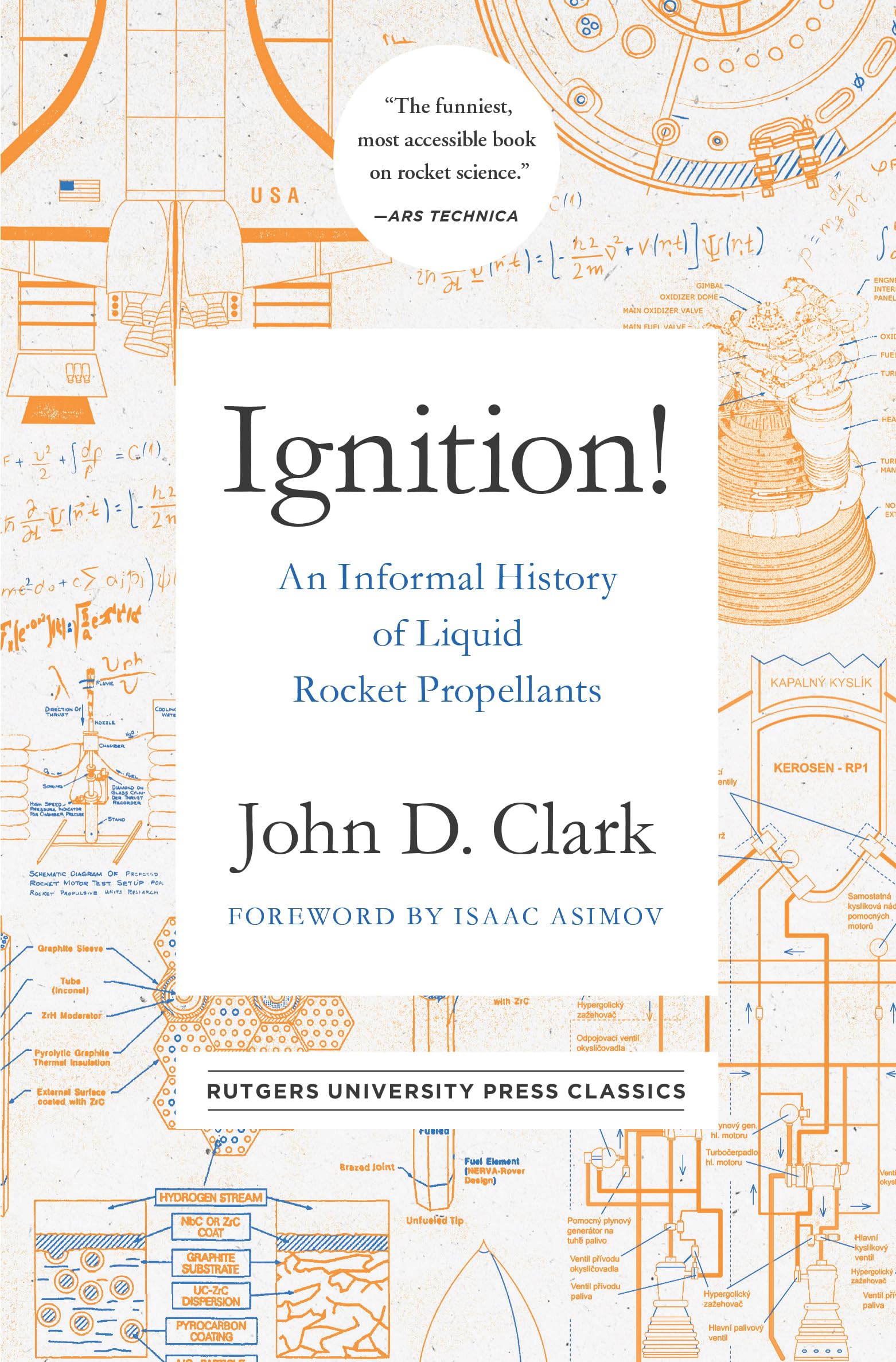
Ignition!: An Informal History Of Liquid Rocket Propellants (Rutgers University Press Classics),Used
Sold by Ergodebooks, an authorized reseller.
Returns accepted within 30 days | support@ergodebooks.com
Shipping Information
- Free Standard Shipping — United States only
- Processing Time: 3–5 business days
- Estimated Delivery: 6–10 business days after dispatch
- Double-boxed, fully insured & discreetly packaged
- Tracking number sent via email once dispatched
Returns & Refund
Returns accepted within 30 days of delivery.
Damaged or Defective Item
Free return shipping + replacement or full refund
Wrong Item Received
Free return shipping + replacement or full refund
Change of Mind
Return shipping at customer's expense · 25% restocking fee applies
Payment Option

A Classic Work In The History Of Science, And Described As A Good Book On Rocket Stuffthats A Really Fun One By Spacex Founder Elon Musk, Readers Will Want To Get Their Hands On This Influential Classic, Available For The First Time In Decades.This Newly Reissued Debut Book In The Rutgers University Press Classics Imprint Is The Story Of The Search For A Rocket Propellant Which Could Be Trusted To Take Man Into Space. This Search Was A Hazardous Enterprise Carried Out By Rival Labs Who Worked Against The Known Laws Of Nature, With No Guarantee Of Success Or Safety.Acclaimed Scientist And Scifi Author John Drury Clark Writes With Irreverent And Eyewitness Immediacy About The Development Of The Explosive Fuels Strong Enough To Negate The Relentless Restraints Of Gravity. The Resulting Volume Is As Much A Memoir As A Work Of History, Sharing A Behindthescenes View Of An Enterprise Which Eventually Took Men To The Moon, Missiles To The Planets, And Satellites To Outer Space.
⚠️ WARNING (California Proposition 65):
This product may contain chemicals known to the State of California to cause cancer, birth defects, or other reproductive harm.
For more information, please visit www.P65Warnings.ca.gov.
- Q: What is the page count of this book? A: This book has two hundred sixteen pages. It provides a comprehensive overview of rocket propellants and their history.
- Q: What are the dimensions of 'Ignition!'? A: The book measures five point two inches in length, eight inches in height, and zero point eight inches in width. These dimensions make it easy to handle and read.
- Q: What type of binding does this book have? A: This book is available in paperback binding. This makes it lightweight and convenient for reading on the go.
- Q: Who is the author of 'Ignition!'? A: The author of this book is John Drury Clark. He is both an acclaimed scientist and a science fiction writer.
- Q: What category does this book fall under? A: This book is categorized under Scientists. It delves into the history and development of liquid rocket propellants.
- Q: What is the reading level suitable for this book? A: This book is suitable for adults and older teens. Its content is rich in scientific history and concepts.
- Q: How can I make the most out of reading this book? A: To enjoy this book, take your time to absorb the historical context. Consider making notes on key developments in rocket science.
- Q: Is this book suitable for beginners in rocket science? A: Yes, this book is suitable for beginners. It presents complex topics in an engaging and accessible manner.
- Q: What themes are explored in 'Ignition!'? A: This book explores themes of innovation, rivalry, and the quest for space exploration. It highlights the challenges faced in developing rocket fuels.
- Q: How do I care for this paperback book? A: To care for this book, keep it in a dry place and avoid exposure to direct sunlight. This helps preserve its quality.
- Q: Is there a warranty on this book? A: There is no warranty on this book. However, it is generally covered under standard return policies if purchased from a retailer.
- Q: What should I do if my book arrives damaged? A: If your book arrives damaged, contact the retailer for return instructions. Most retailers will replace or refund damaged items.
- Q: Can I gift this book to someone interested in science? A: Yes, this book makes a great gift for anyone interested in science. Its engaging narrative appeals to both casual readers and science enthusiasts.
- Q: How does 'Ignition!' compare to other history of science books? A: This book is unique due to its engaging storytelling and firsthand accounts. It offers a blend of memoir and historical analysis that is captivating.
- Q: What makes this book a classic? A: This book is considered a classic due to its influential insights and the author's unique perspective on the history of rocket propellants.