
Title
Illgotten Money And The Economy: Experiences From Malawi And Namibia (World Bank Studies) (World Bank Study),New
Sold by Ergodebooks, an authorized reseller.
Returns accepted within 30 days | support@ergodebooks.com
Shipping Information
- Free Standard Shipping — United States only
- Processing Time: 3–5 business days
- Estimated Delivery: 6–10 business days after dispatch
- Double-boxed, fully insured & discreetly packaged
- Tracking number sent via email once dispatched
Returns & Refund
Returns accepted within 30 days of delivery.
Damaged or Defective Item
Free return shipping + replacement or full refund
Wrong Item Received
Free return shipping + replacement or full refund
Change of Mind
Return shipping at customer's expense · 25% restocking fee applies
Payment Option

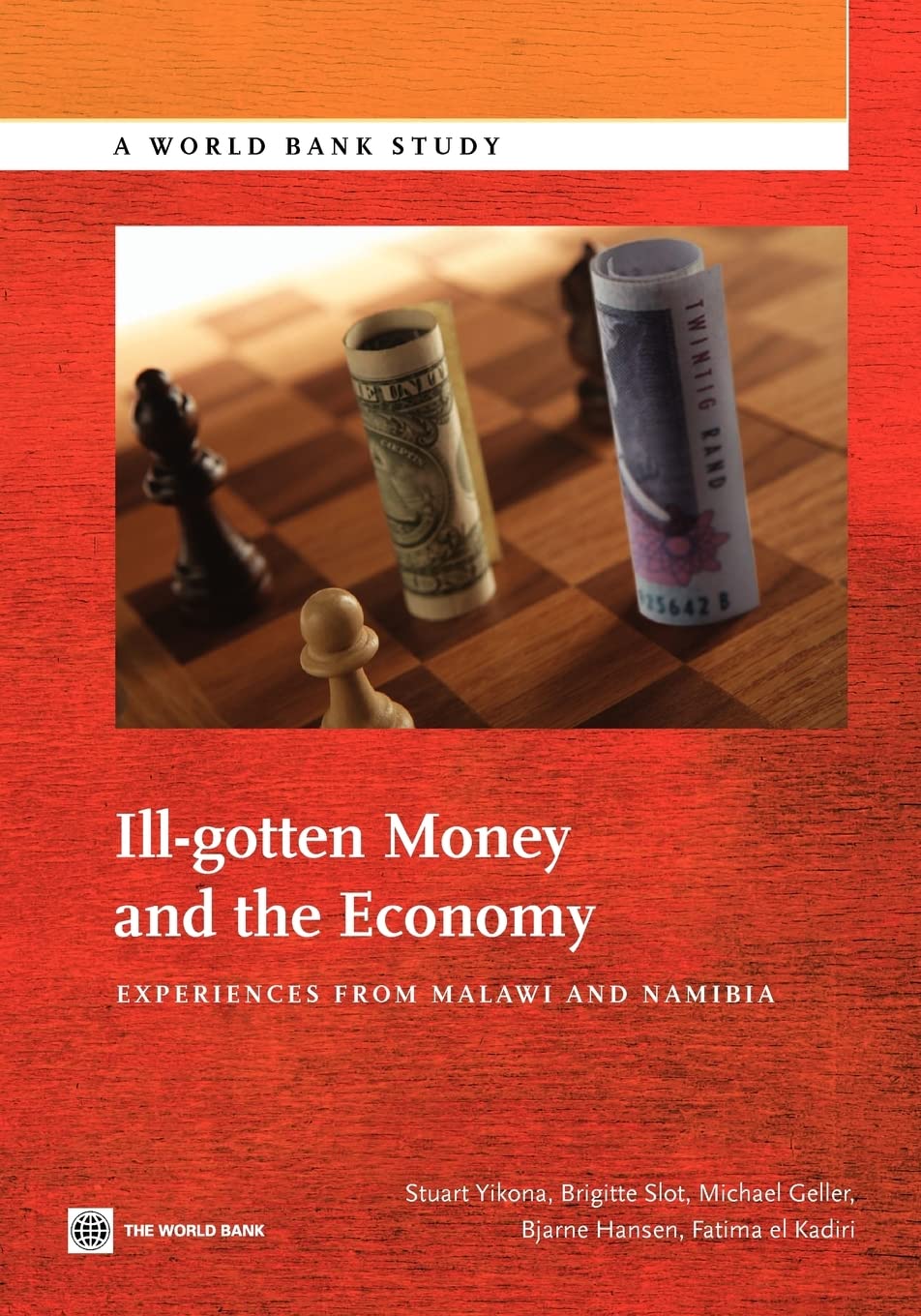
Many developing countries have introduced policies to tackle illgotten money over the past years. Perception remains that such moves were more a result of international pressure being exercised than genuine ownership of such an agenda. There is not enough analysis and literature of how an antifinancial crime framework does (or does not) contribute to the development path of developing countries or how best to use these tools in a developing country environment. This study was aimed at initially exploring the effects of illgotten money or proceeds of crime and antimoney laundering policies on economic development.The study focused on two developing countries: Malawi, (a lowincome country) and Namibia (an uppermiddleincome country). The starting point of this analysis is that antimoney laundering is essentially a tool to address criminal activities and that, as a result, understanding criminal activities and how proceeds of crime impact development. The purpose of this study was: (i) to provide an initial answer to the question if and how measures to address proceeds of crime contributes to economic development; and (ii) to develop a framework that enable governments in developing countries to analyze the main sources of illgotten money and its effects on the economy.
⚠️ WARNING (California Proposition 65):
This product may contain chemicals known to the State of California to cause cancer, birth defects, or other reproductive harm.
For more information, please visit www.P65Warnings.ca.gov.
- Q: What is the page count of this book? A: The book has one hundred eighteen pages. It provides a thorough analysis of ill-gotten money and its effect on the economy.
- Q: What is the binding type of this book? A: This book is published in paperback format. This makes it lightweight and easy to handle for reading.
- Q: What are the dimensions of the book? A: The book measures seven point zero one inches in length, zero point three one inches in width, and ten inches in height. These dimensions make it convenient to store or carry.
- Q: Who is the author of this book? A: The book is authored by Stuart Yikona. He provides insights into anti-financial crime frameworks in developing countries.
- Q: What category does this book belong to? A: This book falls under the Ethics category. It explores complex issues related to financial crime and economic development.
- Q: Is this book suitable for academic purposes? A: Yes, this book is suitable for academic purposes. It offers analytical insights that can be useful for students and researchers studying economics and ethics.
- Q: How can I apply the insights from this book? A: You can apply the insights by analyzing how anti-money laundering policies can be implemented in developing economies. The book provides a framework for understanding these measures.
- Q: Is this book appropriate for general readers? A: Yes, this book is appropriate for general readers interested in economic development and ethics. It's written to be accessible while still informative.
- Q: What themes are explored in this book? A: The book explores themes of ill-gotten money, economic development, and anti-money laundering policies. It offers a critical look at these issues in Malawi and Namibia.
- Q: How do I keep this book in good condition? A: To keep this book in good condition, store it in a dry place and avoid exposure to direct sunlight. Handling it carefully will also prevent wear and tear.
- Q: Can I return the book if I'm not satisfied? A: Yes, you can return the book if you're not satisfied. Check the seller's return policy for specific details and time frames.
- Q: What if the book arrives damaged? A: If the book arrives damaged, contact the seller immediately for a replacement or refund. Make sure to provide photos of the damage.
- Q: Does this book have any additional resources? A: No, this book does not include additional resources. It focuses solely on the content within its pages.
- Q: Is there an ebook version available? A: Yes, there is an ebook version available. This allows for convenient reading on digital devices.
- Q: How does this book compare to other studies on financial crime? A: This book provides a unique perspective by focusing on Malawi and Namibia, unlike other studies that may cover broader regions or topics.
- Q: Are there any reviews available for this book? A: Yes, you can find reviews online that discuss the book's insights and contributions to the field of ethics in economic development.